In a scathing opinion issued on April 18, Oregon US District Judge Mustafa T. Kasubhai, calling Health and Human Services (HHS) Secretary Robert F. Kennedy Jr. an “unserious leader” with an “unserious regard for the rule of law,” vacated Kennedy’s Dec. 18 declaration that health care providers performing gender-affirming care on minors would be disqualified from receiving any federal funds, including under the Medicare and Medicaid programs.
The judge issued a declaration that Kennedy’s policy is unlawful, and he enjoined its enforcement in the 22 states and District of Columbia that are the plaintiffs.
Oregon took the lead in organizing this lawsuit, so it is listed as the lead plaintiff, but virtually every state that allows health care providers to perform gender-affirming care for minors signed on to the case, including New York.
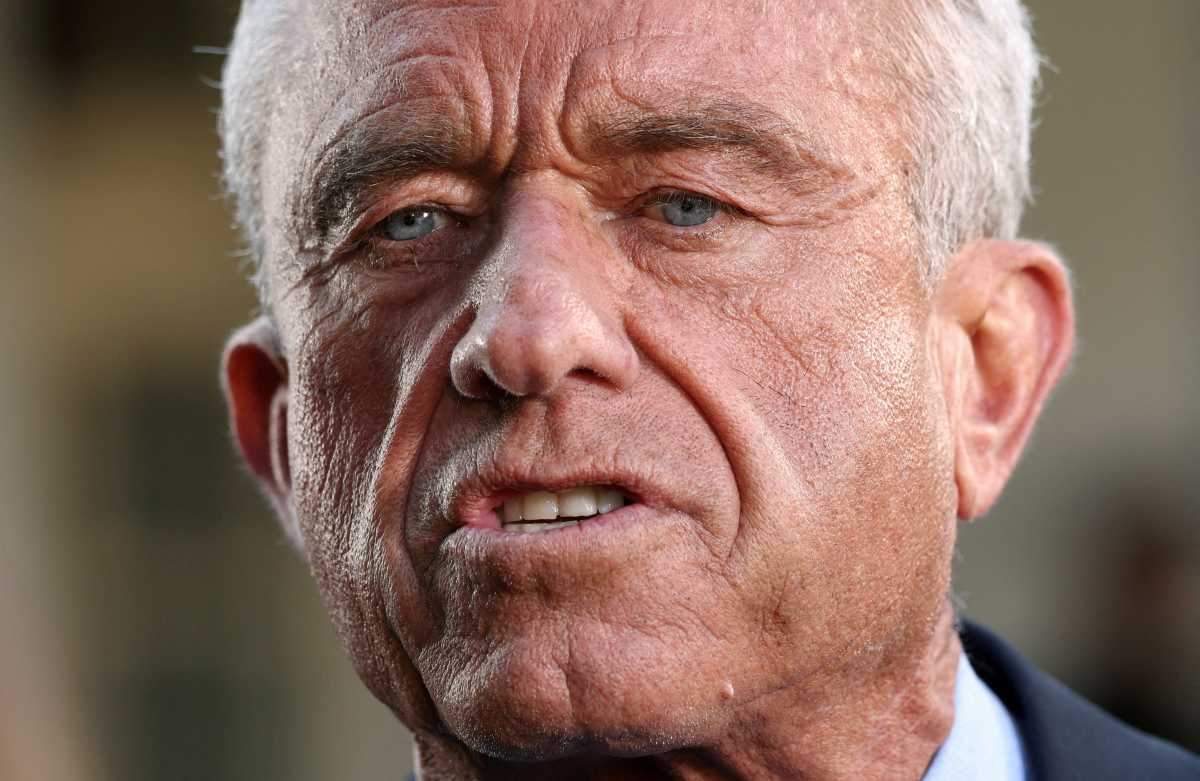
Kennedy held a press conference on Dec. 18, 2025, announcing his declaration and calling it “a clear directive to providers to follow the science and the overwhelming body of evidence that these procedures hurt — not help — children” and that “medical professionals or entities providing sex-rejecting procedures to children are out of compliance with these standards of healthcare.” “Sex-rejecting procedures” is the terminology the Trump Administration uses to characterize gender-affirming care. Kennedy took this action without following any of the procedures set out in the Medicare and Medicaid Acts or the Administrative Procedure Act, referring instead to a so-called “study” that had been produced by his department in support of President Trump’s anti-trans executive order.
Soon afterwards, the HHS general counsel, Mike Stuart, began issuing social media announcements of health care institutions that he had referred to the HHS Office of the Inspector General (OIG) for investigation and action to suspend them from the Medicare and Medicaid programs. The first investigative target, Seattle Children’s Hospital, was announced on December 26 and many more have since been notified. Some hospitals, anticipating trouble, suspended their programs providing care to trans youth even without being notified that they would be investigated.
Under the Medicare and Medicaid statutes, health care providers can be suspended from participating in those programs following an administrative determination that their services do not meet the standard of care prevailing in the medical profession. Kennedy declared that “sex-rejecting procedures” do not meet the standard of care, even though they are recognized as appropriate by state health care regulators in the states that allow them to be performed, and by all the major medical professional organizations in the United States.
Judge Kasubhai’s opinion sharply condemns Kennedy’s actions. “Unserious leaders are unsafe,” he wrote. “There is nothing more serious than our leaders’ dedication to the rule of law so that we might maintain the integrity of our constitutional democracy. This case highlights a leader’s unserious regard for the rule of law. This case demonstrates how disregard for the rule of law does not merely result in an abstract infraction. Rather, and tragically, this case is one of a long list of examples of how a leader’s wanton disregard for the rule of law causes very real harm to very real people.”
The judge found that Kennedy “unlawfully issued a declaration threatening to cut federal funding to medical providers who provided gender-affirming care to minors. If such a declaration could have been enacted lawfully, there might have been ample time and opportunity for medical providers, families, and children — all people and institutions of our great nation — to seek out other alternatives and options. Secretary Kennedy’s utter failure to promulgate rules in accordance with statutory authority, but instead threatening to cease federal funding to medical providers almost immediately after the declaration, caused chaos and terror for all those people and institutions of our great nation. Secretary Kennedy’s unlawful declaration harmed children. This case illustrates that when a leader acts without authority and in the absence of the rule of law, he acts with cruelty.”
The government’s defense of this case was laughable and, at bottom, dishonest. Although Kennedy’s declaration used very direct language claiming to change the standard of care under the federal programs, lawyers for the government argued that he was just exercising his First Amendment right to state his views about the subject, which the judge characterized as “the bald-faced lie that the Kennedy Declaration amounts to nothing more than one man’s musing on gender-affirming care.”
The government also argued that because no hospital has yet suffered a shutoff of federal funding over this issue, which requires investigation by the Inspector General, formal notices, hearings, and detailed opinions explaining why any particular provider is being suspended, the states did not have standing to bring the case, because any harm to them was hypothetical at best. In the history of these programs, such suspensions have rarely happened. The procedures provide for an appeal process, first administratively, and then to the courts, before a shut-off could become final. On that basis, the government argued that the case was not “ripe” for judicial review since predicted future harm might not occur.
Judge Kasubhai’s opinion demolished these arguments, noting that many hospitals had terminated their programs anticipating that they might have to close down entirely if they lost funding under the federal insurance programs. Many hospitals rely heavily on the federal insurance programs to survive. In fact, there are predictions that the Medicaid cuts instituted by President Trump’s “Big Beautiful Bill” last year will lead to the closure of numerous smaller hospitals, leaving some rural areas without nearby hospital services.
Actually, an HHS Rapid Response social media posting on Jan. 18 quoted by the court, said, “It’s working. Hospitals across the country are ending irreversible medical interventions for minors. At HHS, protecting children’s health comes first.” The judge reiterated several times that the government’s argument that Kennedy’s Declaration was merely a statement of one man’s opinion was “absurd” on its face, as shown by the expanding shutdown of gender-affirming care programs in response to Kennedy’s declaration and subsequent notices of “investigations.” The harm is not hypothetical, so the plaintiffs’ burden to show harm in order to get an injunction was easily met.
Under the Administrative Procedure Act, a court can vacate an administrative agency “final action” that it finds to be unlawful. The government argued that the declaration was not a “final action,” but the judge rejected that argument based on the wording of the declaration and its immediate impact. The government also argued that there was no need for a declaratory judgment or an injunction when the court had vacated the Kennedy declaration, arguing that courts normally presume that the government will comply with their rulings.
Given the Trump Administration’s record of defying court rulings, which the judge documented in a lengthy paragraph specifying examples, the court was unwilling to forego talking all steps necessary to be sure that the remedy in this case would be enforceable through the contempt process if not obeyed, by adopting the plaintiffs’ proposed wording of declaratory judgment and injunction, and rejecting the government’s nonsensical argument that the proposed language was not specific enough.
The declaratory judgment makes clear the court’s conclusion that HHS has no authority to alter the standard of care under state law, as states, not the federal government, regulate the practice of medicine, and the Medicare and Medicaid programs cannot be used as a cudgel to bully those states that have approved of such health care. He noted an argument that the states have a contractual relationship with HHS under the Medicaid program, and that failure of HHS to continue providing funding in accordance with those contracts would be unlawful. The result was an injunction worth quoting in full, since it is likely to be the subject of appellate arguments in the weeks ahead.
“The Court permanently ENJOINS Defendants and their officers, agents, servants, employees, and attorneys, including those at the Office of Inspector General (HHSOIG), from initiating enforcement action, enforcing, implementing, giving intent to, or relying, in whole or in part, the Kennedy Declaration — or any materially similar policy which supersedes or purports to supersede the professionally recognized standards of care for gender-affirming care that exist in the Plaintiff States — against any provider in the Plaintiff States.”
The plaintiff states covered by this injunction are Oregon, Washington, New York, California, Colorado, Connecticut, Delaware, District of Columbia, Hawaii, Illinois, Maine, Maryland, Massachusetts, Michigan, Minnesota, Nevada, New Jersey, New Mexico, Pennsylvania, Rhode Island, Vermont and Wisconsin.
If the government reacts true to Trump Administration form to this ruling, it will seek a stay of the court’s orders, first from the district judge, then from the Ninth Circuit Court of Appeals, and if it can’t get a stay from these courts, it may file a so-called “emergency application” with the Supreme Court. But in the meantime, the order has immediate effect and, from the tone of Judge Kasubhai’s opinion, it seems likely that he means to enforce it if HHS does not knock off the investigations that have been launched against numerous hospitals (including New York’s NYU-Langone Health) and such community organizations as Whitman Walker Health in D.C., Callen Lorde in NYC, the Los Angeles LGBT Center and the Institute for Family Health, who were referred for investigation to the OIG on February 11.
The states are represented in this case by their attorney general offices, and HHS by the US Justice Department. Judge Kasubhai, appointed by President Joe Biden, is noted as the first Muslim US District Judge.