
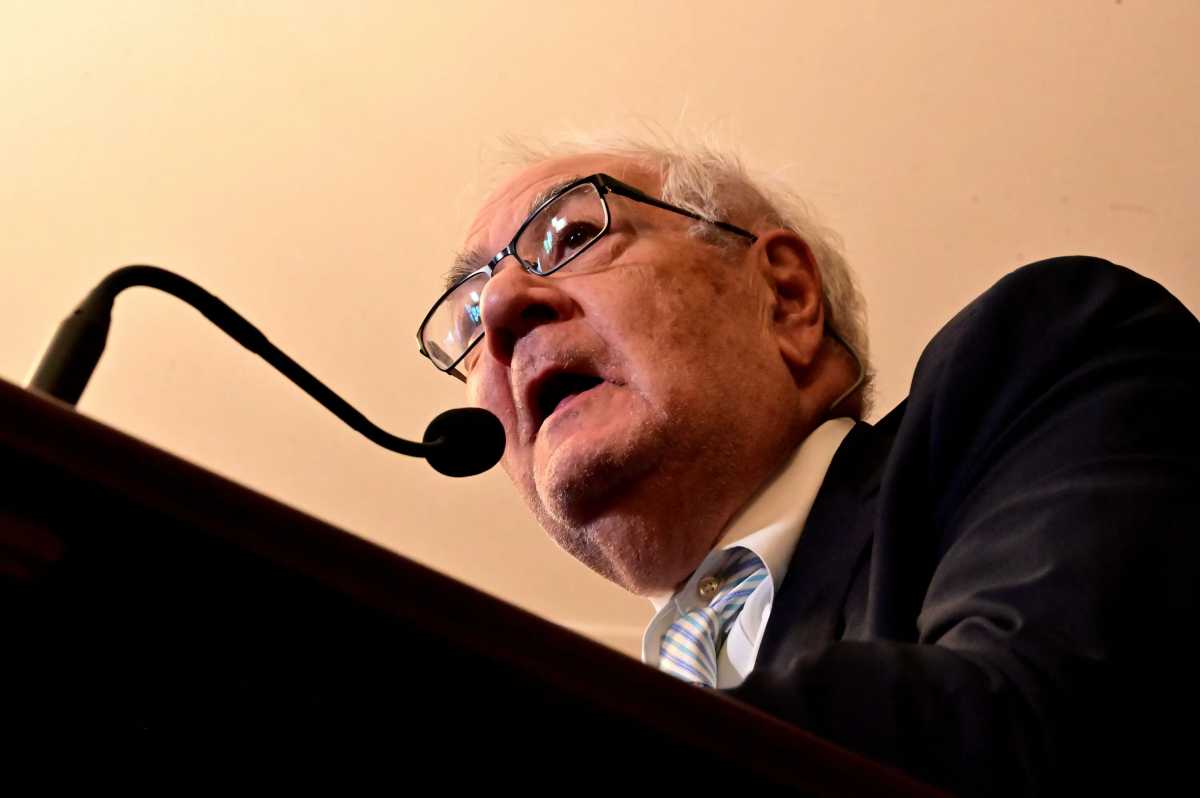
Barney Frank, whose three decades in Congress were punctuated by his historic decision in 1987 to come out as gay, died on May 19 at his home in Maine. He had entered hospice care last month with congestive heart failure.
Born and raised just across the river from New York City in Bayonne, New Jersey, Frank was best known for being the first member of Congress to voluntarily come out as gay, but during his lengthy tenure on Capitol Hill he also found himself playing consequential roles on top issues, most notably finance. He served as the House Financial Services Committee and championed The Dodd-Frank Act, though he also faced criticism for his defense of Fannie Mae and Freddie Mac in the lead-up to the 2008 financial crisis.
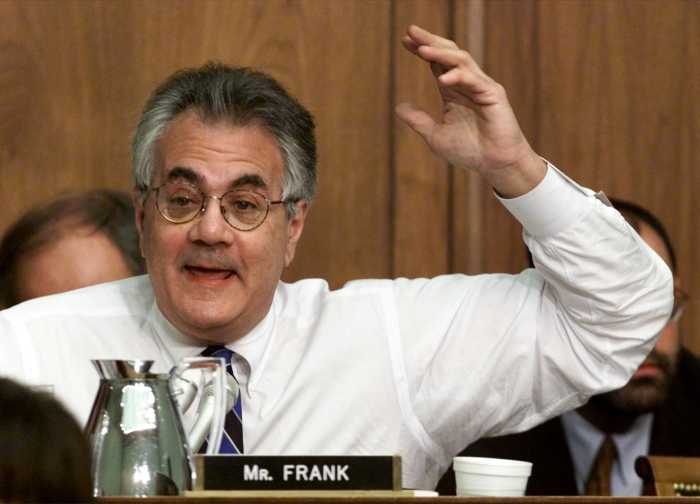
Despite his trailblazing role in queer history, Frank also faced criticism for his positions on trans rights — and in the weeks before his death, he complained about what he described as “overreach by the left” and criticized the way the LGBTQ community has advocated for trans inclusion in sports, underscoring his complicated legacy surrounding LGBTQ issues.
During a 2012 New York Times panel discussion covered by Gay City News, Frank said he realized he was gay at age 13, though he set out to hide his sexual orientation. However, as he became more widely known, he admitted that his sexuality became more difficult to hide. He wrote in a 2015 Politico story that then-Congressmember Robert Bauman — a conservative who was defeated after he was arrested for allegedly soliciting sex from a 16-year-old boy — hinted at Frank’s sexuality in a 1986 memoir.
“No one reading it could miss the clear import: I was a gay man who enjoyed a media silence that [Bauman] had been denied,” Frank wrote.
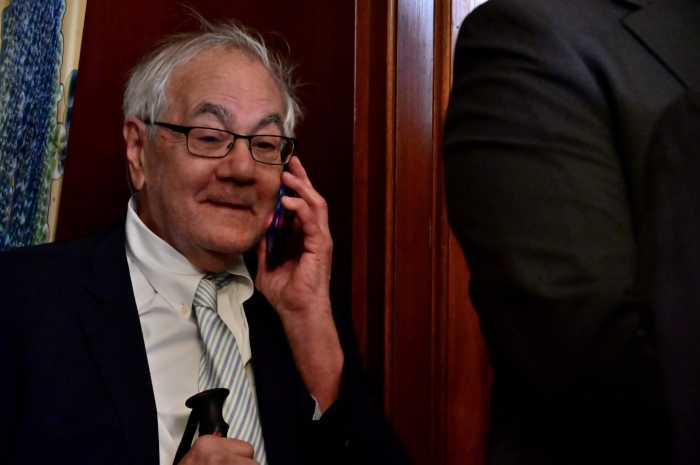
During the 2012 discussion with the Times, Frank said by 1987, his sexuality was “no great secret,” leading some reporters to ask him if they could write about his gay identity. He said no.
“But I began to think about how to do that, and at one point, one of the editors of the Boston Globe came to see me, saying, ‘Look, we’ve got to talk about, you know…’ ‘Yeah, I know,’” Frank recalled. “And he said, ‘Here’s the deal. We don’t want to break the story before you want it. On the other hand, we’re the Boston Globe, the dominant paper that covers you, and it would be awful for us to be scooped after being so nice to you. “I said, ‘No one’s going to write that story without my involvement. But the minute I get a call asking me about it, I’ll call you and you’ll be the first.’ And then I decided this wasn’t going to work. I said, ‘I’m ready to do this,’ and they said, ‘Okay, you’re going to announce it?’ And I said, ‘No, you have to ask me.’ “I finally get a call from them saying, ‘Okay, we’re ready to ask you.’”
When Frank entered hospice, he reflected on his work in the fight for gay rights and elaborated on his belief that progress on more controversial issues should come incrementally. Frank told the New York Times that “we tended to start by trying to win the [issues] that were most popular,” citing efforts like the push to allow gay people to serve in the military.
“We didn’t go after same-sex marriage, we didn’t make marriage a litmus test, until the very end,” Frank said. “I analogize that to male-to-female transgender sports. That is the most controversial part of the agenda — the equivalent of gay marriage — so put it at the end. If you go at it that way, you build support for it. But if you insist on the most controversial parts all at once, you make it harder.”
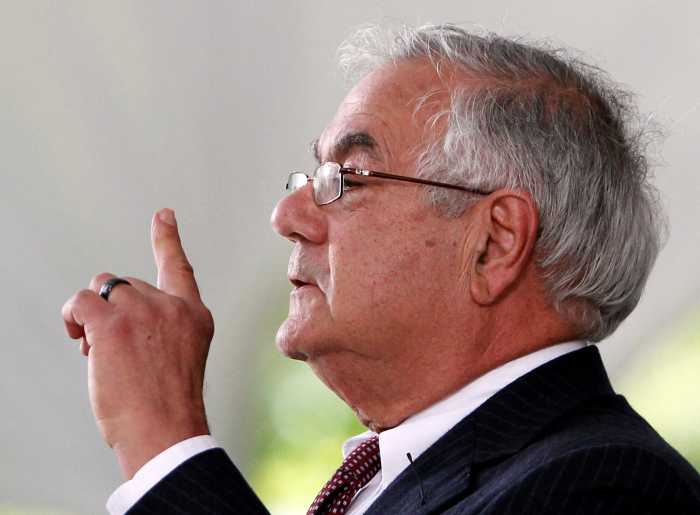
Frank’s death immediately prompted an outpouring of condolences and social media posts from political figures, including former President Barack Obama.
“Barney Frank was one of a kind,” Obama wrote on X. “For more than three decades in Congress, he fought tirelessly for the people of Massachusetts, helped make housing more affordable, stood up for the rights of LGBTQ+ Americans, and helped pass one of the most sweeping financial reforms in history designed to protect consumers and prevent another financial crisis. Barney’s passion and wit were second to none, and our thoughts are with his family today.”
Senate Minority Leader Chuck Schumer of New York said he and Frank “came to Congress together” and he remembered his late colleague as “a fountain of energy, intelligence, morality, and creativity — all aimed at making the world a better place.”
“He never stopped and has had an amazing impact,” Schumer said. “We remained good friends after he retired, and we would continually discuss his plethora of incredible ideas to improve this country and this world that he loved so much. I will miss him as a friend, and the world will miss him as a great humanitarian leader.”
Wisconsin Senator Tammy Baldwin, who served alongside Frank when she was in the House of Representatives, remembered him as “candid, outspoken, quick-witted and downright funny,” saying he was “willing to take on anyone who was in his way, regardless of who they were — I should know, I was one of the many who on occasion got an earful from him.”
“But I, and anyone else who spent time with him, were lucky to watch him in action and learn from him,” Baldwin added. “Barney was a masterful legislator, savvy and strategic, and always thinking of the long game. Earning Barney’s praise when we passed the Respect for Marriage Act is something that I will forever cherish.”
Bronx Congressmember Ritchie Torres, who in 2021 became the first out Afro-Latino member of Congress, said Frank was a “giant” who “paved the road for LGBTQ+ members” of Congress.
“He leaves behind an extraordinary legislative legacy,” Torres wrote, adding that “we lost a true trailblazer today. Rest in peace, Congressman.”
Congressmember Sarah McBride of Delaware, who is the first out trans member of the House of Representatives, said Frank helped lead the way for other out members of Congress.
“One of the privileges of this job is that I got to know Barney Frank,” McBride said on X. “As one of the first openly gay member of Congress, he bore the indignities of being one of the first with grit and humor and laid the groundwork for being out in public life for so many to follow. Throughout his career, he went on to become one of the most effective members of Congress. Barney’s legacy and impact will long endure. My thoughts are with his loved ones today as they navigate the loss of such a foundational giant of the community.”
Former House Speaker Nancy Pelosi also praised Frank’s legacy.
“Barney Frank was an exceptional legislator, whose name is synonymous with the strongest consumer financial protections in history and whose advocacy helped forge a fairer future for all of our children,” Pelosi wrote in a post on X. “Working families in Massachusetts and beyond lost an iconic champion today.”
Frank is survived by his husband, Jim Ready, who he married in 2012; sisters Ann Lewis and Doris Breay; and a brother, David Frank.