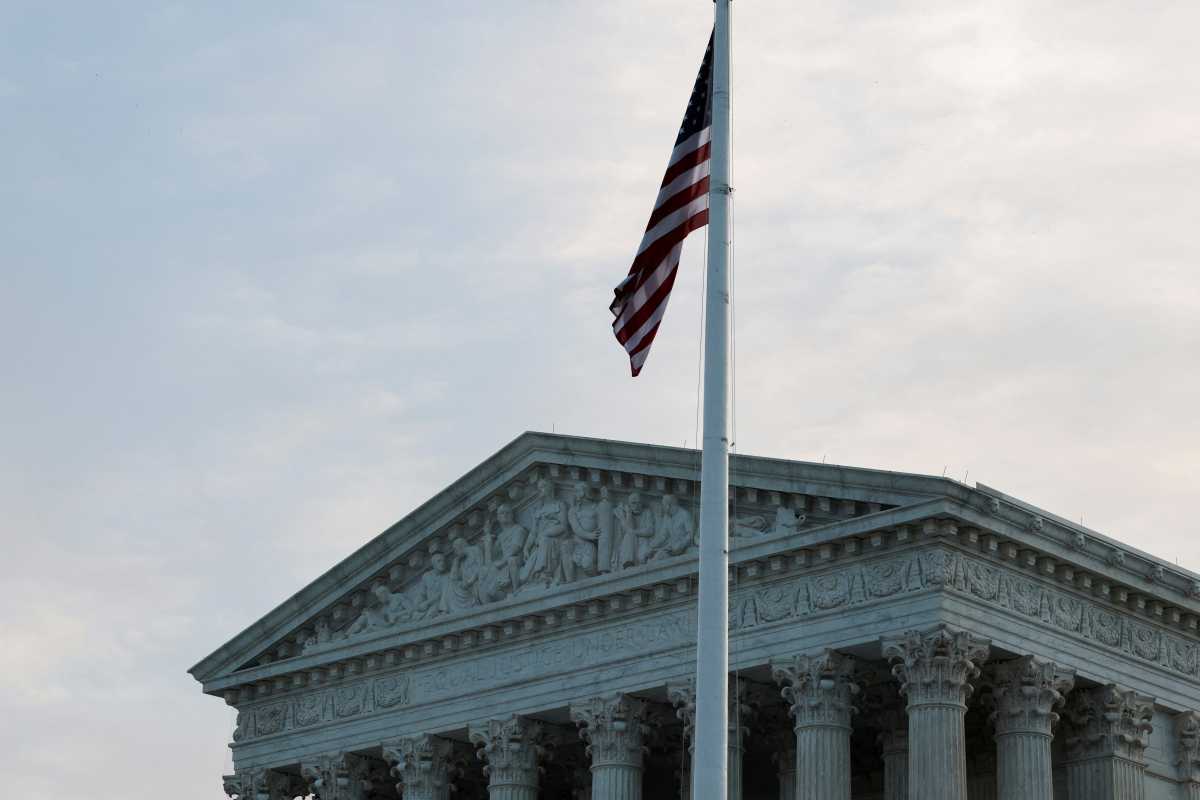
The Supreme Court announced on April 20 that it is adding to its argument docket for next term a challenge to Colorado’s refusal to let Catholic preschools participate in its “universal preschool program” because they admit only families who support Catholic beliefs, including on sex and gender. In granting review, the court stated it would not consider the question whether to overrule its precedent of Employment Division v. Smith, on which the lower federal courts had relied, in this case.
Colorado’s program pays for families to send their children to a preschool of their choice, either public or private. However, the state will not pay for attendance at a school unless all families will have an “equal opportunity” to enroll regardless of prohibited forms of discrimination under Colorado law, including race, religious affiliation, sexual orientation, gender identity, income level, or disability. The state program has several exemptions from this requirement, allowing schools to admit only “children of color,” for example, or “gender non-conforming children,” the “LGBTQ community,” or “low income families.”
When Catholic preschools applied, they were turned down because they only admit children from families who affirmatively support Catholic beliefs, including about sex and gender. Formal Catholic doctrine has strong views against same-sex marriage and gender transition, and these schools imposed a religious belief test for families to certify their beliefs. Colorado officials concluded that the Catholic schools’ admission policies did not meet the equal opportunity requirements.
The plaintiffs in this case are St. Mary Catholic Parish in Littleton, St. Bernadette Catholic Parish in Lakewood, Daniel Sheley and Lisa Sheley, and the Archdiocese of Denver. The Sheleys are Catholic parishioners in Denver whose child is enrolled in a Catholic preschool but who can’t qualify for the tuition subsidy because of the school’s admission policies. The plaintiffs claim that their exclusion from the preschool program violates their right to free exercise of religion. The district court and court of appeals disagreed with them, denying injunctive relief, relying on Employment Division v. Smith, the Supreme Court opinion under which free exercise clause challenges to neutral laws of general applicability are upheld so long as the state has a rational basis for the law. Laws are “neutral” if they don’t target religion. They are “generally applicable” if they apply across the board.
A main point of dispute in this case is about the lower courts’ conclusion that the Colorado law, as described and interpreted by the state, is neutral regarding religion and generally applicable. If it is found not to be, it would be subjected to a more demanding level of judicial review under which the state would have to show an important or compelling justification for the law.
In their petition to the Supreme Court, the plaintiffs, now called petitioners, pointed out that federal courts around the country have differed in their interpretation of the neutral and general applicability principles, some in apparent agreement with the approach of the Denver-based 10th Circuit Court of Appeals in this case, some disagreeing, and there is an argument that recent decisions by the Supreme Court bolstering free exercise claims have modified or come close to overruling Employment Division v. Smith, as the court has held that some state programs may not exclude religious entities from participation.
Readers may recall the Supreme Court’s 2021 ruling in Fulton v. City of Philadelphia, where the court rejected Philadelphia’s decision to exclude a Catholic foster care agency from participation in the city’s foster care program because the agency refused to certify same-sex couples to be foster parents. The court held that the agency could not be excluded, finding that the city’s contracts with foster-care agencies reserved discretion to the city to decide whether to waive its anti-discrimination requirements, and thus the requirements were not generally applicable to everybody and the city could not advance a compelling reason to exclude the Catholic agency when there were numerous other agencies in the city that would certify same-sex couples to be foster parents. This was one of several rulings by the Court in recent years that have magnified free exercise and degraded the establishment clause of the First Amendment, which used to be invoked as a “wall of separation” between church and state.
The court’s grant of review in this case signals that at least four and possibly more members of the court were persuaded that two of the three questions posed by the petitioners need answering: Whether proving a lack of general applicability under Employment Division v. Smith requires showing unfettered discretion or categorical exemptions for identical secular conduct, and whether Carson v. Makin, a recent decision where the court held that a state could not expressly exclude religious schools from a tuition subsidy program, had effectively displaced the rule of Employment Division v. Smith only when the government explicitly excludes religious people and institutions. This second question is significant because Colorado does not explicitly exclude all religious preschools from its program, but only those that have discriminatory admissions policies. The lower courts in this case upheld the right of the state to refuse to subsidize organizations that discriminate. A religious school without a discriminatory admission policy would be allowed to participate in the Colorado program.
The petitioner posed one more question to the court: Whether Employment Division v. Smith should be overruled. The court declined to accept that question for review. Although several conservative members of the court have called for the court to reconsider that precedent, and some of them voiced disappointment when the court decided the Fulton case without reconsidering Smith, evidently there were not at least four votes on the court to grant review on that question, as the nine-member Court uses a “rule of 4” to decide whether to grant review.
The petitioners are represented by attorneys affiliated with the Becket Fund for Religious Liberty, a Washington-based litigation group that advocates for a very expansive constitutional right of free exercise of religion. Attorneys for the state of Colorado will argue in defense of the state’s Department of Early Childhood and its Universal Preschool Program.