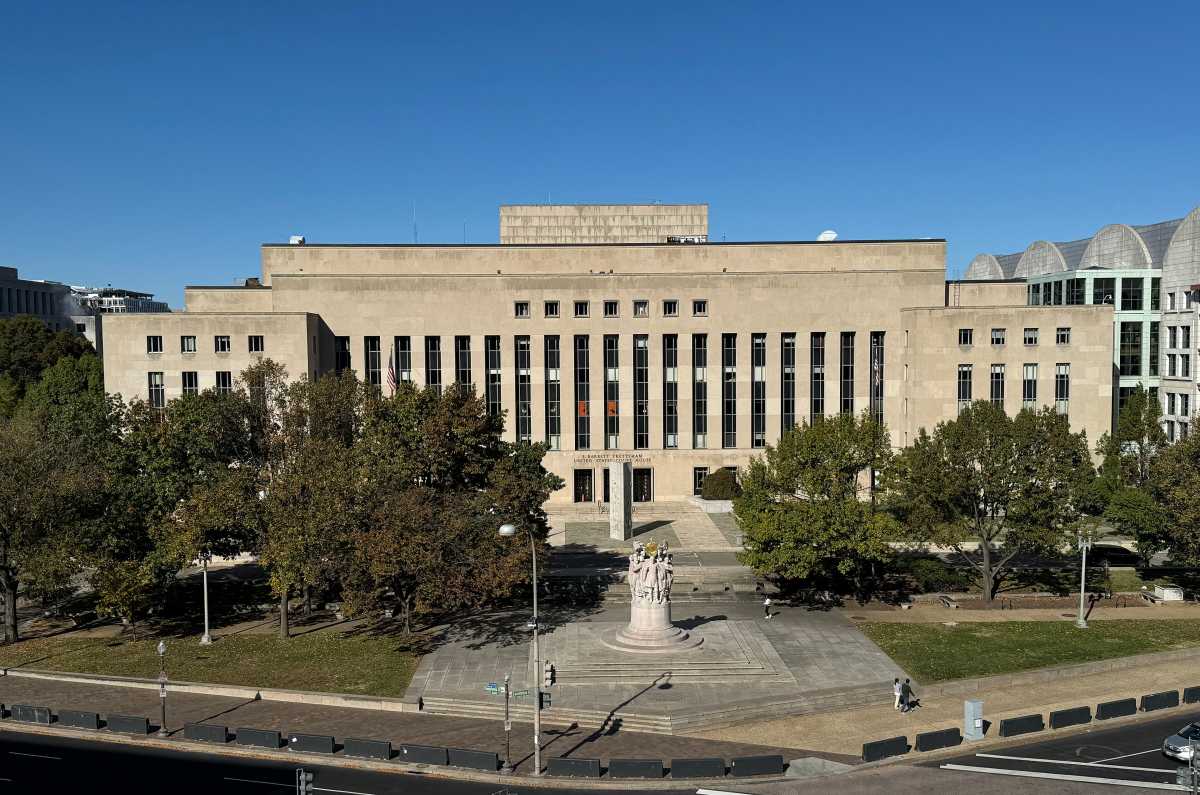
A sharply divided three-judge panel of the U.S. Court of Appeals for the District of Columbia issued a decision on June 1 upholding a preliminary injunction that District Judge Ana C. Reyes had issued on March 18, 2025, barring the Defense Department from discharging a group of transgender service members who sued to contest the Trump Administration’s policy against military service by transgender people. The vote on this issue was 2-1.
By a different 2-1 vote, however, the panel refused to uphold the preliminary injunction as it applied to transgender plaintiffs who were seeking to enlist. One member of the panel would have upheld the district court’s preliminary injunction completely, although restricted to the plaintiffs. Another member of the panel would have overruled the preliminary injunction completely. One needed a scorecard to figure this out.
Circuit Judge Robert Wilkins wrote the opinion for the first 2-1 majority, joined in part by Senior District Judge Judith W. Rogers. Writing separately, Judge Rogers explained why she was dissenting from part of Judge Wilkins’ opinion, as she advocated for extending preliminary relief to transgender persons seeking to enlist. Circuit Judge Justin R. Walker dissented, arguing that the court had no business ruling on military personnel judgments by the commander in chief and Congress, the political branches of government, about how to constitute the military.
Judge Walker embraced an extreme form of deference to military judgment even though, of course, the animating judgment here came not from the military but rather from the president and was clearly political, not based on any military knowledge or expertise.
Judge Wilkins carefully set out the full history, starting from the Obama Administration, of the issue of transgender military service. The starting point was a determination by then-Secretary Ashton Carter to relax existing bans and allowing transgender people to serve and/or enlist under specified circumstances. This culminated in a policy announced during 2016, a presidential election year, and the policy was specified to phase in from the end of 2016 until mid-2017, with the unvoiced expectation that Secretary of State Hillary Clinton was poised to win the presidential election and there would be a smooth transition of military leadership without any modification of this policy.
But after Donald Trump won, his newly-appointed Secretary of Defense, James Mattis, put a pause on implementing the Ashton Carter policy, and in mid-July, 2017, President Trump issued his infamous “tweet” barring military service by transgender people, followed by a memorandum from the White House fleshing out some details. This announcement purportedly caught military leaders by surprise, as they had made no preparations for implementation. Trump charged Secretary Mattis with devising an implementing policy under which the ban had some narrow exceptions and qualifications so that, among other things, some transgender people might continue to serve.
When Joe Biden took office in 2021, he quickly directed the Defense Department to revise its policy, resulting in opening up both enlistment and continued service by transgender people with few restrictions and with the Defense Department supporting those transitioning or needing medical support for maintaining their gender transitions. Biden’s approach to the issue was informed by his administration’s broad interpretation of the Supreme Court’s 2020 ruling in Bostock v. Clayton County, construed to bar government discrimination against transgender people.
This situation came to an abrupt halt when Trump took office a second time. From day one, his executive orders radiated contempt and disapproval of transgender people. As Judge Wilkins describes, “Denouncing transgender people and the whole concept of transgender identity as inconsistent with ‘biological truth’” in his day-one executive order, a week later Trump issued another executive order specifically directing the Defense Department to “implement his vision of ‘biological truth,” which his newly-installed Secretary, Pete Hegseth, did two weeks later, proclaiming that “expressing a false ‘gender identity’ divergent from an individual’s sex cannot satisfy the rigorous standards necessary for Military Service.” Echoing Trump’s executive orders, which had labeled transgender persons “as dishonorable, undisciplined, arrogant, selfish liars,” Hegseth decreed that all transgender service members be processed for discharge, regardless of their length of service, accomplishments in service, promotions and commendations, and to absolutely bar anybody who had ever evinced any symptoms “consistent” with gender dysphoria to be considered disqualified for service.
Two lawsuits were filed challenging these policies. In both cases, district judges granted preliminary injunctions blocking their implementation. One case quicky found its way to the Supreme Court, which stayed the preliminary injunction. The other, the Talbott case decided by the Court of Appeals on June 1, is at an earlier stage. Although Judge Reyes had granted preliminary relief, the Court of Appeals at first stayed her preliminary injunction upon the government’s motion while it considered how to rule on the government’s appeal, and, as noted above, remained split three ways about what to do.
The government considered the Supreme Court’s Skrmetti case from 2025 to be definitive on rejecting constitutional equal protection claims involving transgender people, but Judge Wilkins (and Judge Rogers) disagreed, finding Skrmetti distinguishable and not dispositive of this case. Whether the court applied heightened scrutiny or the less demanding rational basis review, they considered that the history of this issue and the language used by Trump and Hegseth in dealing with it showed that the motivation for this policy had nothing to do with unit cohesion, morale, or fitness for service, and that it was motivated by sheer animus against transgender people, which is never a legitimate basis for a discriminatory policy.
The Wilkins opinion, amplified by Judge Rogers’ opinion, knocked down all of the arguments mounted by the government, concluding that plaintiffs were likely to prevail on the merits when the district court reaches that stage of the case. They parted over their analysis of the other factors considered by courts when asked to award preliminary pre-trial relief in cases against the government. While they agreed that transgender people currently serving should be allowed to continue serving while the case is litigated due to the irreparable harm they would suffer from being abruptly discharged, they differed about whether the balance of harms was the same for those seeking to enlist. Taken together with Judge Walker’s dissenting contention that the court had no business interfering with this military policy, this meant there were two votes against giving injunctice relief to those plaintiffs who were seeking to enlist.
It was key to Judge Wilkins’ position that under the Biden Administration policy, transgender people had been serving in the military without any real difficulties, giving the lie to just about every pejorative statement that Trump and Hegseth made seeking to justify the exclusionary policy. As Wilkins noted repeatedly, the plaintiffs in the case had accrued together many years of creditable service, won many promotions, earned many citations for their service, and clearly did not pose any risk to the military, while their abrupt exclusion would actually harm the military by removing people in whom the government had invested considerable expense and effort in training, requiring considerable expense and effort to replace them. But Wilkins contended that because the same could not be said of the potential enlistees, this crucial element was missing from their case for preliminary relief. Rogers did not consider that to be crucial, finding that the arguments for denying enlistment were not supported by the record.
Judge Reyes’ preliminary injunction sought to block the challenged policies from any enforcement, but Wilkins and Rogers agreed that the Supreme Court’s recent “shadow docket” ruling on the birthright citizenship case disfavoring nationwide injunctions compelled limiting the preliminary relief to the individual plaintiffs. However, the court called for further briefing and consideration about whether to extend the injunction to protect all currently serving transgender personnel.
The government is likely to ask the Supreme Court to stay this ruling, the same way they gained relief in the other case challenging the trans service ban. Because Judge Wilkins’ analysis differed from the earlier case by finding strong evidence that the policy was motivated by animus rather than legitimate reasons, there was some hope that the conservative majority of the Supreme Court might splinter over a motion for a stay at this point, but it is difficult to predict with any confidence what the Supreme Court might do, other than to assume that trans litigants are high unlikely to get the votes of Justices Clarence Thomas or Samuel Alito. Some of the other conservatives might be in play on this issue.
Shannon Minter of the National Center for Lesbian Rights argued to the court of appeals on behalf of the plaintiffs in this case, backed up by an extensive legal team representing the various individual plaintiffs and submitting amicus briefs in their support, including attorneys from other LGBTQ rights groups. Twenty states joined an amicus brief in support of the plaintiffs filed by the attorneys general of Vermont and Washington.
Judge Wilkins was appointed by President Obama. Judge Rogers was appointed by President Clinton. Judge Walker was appointed by President Trump. District Judge Reyes, who issued the preliminary injunction that the government was appealing, was appointed by President Biden.