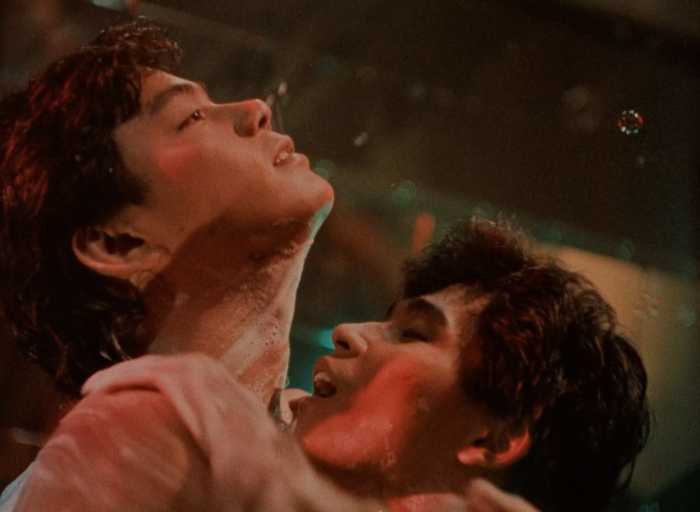
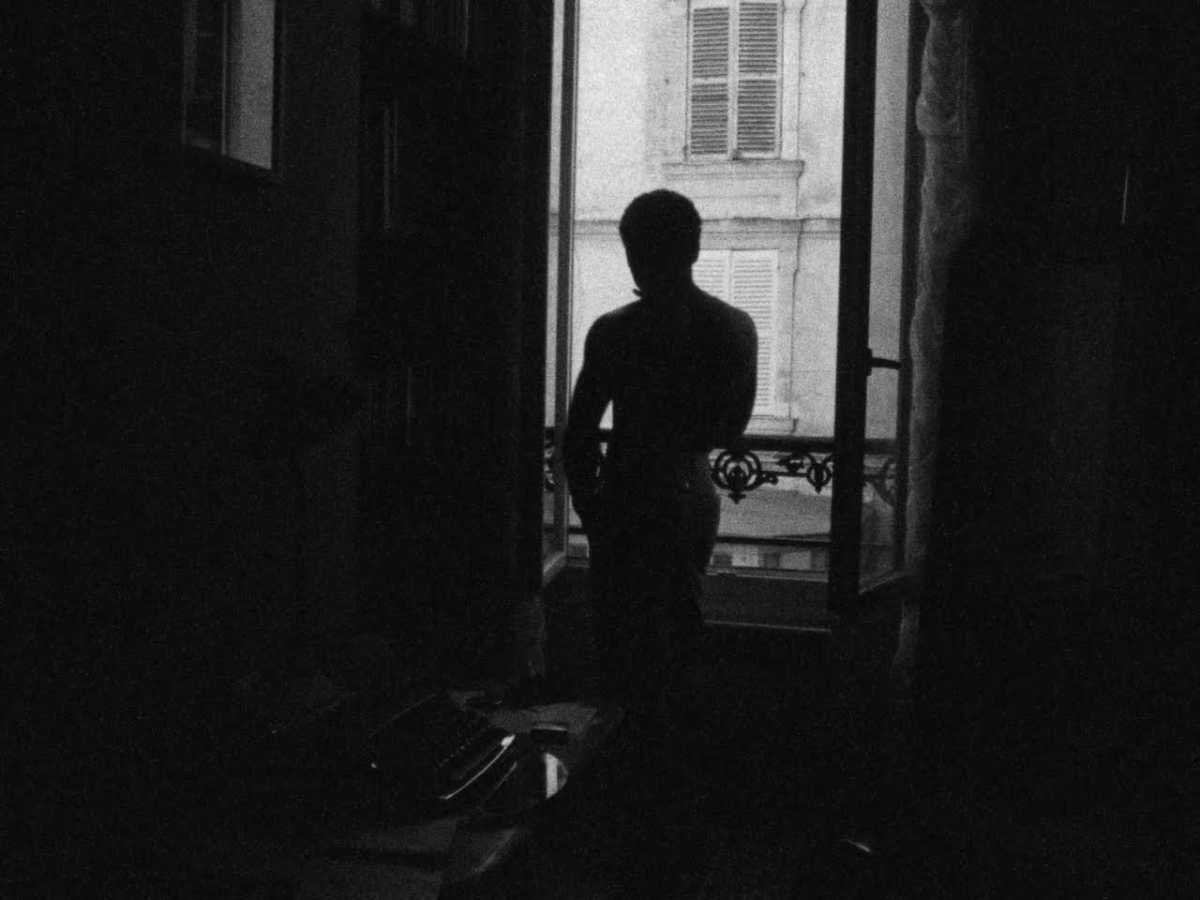
“Jimmy,” written, directed, produced, edited, and photographed (on Kodak film) by Yashaddai Owens, is an inventive, imagined portrait of James Baldwin in Europe.
The film opens in Istanbul with no real context. Viewers may surmise that Baldwin (Benny O. Arthur) is a tourist filming what he sees — a park, city streets, rooftops, birds flying in the sky, food vendors and musicians on the streets, and more. After ten plus minutes of this footage, which has a home movie vibe to it, Baldwin arrives in Paris.
This prologue, therefore, can feel superfluous, but it sets up the tone for the rest of the film, which mostly involves Baldwin being filmed in Paris as jazz music plays on the soundtrack. The year may be 1948 — since that was when Baldwin first went abroad — but during a scene of him walking through food stalls in an open-air market, the clothes and cars — and is that a Bluetooth in someone’s ear? — suggest a more contemporary period.
“Jimmy” eschews dialogue save a voiceover monologue at the end of the film, some untranslated French, and a brief conversation early on with a man driving Baldwin to his hotel. The driver asks Baldwin where he is from, and when the writer replies, “I just arrived from New York.” The man remarks, “I always wanted to go to New York,” which prompts Baldwin to admit, “I always wanted to leave.” This exchange gets at Baldwin’s dissatisfaction with America and sets up his reason for being in Paris.
But nearly 20 minutes have passed, and Baldwin has only arrived in his hotel room. There is a rule in cinema that if nothing happens in the first 20 minutes, nothing is going to happen, and that rule applies to “Jimmy.” Even with its brief running time of 67 minutes, this portrait will be an endurance test for most viewers because nothing much happens.
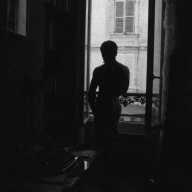
The “action” consists of Baldwin smoking on his balcony, or in bed. (The bed scenes are arresting given how his Black body is contrasted both with the white sheets and a black headboard that looks like bodies intertwined.) He eventually takes a bath. He writes in his notebook. He wanders the streets of Paris and goes into a store as well as a café. Baldwin eventually meets a guy whom he takes back to his hotel room. They play hide-and-seek in the hallways before fooling around in bed.
These episodes and the ones that follow are intermittently compelling. Owens’ camera invites viewers to share Baldwin’s experiences. The black and white photography is nice, but there are times where the screen washes out to white, probably more a function of the film stock and lighting than any real artistic meaning.
To his credit, Arthur gives an expressive performance, conveying the writer’s restlessness by shifting his eyes or his feet, but it is hard to know what Baldwin is thinking as he saunters down the street, or sits under a tree eating an apple. Not enough happens to provide any real insight. Yes, Baldwin appreciates beauty when he is in nature, and there is a calmness when he bikes through the streets of Paris experiencing a sense of freedom. But to what end?
“Jimmy” has Baldwin passively meandering in the shadow of the Eiffel Tower, or along the Seine. There are moments of him typing in his hotel room or writing in a notebook while sitting in a café while enjoying a cup of coffee. It is unclear if he’s writing a letter, penning an essay or short story, or making notes for one of his novels. And, ultimately, it does not matter.
In the film’s last ten minutes, Baldwin speaks in voiceover, and comments about pigeons “masquerading as if they’re doves.” This may be a clever analogy, but he makes a sharper point when he mentions having a blue passport “that proclaims I am a free citizen of a free country, and I’m not therefore, to be treated as one of Europe’s uncivilized Black possessions.”
Owens’ film could have used more striking moments like this that reveal Baldwin and provide a sense of his righteous outrage. The film’s visuals can only do so much lifting. Alas, the most dramatic thing that happens in “Jimmy” is when Baldwin runs out of cigarettes.
“Jimmy” was made in 2024, the 100th anniversary of his birth. On Aug. 2, after the 6:30 p.m. show, director Yashaddai Owens will be in conversation with Barry Jenkins to commemorate Baldwin’s 102nd birthday.
“Jimmy” | Directed by Yashaddai Owens. Opening July 31 at the IFC Center | Distributed by Strand Releasing.