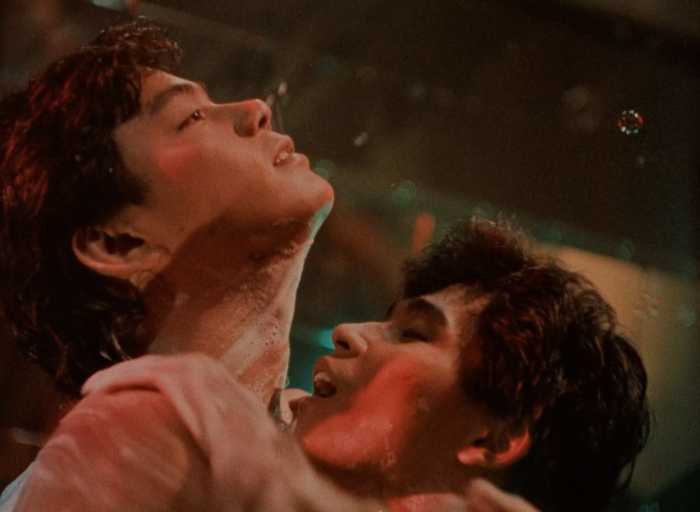

Early on in “Heartstopper Forever,” Charlie Spring (Joe Locke) looks at a photo of him and Nick Nelson (Kit Connor) from season one of the hit Netflix show, based on the comic by Alice Oseman. “We look like babies,” Charlie reminisces. “We were,” Nick calmly replies. It is one of many reflective moments in “Forever,” showing how far these characters have come.
Fans of the “Heartstopper” series have followed Charlie and Nick’s budding romance for three seasons now. Season one introduced the two, telling the story of how they become friends and secretly fall for each other. By the end of season two, they’re out and proud, officially dating, and navigating the next steps of their relationship. Season three kept the show’s trademark sweet wholesomeness, but allowed its characters to tread more mature themes – including mental health and eating disorders. The last season won Locke an Outstanding Lead Performer in a Preschool, Children’s or Young Teen Program Emmy Award for his performance as Charlie.
After rumors and speculation about whether or not Netflix would pick up the show for its final season, the streaming platform opted for a movie finale as opposed to an entire season, giving Nick and Charlie’s finale the gravitas it deserved. This final chapter opens with Charlie campaigning to be headboy at Truham School for Boys, seemingly with the full support of both his friend group and the majority of his classmates and teachers.
While Charlie is blossoming at Truham, Nick is preparing university applications, grappling with life after high school, and realizing he doesn’t know what he wants to do with his life. He takes up volunteering at an animal shelter. After two seasons of seeing Nick be Charlie’s anchor, watching Nick discover who he is was a welcome (if sometimes heartbreaking) change.
Outside of their academic lives, Nick and Charlie juggle their social lives. The movie juxtaposes over-the-top party scenes with intimate vignettes where the two dream up their futures together. “You’ll get a job as a rugby coach for two-year olds and I’ll be a famous historian,” Charlie quips. These may seem like silly scenes, but they are the confection-coated moments “Heartstopper” is known for. While previous seasons have used these intimate moments of queer joy as a balm for surviving the trials and tribulations of teenage angst, “Heartstopper Forever” dares to suggest that they are both the journey and the destination.
My one gripe about the movies-over-episode format is viewers get less time with the rest of the “Heartstopper” gang. Tara and Darcy in particular get minimal screentime. And while no character is omitted entirely, many have been reduced to brief cameos or one-liners. That said, Elle (Yasmin Finney), a trans girl who spent earlier seasons figuring out who she was — her art, her relationships, her place at a new school — has one of the movie’s most moving moments. When Charlie hesitates to join the town’s Pride parade, Elle pushes him. “I need you to come and march with me on Saturday because I’m fucking scared. The world hates me right now. The government is taking away my rights and everything we fought for,” she implores. “I just want to be myself.” The speech shows the harsher realities of life for queer youth. Given both the United Kingdom and the United States’ increased attacks on trans rights in recent years, this rallying cry is for viewers as much as it is for Charlie.
Another great scene that meets the moment of today involves a new character. While campaigning, Charlie meets Alfie, a young impressionable student who is being bullied by his classmates. It is hard not to recognize a younger Charlie in Alfie. Charlie doesn’t swoop in as some gay savior; he instead shows Alfie, the way Nick once showed him, that Alfie doesn’t have to go through it alone. “I know I can’t, like, cure the world of homophobia,” Charlie later bemoans as he recaps the encounter with Alfie.
This has always been the message of “Heartstopper.” No one person, show, or law for that matter is going to instantly give us queer liberation. But they can get us closer, even if it is step by step. When Gay City News reviewed the first season of the show, I noted how radical it felt seeing queer joy realized and expressed so freely. And watching the finale, it is still worth asking what it would have meant to grow up with a story like this one already told. What if we had seen stories about same-sex love and could have fallen in love that way – awkwardly but safely, not in closets but in daylight – all without having to invent the template ourselves? “Heartstopper” doesn’t just tell a queer love story; it lets queer adults borrow a youth many never quite got to have, while handing today’s queer youth a map we didn’t know we needed. That’s the show’s real achievement.
So, can first love really last forever? Does everyone get a happy ending? “Heartstopper Forever” doesn’t pretend these questions have easy answers, but it doesn’t overly belabor the points either. The movie closes not with a grand gesture but with something smaller and harder-won: the quiet realization, for Nick and Charlie both, of how great they actually are, together and apart. As a series finale, it doesn’t chase spectacle, and it doesn’t need to. It ends the way the show always worked best – gently, generously, and sure of itself. “I love knowing that we have tomorrow,” Nick says. By the time the credits roll, you believe he means it.
“Heartstopper Forever” | Available on Netflix