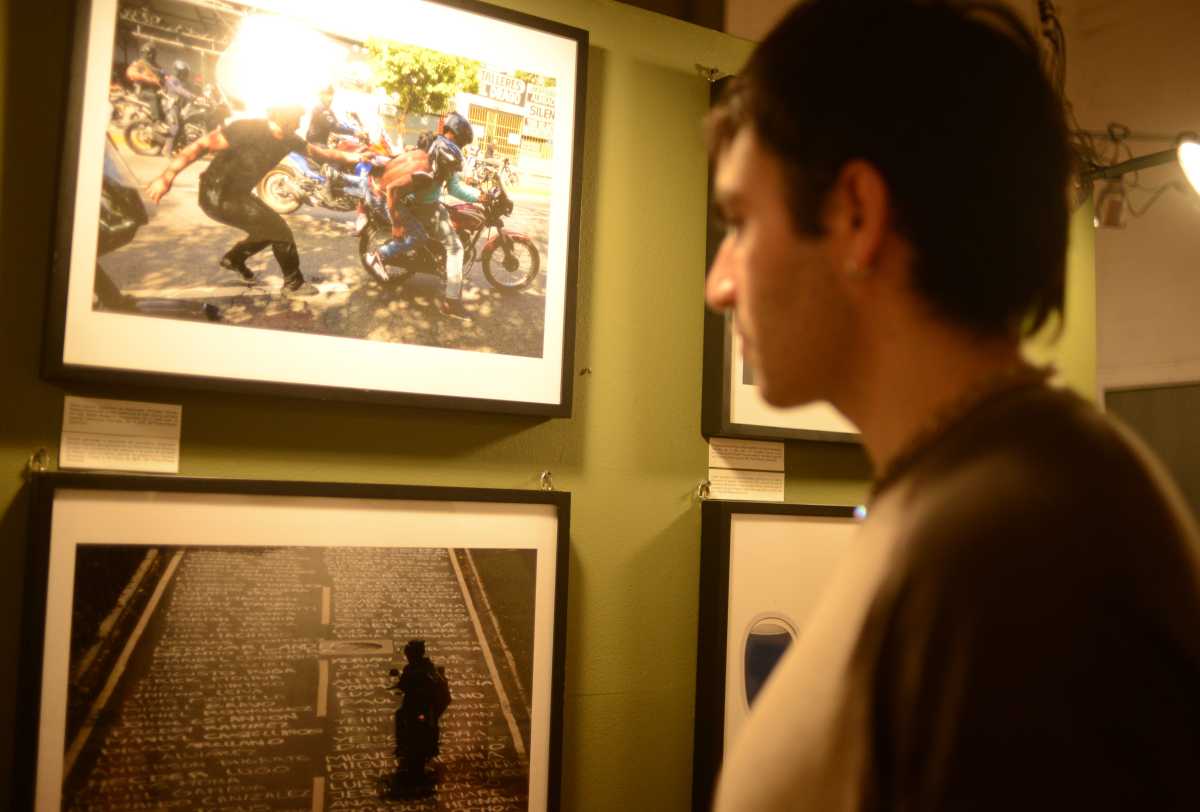
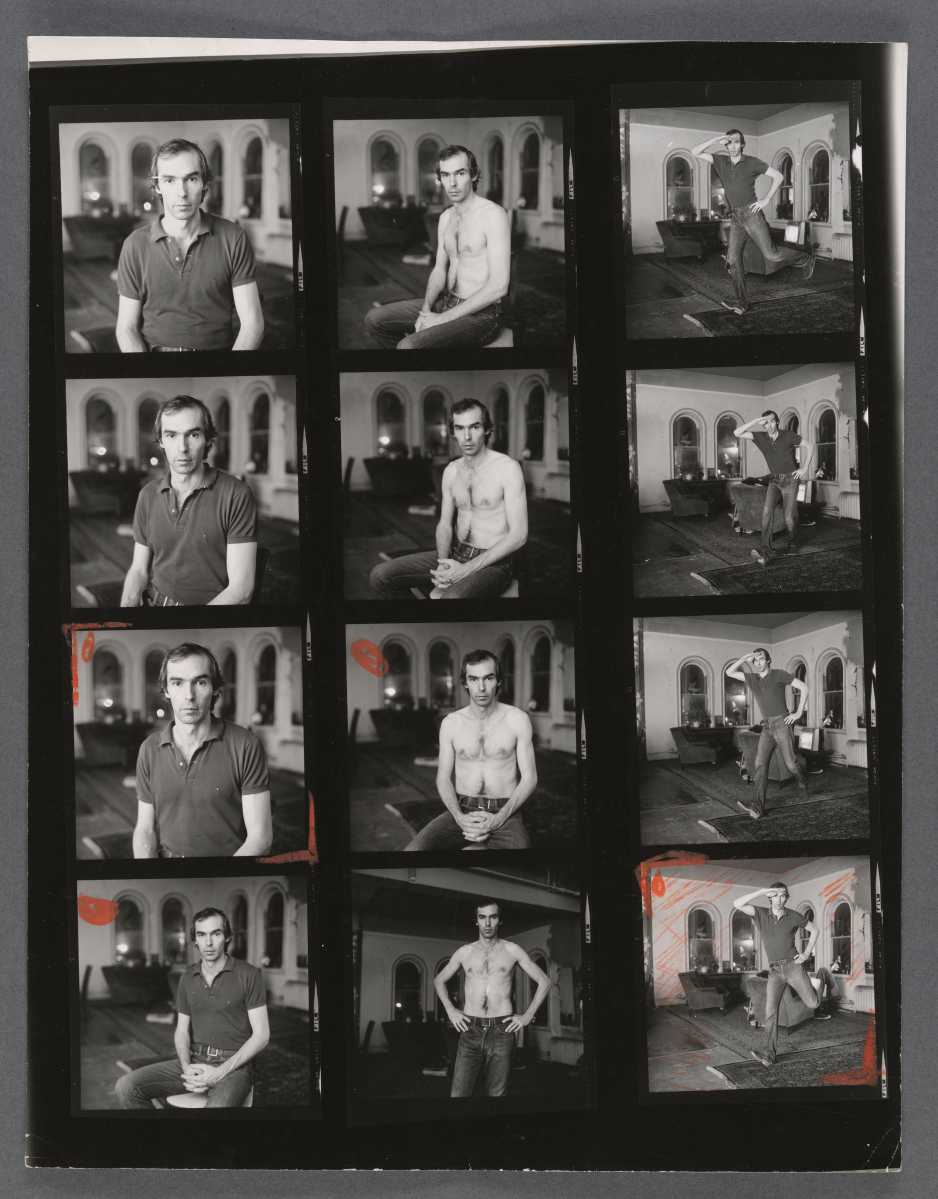
The gayest show in town may be on the walls of the Morgan Library & Museum (through Oct. 23), which has mounted an exhibit of the work of the gay photographer Peter Hujar.
Hujar, born in 1934, worked steadily and in a class by himself from the 1960s until his death in 1987 at 53, only nine months after being diagnosed with HIV.
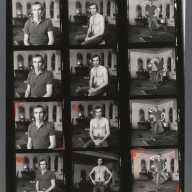
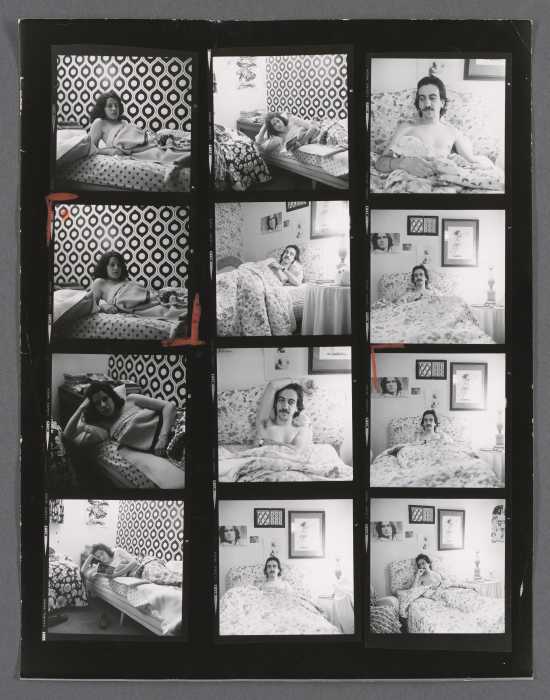
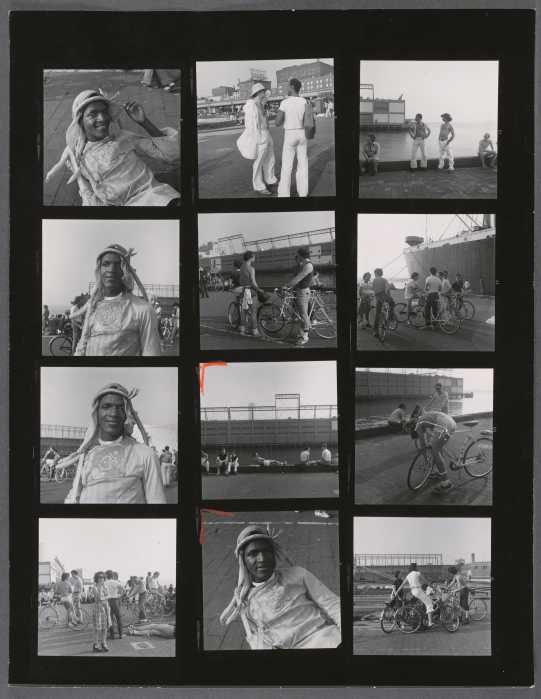
In HUJAR:CONTACT, Joel Smith, Richard L. Menschel Curator and Department Head of Photography at the Morgan, has organized 110 contact sheets and 20 enlargements of his work. In these photos, Hujar lives— as do many ghosts of the counterculture that was his element. It is an intimate look at a lost New York (with international detours) and a tribute to his eye as an artist and to his singular focus on the outsiders of his day — many of whom are now household names and some of whom went on to fame and fortune.
Hujar is having more than a moment now. Last year, it was Ira Sachs’ film starring Ben Wishaw as Hujar in the indie hit “Peter Hujar’s Day,” recreating a day in New York in 1974 with his friend Linda Rosenkrantz (Rebecca Hall). Sachs said the movie was “a film about what it is to be an artist among artists in a city where no one was making any money.” Hujar apparently died broke, but the richness and importance of his visions live on. Collections of his work are now in top US and European museums.
As early as 1963, he was training his eye on the macabre Capuchin Catacombs in Palermo, Italy, but most of the work was done in New York.
In 1967, he shot “Jay and Fernando” — two leather men in biker outfits — passionately making out years before the liberation of Stonewall.
Hujar had a special eye for the gender non-conforming. He photographed the drag artists the Cockettes in 1971 and their star, Fayette. He shot Warhol superstar and drag artist Jackie Curtis in 1970 — and took a surreptitious shot of Curtis in her coffin in 1985 at her wake.
There’s Charles Ludlam’s Ridiculous Theatre company in their dressing room in the Village in various stages of undress.
In 1973, he did a series of photos of trans Candy Darling, another Warhol star, looking vulnerable but still fabulous in a hospital bed. (She died in 1974.)
Included are photos of his friends lounging in bed: Fran Liebowitz — at home in Morristown, New Jersey in 1974 — and then “underground filmmaker” John Waters before they were famous. He photographed Andy Warhol reading the paper that same year when he was already world famous.
There’s Marsha P. Johnson looking serene on the Hudson piers in 1976 — piers that Marsha either jumped or was pushed from and from which her ashes were scattered in a public funeral in 1992. Hujar also captured the sexiness of those crumbling piers — the intense cruising and the art/graffiti that festooned the walls.
There are numerous self-portraits of Hujar — often nude and many looking right at us, inviting our gaze. (He had studied with the legendary portrait artist photographer Richard Avedon for a time.) Hujar may be the only person on Wikipedia whose profile photo is of him in nothing but a jockstrap — the book cover of “Peter Hujar: Love and Lust.”
While he did not do much overtly political work, he was the rare photographer who caught the spirit of gay liberation in the wake of the 1969 Stonewall Rebellion, capturing the joy of 17 men and women of the Gay Liberation Front — including his then-boyfriend Jim Fouratt — in what became an iconic poster called “Come Out!” used to promote the first Christopher Street Liberation Day March in June 1970.
Hujar met artist David Wojnarowicz in 1980, becoming lovers for a time and then a mentor to him — a fertile time creatively for them both. Wojnarowicz was a frequent subject of Hujar’s work, often displaying a steady and stern gaze at a world gone wrong. Wojnarowicz himself died of AIDS in 1992, leaving behind an equally stunning body of photos, canvases, and searing poetry.
There’s much more here. Hujar projects a love for his subjects. There is no attempt to sensationalize their images or to focus on the grotesque the way photographers such as Diane Arbus and Vivian Maier often did. Come see for yourself. It is rich photographic art — and history.
More info on the exhibit here. The Morgan Library & Museum at 225 Madison Ave. at 36th St. is open Tuesday, Wednesday, Thursday, Saturday, and Sunday from 10:30 a.m. to 5 p.m., and Friday from 10:30 a.m. to 8 p.m. Admission is $25 for adults, $17 for seniors, $13 for students, and $13 for visitors with disabilities (with free admission for accompanying caregivers). Admission is free to all on Friday evenings from 5-8 p.m., but advanced registration (available one week in advance) is required here.