“Macho Dancer” yearns for real emotions in a world where everything is transactional. Gay Filipino director Lino Brocka’s 1988 film, currently being re-released, treats sex work as a space to examine the worst extremes of capitalism. Brocka set himself against the Marcos regime, engaging in off-screen activism, and although “Macho Dancer” isn’t his most overtly political film, it emanates from a deep concern for poor people. In “Macho Dancer,” anyone’s capable of exploitation: women and gay men harm each other. Still, their worst behavior is encouraged by political corruption and neo-colonialism.
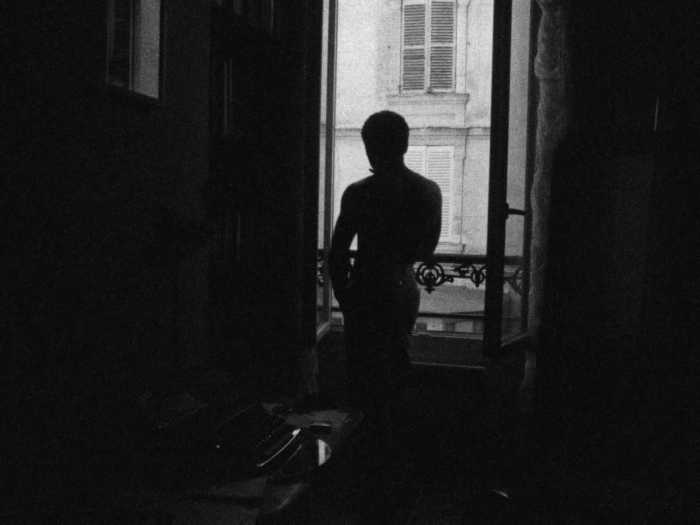
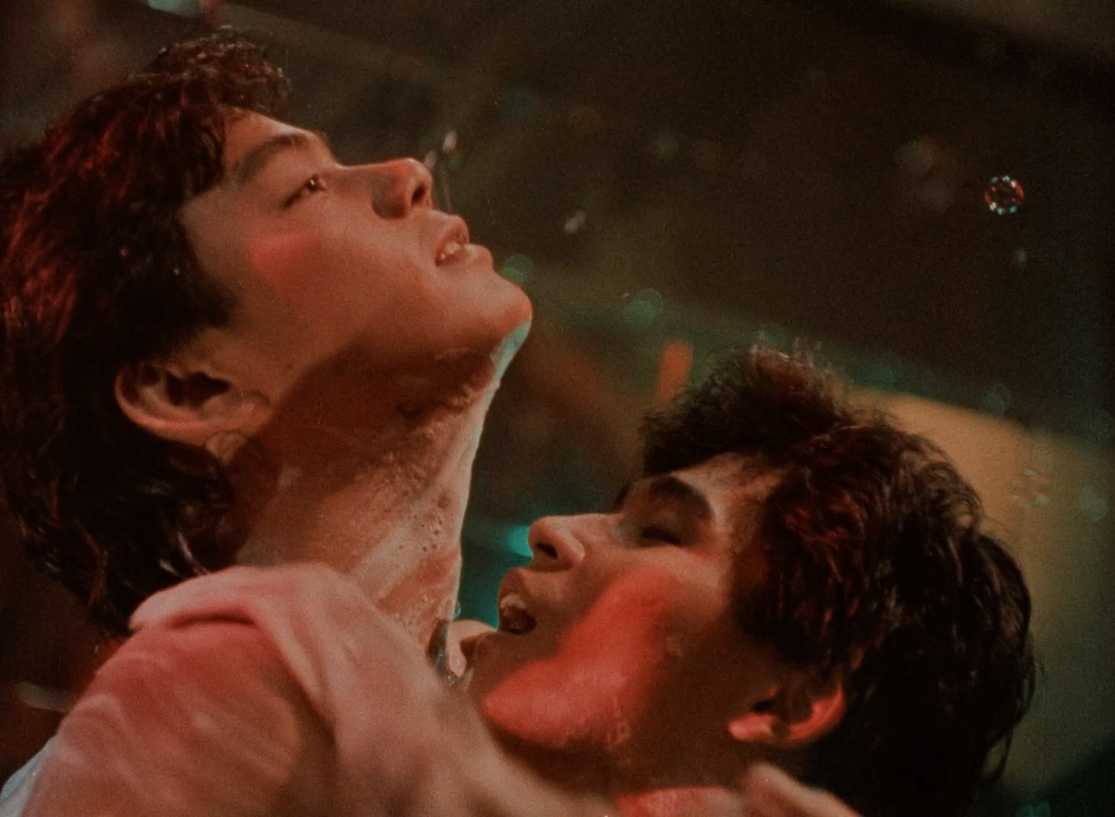
“Macho Dancer” works within a familiar story: A young person who moves to the city to make money and finds himself in danger. Even in a small town, poverty has driven Pol (Allan Paule) into the arms of an American soldier who pays him for sex. He helps support his family, who knows about this arrangement. Since his client will be leaving the Philippines, he needs a new source of money. A friend suggests that he move to Manila. Pol gets hired by Mama Charlie’s, where “macho dancers” dance in their underwear, cover each other in soap and water and even masturbate onstage. Although these actions are illegal, the club stays in business by paying off a corrupt police officer. Pol begins to find a new circle of friends among Manila’s sex workers. He moves in with Noel (Daniel Fernando), who’s frantically searching for his missing sister in the city’s brothels. He also falls in love with Bambi (Jaclyn Jose), the first woman with whom he’s ever had sex.
“Macho Dancer” was heavily censored by the Filipino government, who objected both to its gay sex scenes and the murder of a cop, but its current release is the uncut, 133-minute version smuggled out of the Philippines. During Brocka’s lifetime, his films played in competition at Cannes, and he’s continued to inspire Filipino filmmakers. Bong Joon-ho and Sean Baker have praised his work. Although “Macho Dancer” made it to US theaters and video stores in 1989, only in the last decade has Brocka become a known quantity to American cinephiles. “Insiang” and “Manila In the Claws Of Light” are part of the Criterion Collection, and Kani Releasing dropped a Blu-Ray of “Bona” last year. Brocka died when he was just 52. Despite his early passing, he was able to direct 68 films, beginning 1970. Many have circulated online in cruddy VHS dubs, often unsubtitled. At last, his status as an auteur finally seems set in the US. A restoration of his 1974 “Weighted But Found Waiting” is in the works.
A description of the entire plot of “Macho Dancer” would sound impossibly pulpy. (It’s kin to Paul Verhoeven’s “Showgirls.”) Brocka depicted poverty without treating his characters as noble victims. If Italian neo-realism (and its descendants, like Ken Loach and the Dardenne brothers) became European cinema’s main method of speaking about people abandoned by their society, Brocka amplifies melodrama, rejecting the respectability of arthouse tradition. Naturalism mutates into soap opera, while remaining believable and grounded in real situations and locations.
In one of the final scenes of “Macho Dancer,” Bambi lets a flurry of tears loose while acting more hardened and emotionless than she actually is. This is the cost of survival in Manila. Brocka’s style leans heavily into this milieu’s ugliness. The colors of Mama Charlie’s clash, casting a heavy red glow over the audience. Mon Del Rosario’s score is straightforwardly romantic, but it also creates a distancing effect. A sex scene’s live sound drops out so that xylophones and strings can swell to underline it.
As oppressive as the characters’ lives are, queerphobia isn’t a major problem for them. Described as a drag queen, Mama Charlie might now identify as a trans woman, and her club’s bouncer is lesbian. Misogyny is harder to avoid. Much of the market for sex work comes from tourists: none too subtly, the film lays out a pay-to-play dynamic between Filipinos and visitors from the US, Europe, and Japan. At worst, its indictment of their desires has its cake while eating it too, denouncing objectification while the camera lingers endlessly over nude bodies. But in the end, it’s interested in the prospects for rebellion. “Bona,” the best Brocka film I’ve seen, stages a revenge fantasy in which a poor girl rises up against an actor who treats her as a maid rather than a partner. Similarly, “Macho Dancer” looks for solutions to widespread economic inequality.
“Macho Dancer” | Directed by Lino Brocka | In Tagalog with English subtitles | Kani Releasing | Opened July 10 at IFC Center