Yelena Goltsman, who moved to New York City from Kyiv 35 years ago, once approached her rabbi to express frustration about the lack of a Russian-speaking LGBTQ community in southern Brooklyn.
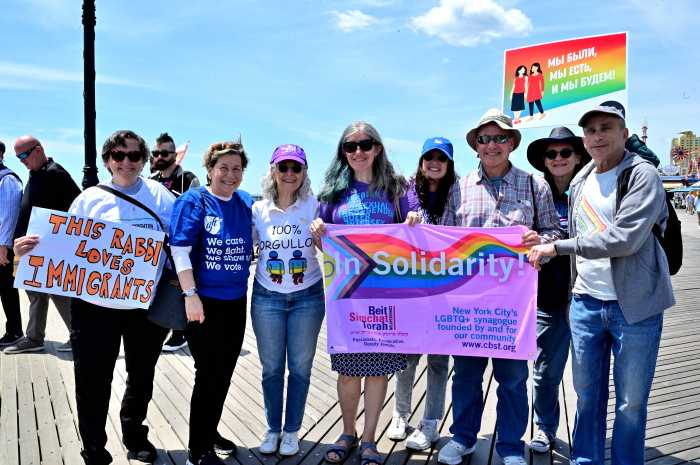
Goltsman’s rabbi, Sharon Kleinbaum of the LGBTQ-based synagogue known as Congregation Beit Simchat Torah, responded as straightforwardly as possible.
“She spoke to me and said, ‘There are Russian people out here looking for each other, looking for community,’” Goltsman said. “Go do something about it.’”
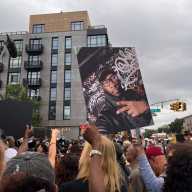
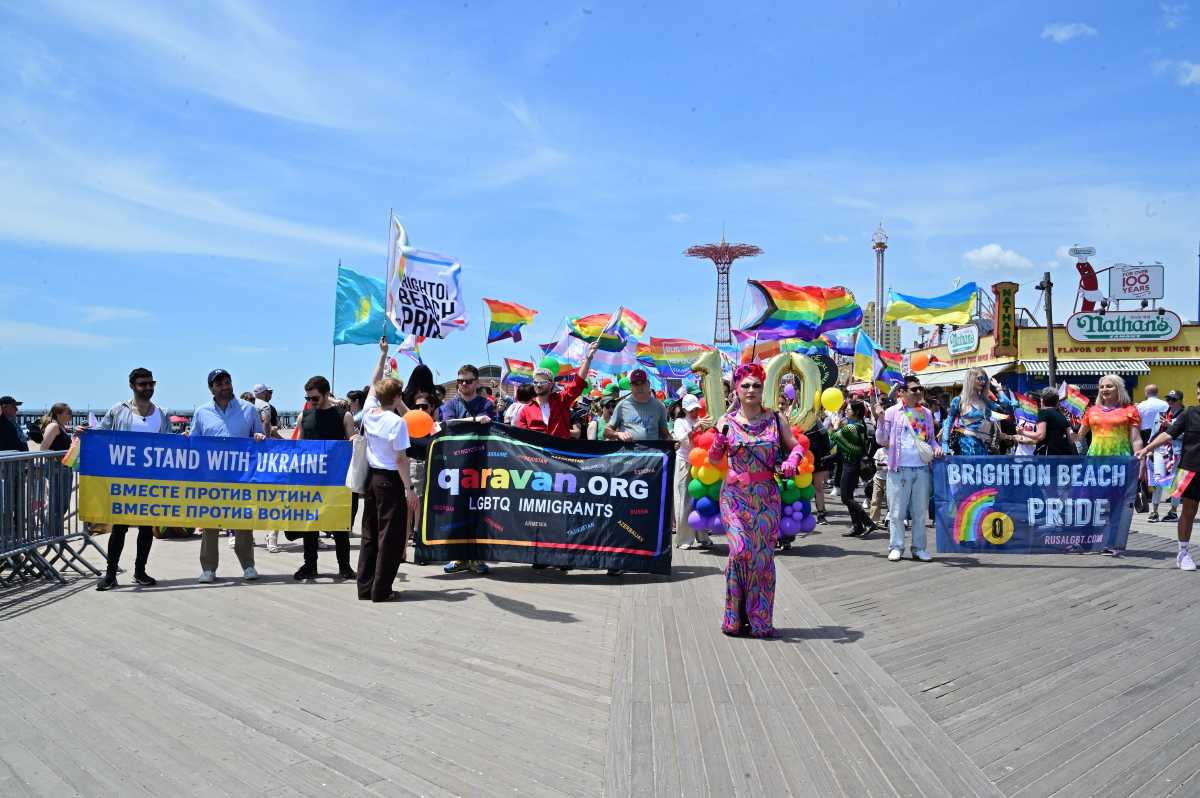
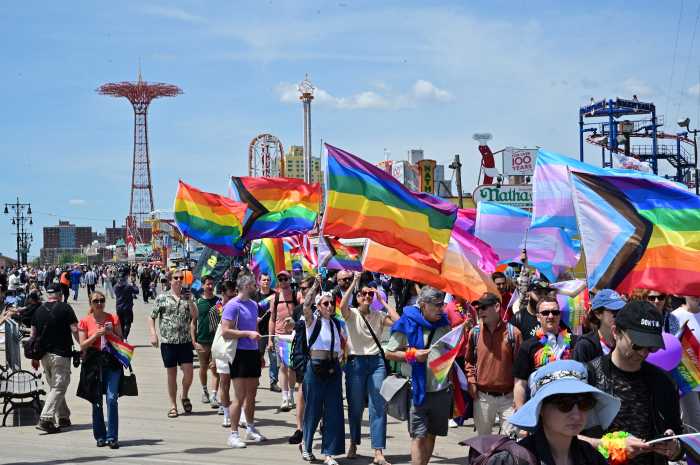
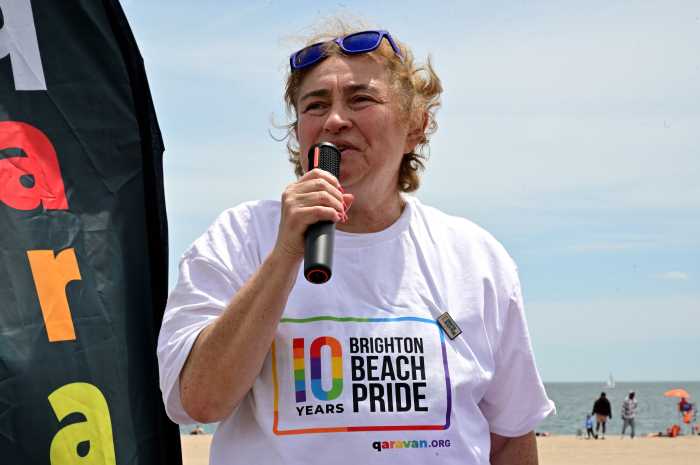
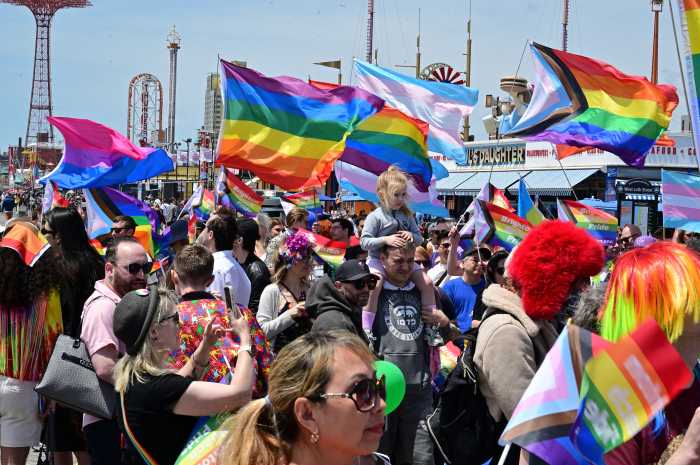
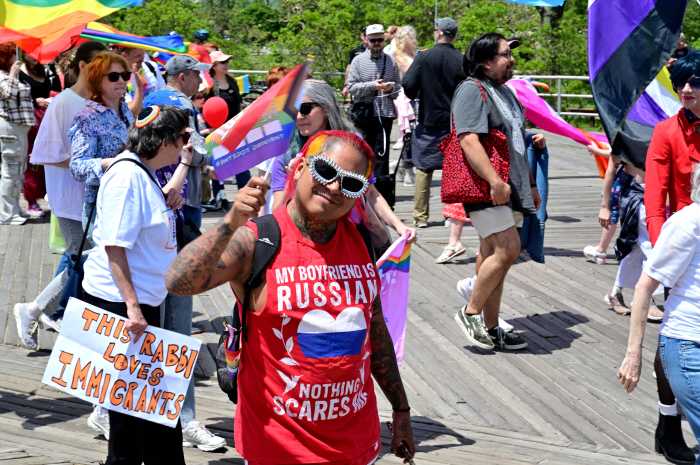
That’s exactly what Goltsman did — and evidence of that was on full display along the Riegelmann Boardwalk on the afternoon of May 31 at the 10th annual edition of Brighton Beach Pride, which attracted hundreds of people who marched from Coney Island to Brighton Beach along Brooklyn’s southern shore.
Nearly two decades ago, Goltsman and others banded together to create what is now known as Qaravan, a non-profit organization primarily composed of Eurasian LGBTQ Russian-speaking immigrants from Russia and other parts of the former Soviet Union. In 2017, the group’s visibility reached new heights when it hosted the first annual Brighton Beach Pride — a risky and explosive move in an otherwise sleepy, conservative part of Brooklyn’s southern coast.
Nevertheless, the queer Russian-speaking community of southern Brooklyn remained defiant and has returned to the boardwalk year after year to celebrate the community and send a message to the local neighborhood that queer people are just as part of the local fabric as any other neighbor.
“When we say ‘we’re here to stay,’ we mean it,” Goltsman told the crowd at a post-march rally on the boardwalk.
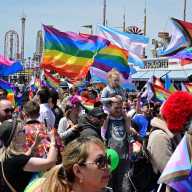
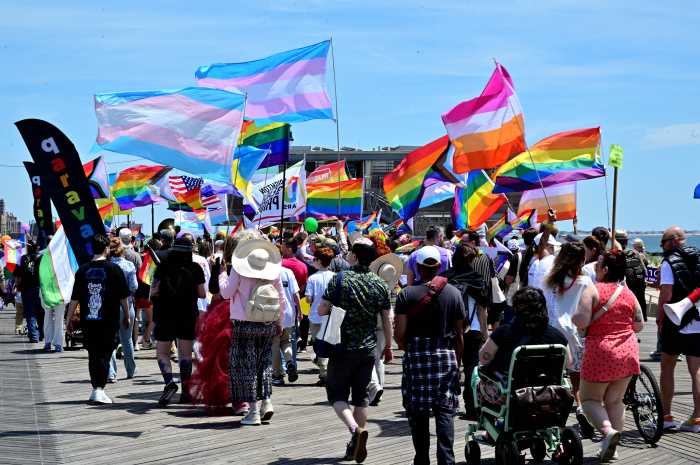
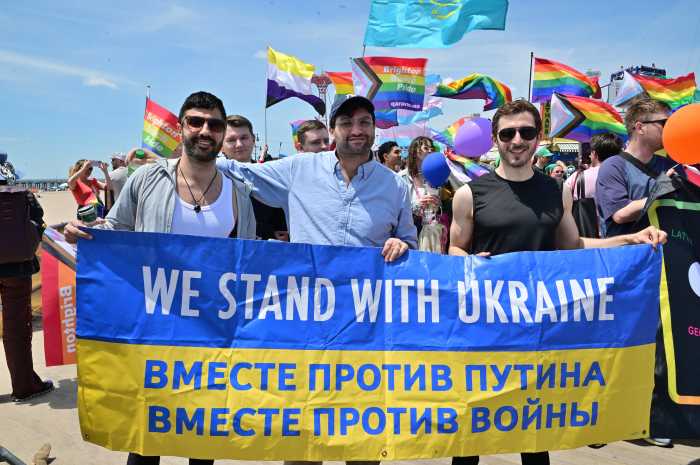
Like in past years, the Brighton Beach Pride march brought a sea of flags representing different parts of the LGBTQ community and Eastern Europe, including the classic Rainbow Flag, the Progress Pride Flag, the Trans Flag, the non-binary Pride Flag, and the Ukrainian Flag.
Criticism of Russian President Vladimir Putin and the anti-LGBTQ actions of the Kremlin have been recurring themes at the march. However, one change has been evident in the display of flags at the march: Russian Flags were front and center at the march through 2021, but they disappeared after Russia invaded Ukraine in 2022. Those flags have overwhelmingly been replaced by Ukrainian Flags, and the southern Brooklyn neighborhoods of Brighton Beach and Sheepshead Bay have been filled with pro-Ukrainian and anti-Putin attitudes throughout the Ukraine war.
One attendee, Gleb, accompanied by his family, said he and his family moved to the United States from Russia 10 years ago. He told Gay City News that he shows up almost every year to stand in solidarity with the community. He also attends the main NYC Pride March in June and attended WorldPride in Washington last year.
“Diversity has to be in this world,” Gleb said. “We’re going to stay with them. There is no more important thing than different opinions and different people. It’s important to help the community, and we support them.”
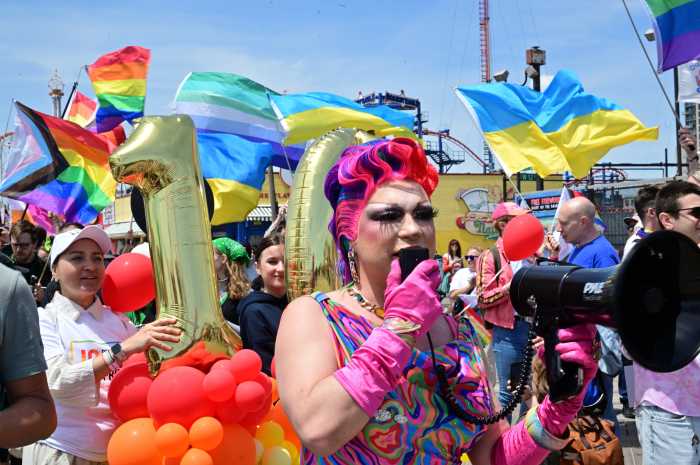
Drag artist Svetlana Stoli, who has lived in New York for the last 13 years, led the way at this year’s march and delivered remarks during the post-march rally.
Like in the past, immigration was among the top issues of the day at Brighton Beach Pride, where multiple speakers noted that they knew of individuals who would have otherwise attended the march but could not show up out of fear of Immigration and Customs Enforcement (ICE), which has faced widespread criticism for aggressively ramping up its attacks on immigrants, journalists, and everyday citizens in the second Trump era.
Relatedly, some speakers brought up the actions of repressive governments and the ways in which those — like the one in Putin’s Russia — wield power to sabotage LGBTQ rights.
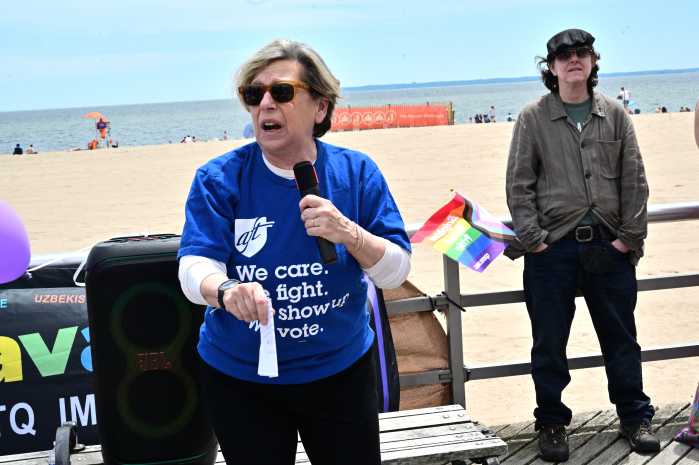
“We stand on the shoulders of so many people who have struggled in authoritarian dictatorships for the freedom of LGBTQ people to live freely, for the freedom of Jews and other minority religions to live freely, and the ability to create and sustain our communities without authoritarian dictators,” said Kleinbaum, who is now senior rabbi emerita following her 2024 retirement.
Kleinbaum said fascist regimes tend to target three groups first: immigrants, women, and LGBTQ people.
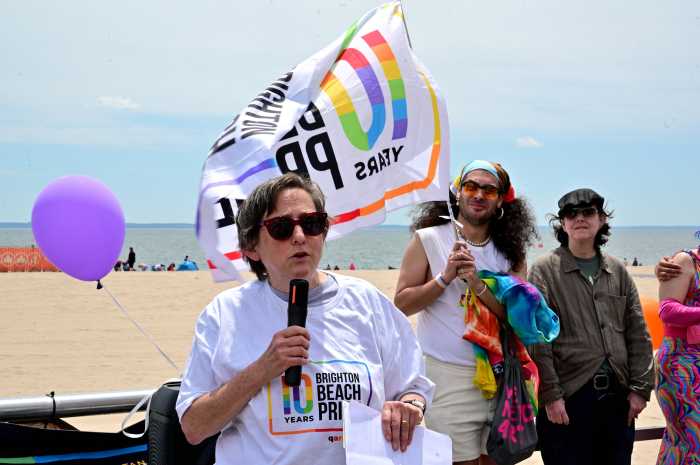
The post-march rally featured several other speakers, including Kleinbaum’s wife, Randi Weingarten, who is the president of the American Federation of Teachers; activist Adam Eli, who founded Voices4; and journalist and filmmaker David France.
France discussed his work in creating the 2020 documentary “Welcome to Chechnya,” which exposed the anti-gay attacks in the Russian region of Chechnya. France said there are still many individuals stuck in safehouses in Russia — and just one individual has been brought to the United States.
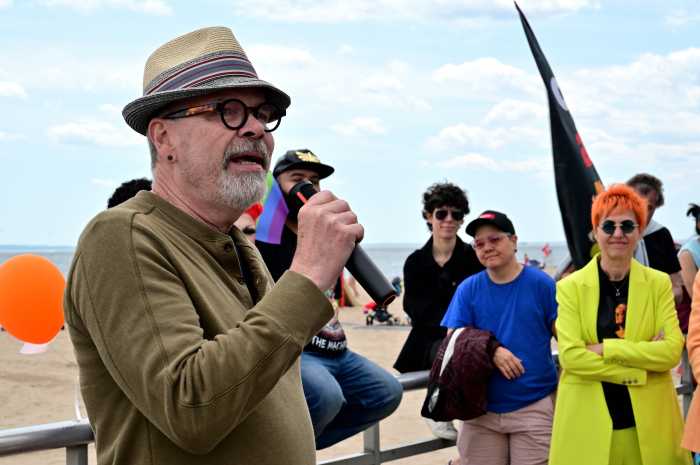
“It has been almost exactly nine years since the Chechen government formally declared a liquidation campaign against LGBTQ citizens in there, and it’s literally the first and only time since Hitler’s Germany that a government began to round up gay people with stated intent to cleanse the blood lines of queerness,” France said.
Goltsman, reflecting on the last decade of Pride in Brighton Beach, told Gay City News after the rally that the local community has grown accustomed to the march.
“The first year, people on the Brighton boardwalk were not utterly opposing us,” Goltsman said. “They weren’t welcoming, either. And every year, we get more and more support.”
When asked about the most pressing issues facing the Russian-speaking LGBTQ community, Goltsman underscored the fear of immigrants who are facing a hostile Trump administration but cannot return to the repressive environment in Russia.
“These asylum seekers — they are oppressed, beaten, and their rights are non-existent in the former Soviet Union,” Goltsman said. “They are unable to come to the US and ask for asylum. And the asylum seekers here now are afraid that their legal rights will be taken away. We know enough people that were stopped in coffee shops, driving their trucks, being out and about, going to their asylum interviews — they will be grabbed from the street and thrown in detention.”
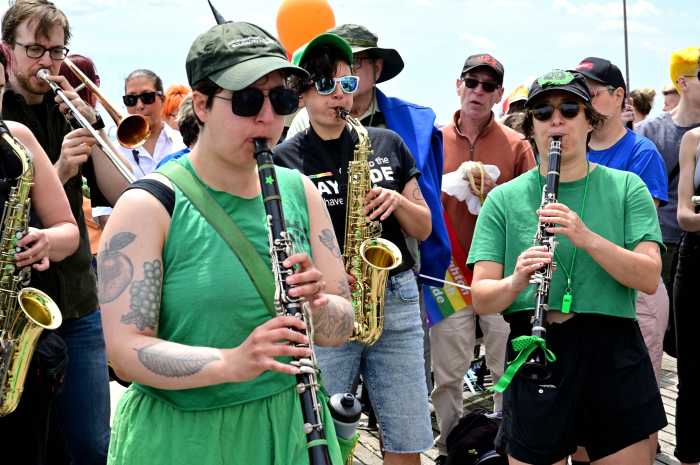
Near the end of the rally, the protest marching band Rude Mechanical Orchestra gave a special performance — and the event concluded with a rendition of Lady Gaga’s “Born This Way.” No elected officials appeared to attend the event, but a representative from State Senator Jessica Scarcella-Spanton’s office provided Brighton Beach Pride with a Senate proclamation.
Following the afternoon rally, attendees made their way to two separate after-parties: one at the Stonewall Inn in Manhattan and another one at The Red Doors Bar and Grill in Coney Island.
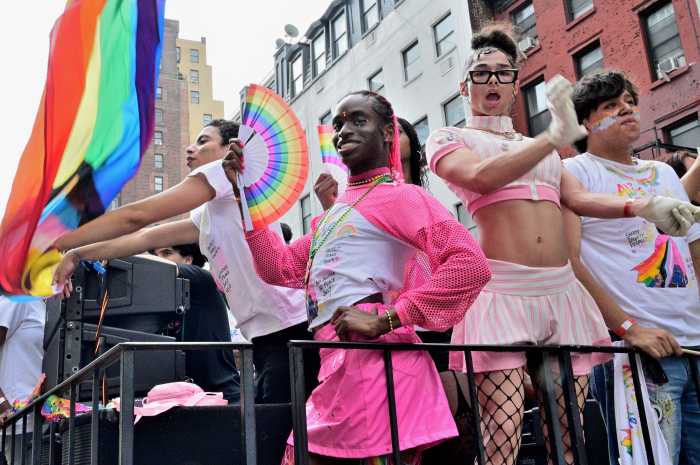
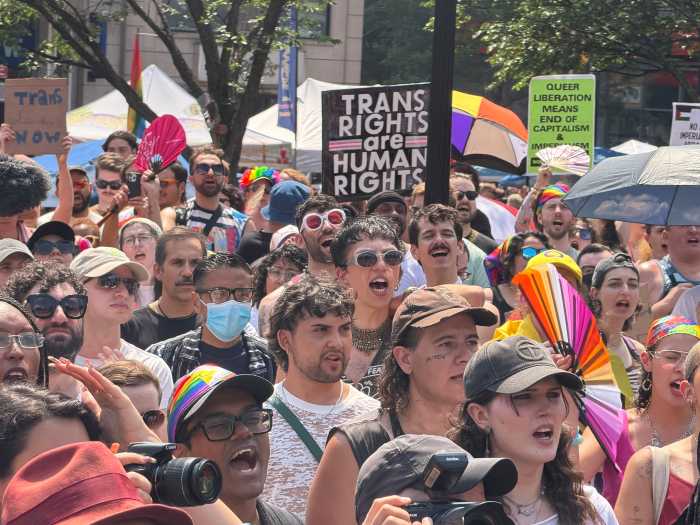
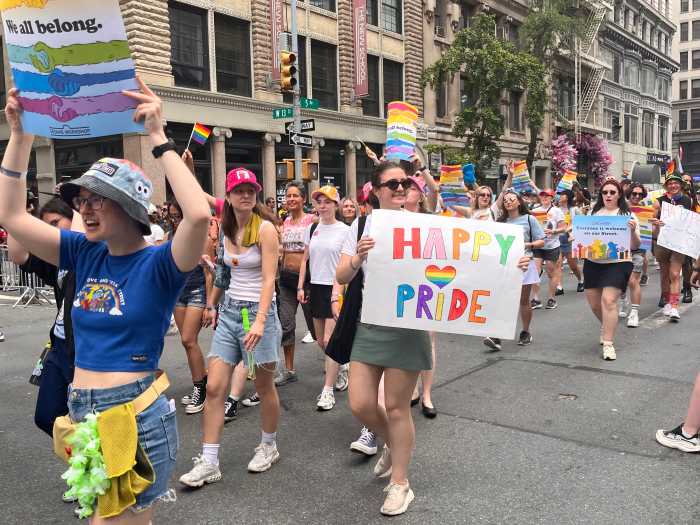
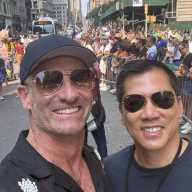
See some photos below:
View this post on Instagram