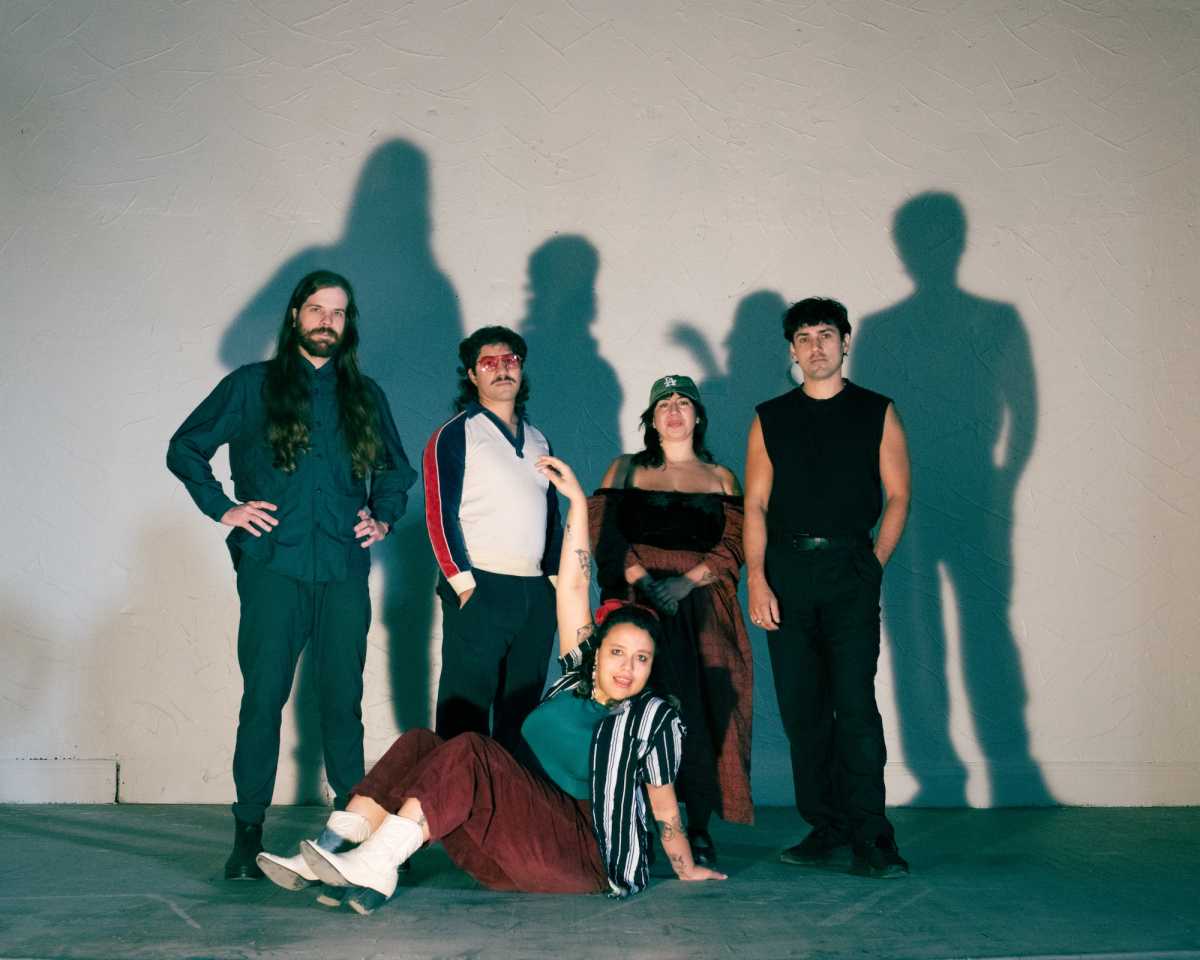
This month, Gay City News lends an ear to new albums by gay country singer Andrew Sa and punk band Downtown Boys, who include several queer members.
Downtown Boys | “Public Luxury” | Sub Pop | June 26th
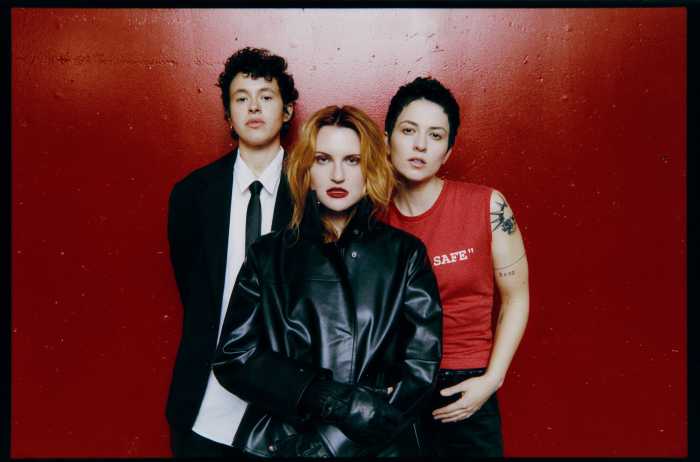
A year into the first Trump administration, Downtown Boys’ “A Wall” raged against the self-serving cruelty it epitomized. But after following their 2017 album “The Cost Of Luxury” with a soundtrack to Susanna Nicchiarelli’s “Miss Marx,” the band vanished. I assumed they had broken up, although they never made a statement about it. They walk it like they talk it: singer Victoria Marie has worked as a union organizer and public defender. Deep into an even worse political environment, they’ve finally come back with their third album.
“No Me Jodas” lights the fuse of “Public Luxury.” To a greater degree than it was in 2017, singer Victoria Marie’s choice to alternate between English and Spanish is a political statement in and of itself. (Four of this album’s songs are performed in Spanish.) Paradoxically, Spanish-language music is more popular than ever in the U.S., while ICE rampages against Latinx immigrants. “Sirena” and “No Me Jodas” draw on Marie’s family heritage. Inspired by Los Dandys’ “Gema,” Marie summons her late grandmother as a model and places photos of her in the latter’s video.
Invoking X-Ray Spex, Romeo Void and early Roxy Music, Joe DeGeorge’s saxophone is as crucial to Downtown Boys as guitar and drums. The band swaps surf music licks and scratchy rhythms. They bring the early B-52s’ spirit of queer playfulness, heard in the handclaps and synthesizer of “Sirena, ” into angrier sounds, while holding on to the importance of pleasure. Although no less impassioned, “Yellow Sun” is slower and more tuneful than most of “Public Luxury” “Viva La Rosa” accelerates towards hardcore, and “You’re A Ghost” forges cyborg punk.
Seth Manchester and guitarist Joey La Neve DeFrancesco’s production makes Downtown Boys sound bigger than they ever have. They beef up the band’s sound without toning anything down. Their “No Me Jodas” videos espouses their communal spirit: shot at the Jade Bar, it invites Alvaro Paulino’s mariachi group into the performance. “Public Luxury” hoists up an enormous tent, finding reasons for hope and calling on the audience to join the protest.
Andrew Sa | “American Rough” | Bloodshot | June 26th
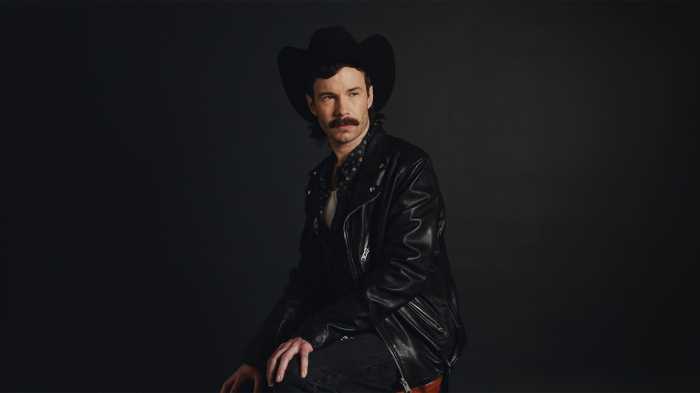
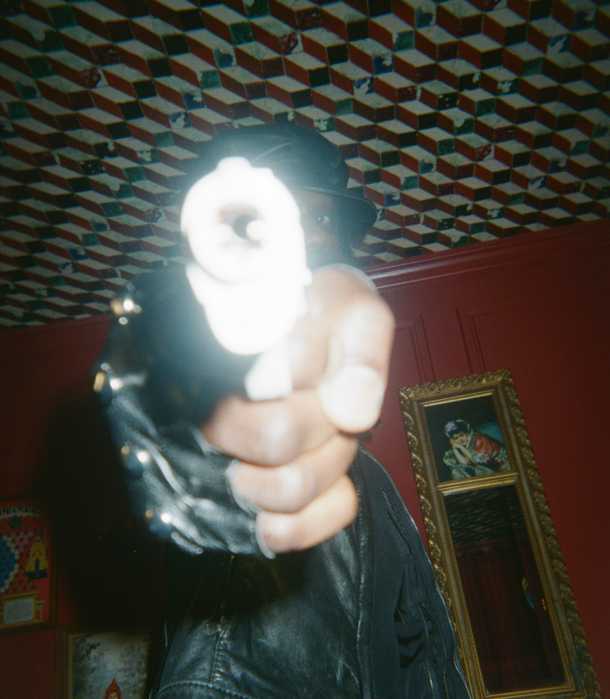
Andrew Sa’s version of masculinity does not seek to dominate anyone. His image speaks as loudly as his music. The cover of “American Rough” pictures him as a cowboy, but one without any macho pretensions. His cowboy hat and mustache resemble a ‘70s “clone.” He smiles as a hand grasps his face. He shot a series of live videos at the Leather Archive & Museum, singing under an enormous Tom Of Finland drawing. Taking on such signifiers, he introduces a dimension of fragility.
While “American Rough” is Sa’s debut album, he’s been traveling towards it for more than a decade. After his beginnings as a folk singer, he embraced country music, deciding to use it to express his queerness. Finding a home as a musician in Chicago, he became a regular in the Cosmic Country Showcase. As heteronormative as the genre’s mainstream is, he pays tribute to its queer byways with “Lavender Cowboy.”
“American Rough” reclaims ‘50s and ‘60s country, while incorporating jazz and pop influences. Its tasteful arrangements are simultaneously spare and lush. On “Follow,” strings and a rolling snare drum push the song forward. The arrangements include hidden subtleties, like the violin scrapes of “Your Whisper,” as a saxophone provides counterpoint to Sa’s voice. Lesbian country singer/songwriter H. C. McEntire co-produced the album, providing backup vocals on three songs.
Sa’s voice is graceful, almost androgynous. He sings with a campy wink, testifying “I’ll never be a saint/you turned me on.” In the hands of marketers and influencers, vulnerability has become an empty slogan, but “American Rough” truly lives it out. If the title of “Under You” implies sexual innuendo, the lyrics detail a different form of submission: devotion so strong that his lover’s absence feels like the sun setting. He asks “Do you recall exactly who I am?” In a very upfront manner, Sa’s love songs are heartfelt.
“American Rough” is rather soothing, with tempos that don’t break a sweat. It lays out its emotions openly and honestly, avoiding the competition men (even if we’re queer) so often act out. Sa boils the banality out of love songs, extracting their essence.