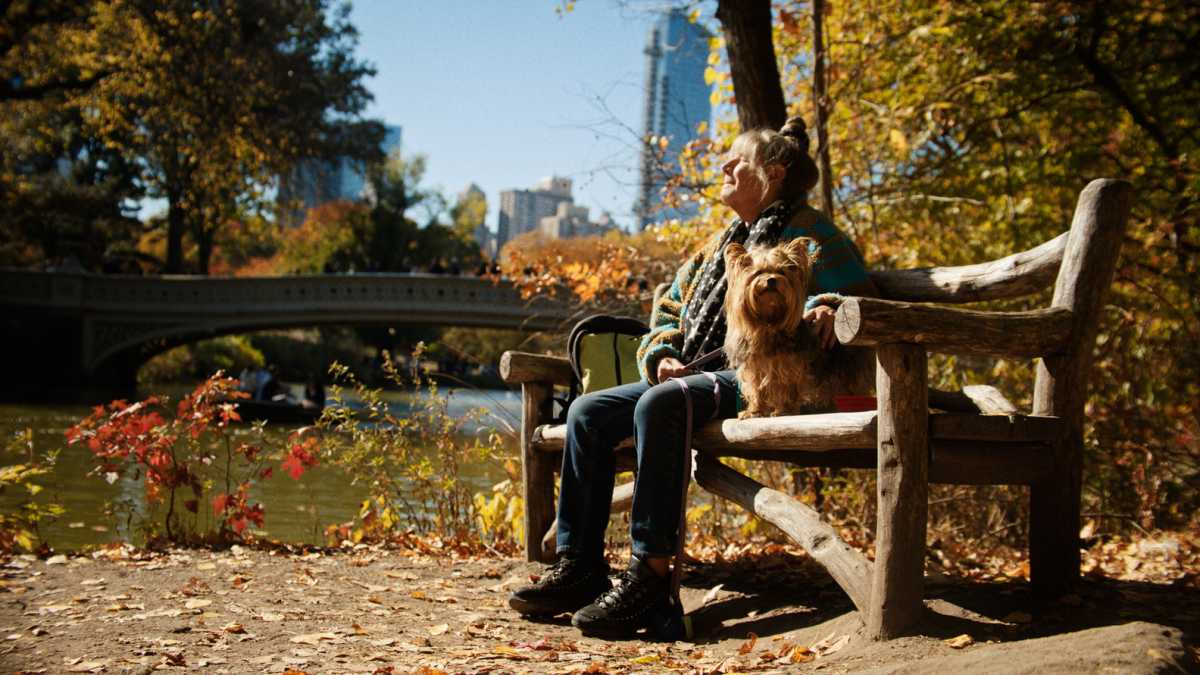
Robin Byrd is a New York institution. The bisexual, sex-positive, free speech activist, businesswoman, former porn performer, and queer ally hosted, wrote, produced, and directed her eponymous TV show on Manhattan Cable’s Channel J from 1977 until 1998. It was a landmark program that featured audience call-in, taught safe sex during the AIDS epidemic, and had guest hosts like fan Sandra Bernhard. Each episode ended with the guests dancing to the song, “Bang My Box,” which Byrd, wrote and performed, ‘natch.
The new documentary, “Bang My Box,” premiering June 30 on HBO, is just like Robin — sweet and slightly raunchy. The film celebrates its creator’s life and career as she plans to archive her work. Co-directors Jyllian Gunther and Stephanie Schwam tell Byrd’s story through contemporary footage and interviews with Byrd and her husband, Shelly, at their Manhattan apartment and their house on Fire Island. Clips from her TV show illustrate how she connected with audiences and the gay community. “Bang My Box” also shows Byrd’s fight for free speech when she was part of a federal lawsuit when there was a crackdown on obscenity.
Byrd, along with directors Gunther and Schwam, talked with Gay City News about making “Bang My Box.”
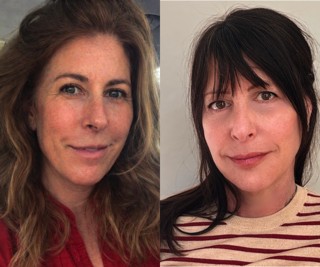
Jyllian and Stephanie, where did you first hear about or see Robin Byrd and decide to make a film about her?
Jyllian Gunther: I watched her as a child in New York City. I knew all about her and Steph visited New York with her mom and watched Robin on TV when her mom left the hotel. We got an education and had the idea to make the film. We got in touch with someone who knew her and set down for lunch with Robin. Robin interviewed us — she had been asked many times before — and we had a connection.
Robin Byrd: They were women. Many men came to interview me or wanted to do a documentary with me.
Jyllian Gunther: We love telling stories and Robin is the perfect subject for us. We love verité and she was a beautiful presence in the present. They had this amazing archival collection and story that coincided with so much history. Robin had the perfect combination of our interests. Issue driven and emotion driven. She had it all.
Robin Byrd: It was a synergy. Absolutely.
Stephanie Schwam: The heart of the film is a beautiful love story. It’s representative of what Robin stood for, the idea of love. When we set out to make the film, we didn’t know Shelly [Robin’s husband] and this long-term love story. To be able follow that and gain Robin’s trust enough for her to let us film with Shelly was a big deal.
Jyllian Gunther: When we discovered Robin, we had no idea of the impact she had in the queer community and people discovering their sexuality or her first amendment fight. These were things we discovered as when we got to know her and her story. It was an instinctual thing. It was amazing to learn all the things we’ve done. We set up a “Byrdwatcher” hotline for people to call in and tell their stories as an homage to her show. And we got calls that were so emotional — heartbreaking stories of how much she meant to people.
Stephanie Schwam: One of the first shoots we did was Robin on Fire Island judging “Drag Attack,” the ugliest drag queen contest. A man walked up to me and was farklempt. He said, “I was around in New York City when for me as a gay man, having sex felt like a death sentence. I felt utterly alone and utterly unseen. And for me to turn the channel on and watch [Robin’s] show made me feel less alone, and less scared.” It was very real and emotional. That was a big moment that reinforced what we discovered. She was creating an impact.
Jyllian Gunther: She created a queer space before there was an online community, and you could be connected. The interaction—you could call Robin. She was a precursor to social media.
Stephanie Schwam: This other idea when we discovered how they turn on the show on at Julius’. It was like this is how straights watch sports in the sports bar! But the “Robin Byrd Show” is the sport. They were yeah-ing and booing the dancers like they were their teams.
Jyllian Gunther: They are not just watching for the sex, they felt like they belonged somewhere.
Robin Byrd: It was very campy, and lighthearted and sex-positive in a world where people were dying and people were negative about sex—the Meese Commission, and what I call the “Immoral Minority.” It was a place to be light and fun and create fantasy and relaxation before you went to sleep at night. I told you to scrub your teeth and use your rubbers. Dental care and love and warmth through the television.
Jyllian Schwam: Robin really talks from her heart. She’s reacting and acting to things that are happening in the moment. We called her an “accidental activist.” She coincides with so many movements that were happening.
The film is very much about her legacy, and you entwine three strands—her show, her activism, and her archive. Can you talk about your approach to telling her story?
Jyllian: Going from past to present was a way of figuring out where to start. When Robin got the letter from Annie Sprinkle, we could use that notion of looking into her archives, which is how we start the film. We tried to find organic ways to segue between the past and the present and how one informs the other until they meet up at the end. This question: What is Robin doing now? is part of the segue, and the film shows her caring for Shelly, who took care of her.
Stephanie Schwam: Something that was important to us, outside of getting the historical stuff right, was this idea we weren’t manufacturing things to follow. Robin said, “I want to take Shelly back to [their former home] to see if I can jog his memory. Or I go and celebrate my birthday at Serendipity every year.”
Robin Byrd: Everything about this film has been organic and very spiritual and very esoteric. Every little thing that popped up had a meaning. I’m happy about how it turned out. I am connected to my purpose. We can all connect to our purpose if we stop and listen and sit with it. I believe the universe gives us what we need when we need it. And it certainly happened with this film.
There are many fabulous clips of Robin. How did you determine what clips to showcase in the film?
Stephanie Schwam: That was a nightmare to be honest. She has 600 freaking tapes! The tapes are ¾”, so you can’t play the tapes. We had to “bake” the tapes and if it hasn’t fallen apart, you can look at it. And it is a really expensive process, so we had to pick and choose and back our way into the people and stories that were important. Not all of the tapes were dated or labeled so we had figure out the year. We transferred 40 tapes and were choosy and use what we transferred.
Robin, you have long had a very strong connection to the gay community. Can you talk about that?
Robin Byrd: I always say I am trisexual; I’ll try anything sexual. But I am bisexual and for many years, when I was on the show, I would mention the Gay and Lesbian Community Center. And one day it struck me, why can’t they have the Gay and Lesbian and Bisexual Community Center? Now we have Gay Lesbian Bisexual Trans, IA+++ I believe everyone has a right to be whoever they want to be as long as they are not hurting anybody. The connection is love.
You said, “Giving the love you wanted.”
Robin Byrd: Giving love gets love and getting love gives loves back in return. It’s as simple as that.
Jyllian Schwam: When we think about Robin’s childhood and her leaving home and finding her own chosen family, that is a very common thing in the queer community. There was a sympatico. Relating to a community that was choosing each other.
Robin Byrd: Exactly. It’s a unity of human beings. I don’t put labels on people. I understand gay, straight, but it’s being who you should be. I think we are all born bisexual and it is parents and society that push you into that envelope or stereotype—and I hated stereotypes. My show is a product of that.
I appreciate that you have an end sequence of Robin, now 70, walking naked on the beach. What prompted that moment? I liked Robin’s ambivalence and feeling conflicted about that request.
Stephanie Schwam: It’s this idea of aging. I don’t think anybody gets out alive grappling with that stuff — even a person who spent a lot of their life unclothed. Robin talked in the film about her body changing. Robin, who is body- and sex-positive, is still thinking about and wrestling with that. It makes it more human and realistic. It was our idea to suggest that. Robin is often naked off camera and on the beaches. We thought, how nice would that be? But there is a difference being naked on the beach at 70 versus being naked on camera. We wanted to put in her ambivalence. That was important. As soon as we shot it, we thought that might be a great ending.
Jyllian Gunther: That was one of the first days of shooting on Fire Island with her.
Robin Byrd: They wanted me to walk through the “Meat Rack” naked. [laughs]. I would have, but I didn’t think it was right at the moment. I had to think about it. People remember me having a pretty hot body and being thin and young and their fantasy. You are only as good as the last thing you have done.
Stephanie Schwam: But people also remember you as someone who embraced every body.
Robin Byrd: That’s why I said, “What am I, a hypocrite?” Because I’m not!
Stephanie Schwam: More important than showing Robin looking the same — and no one looks the same as they did — it was more important to show Robin’s own journey with self-acceptance.
Jyllian Gunther: We’re female filmmakers and that scene was important for us. We need role models. She was [naked] off camera, so it mattered to us. It was moving for us that she hesitated and then did it anyway. It gave us a sense of freedom. Her role has been so much about giving people freedom to be who they are. It was moving for us in that moment, and it was a must include if she was okay with it — and she was.
“Bang My Box: The Robin Byrd Story” | Directed by Jyllian Gunther and Stephanie Schwam | Available June 30 on HBO