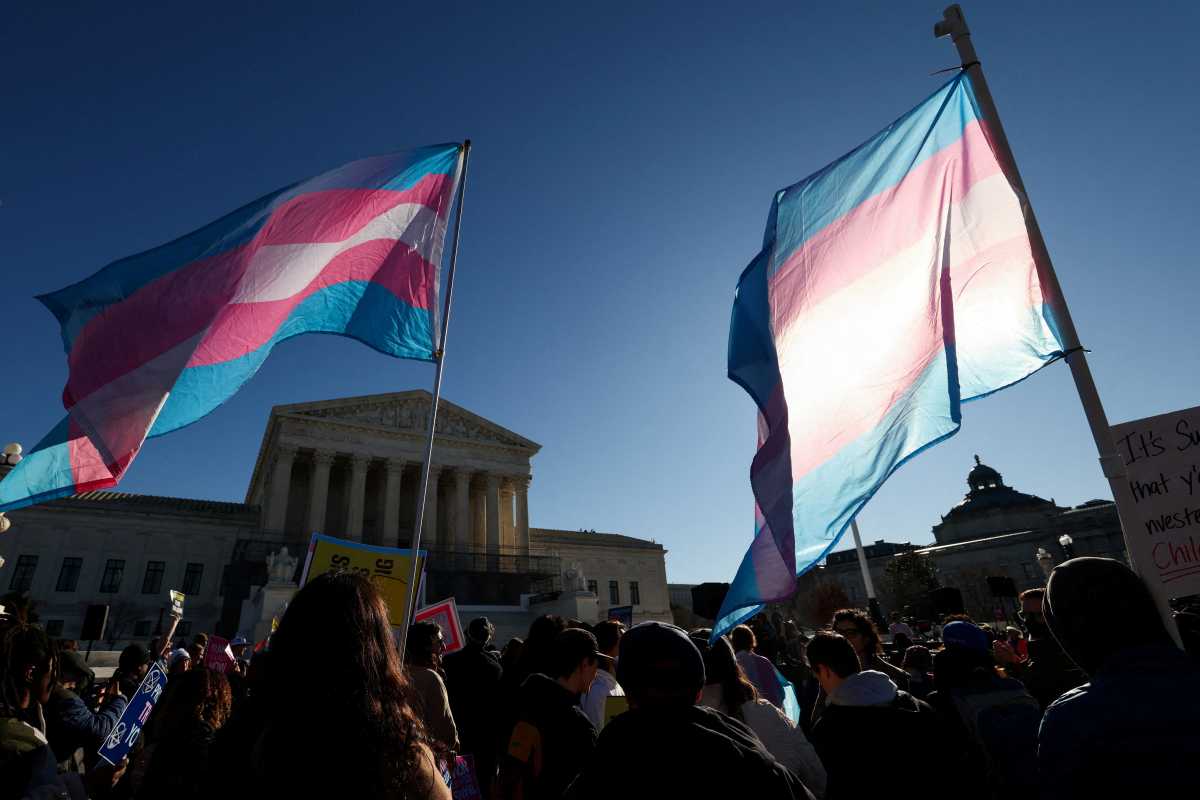
As predicted by many observers based on the Supreme Court’s Jan. 13 hearing, the court ruled on June 30 that state laws limiting participation in women’s school sports to what the court describes as “biological women” do not violate Title IX of the Education Amendments of 1972 or the Equal Protection Clause of the Constitution’s 14th Amendment.
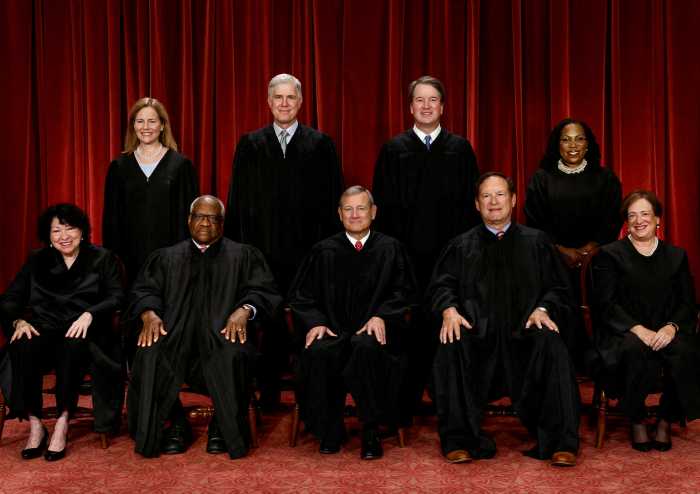
Justice Brett Kavanaugh, an appointee of President Donald J. Trump, wrote the opinion for the Court, which was joined by Chief Justice John Roberts, and Justices Clarence Thomas, Samuel Alito, Neil Gorsuch and Amy Coney Barrett, and in part by Justices Sonia Sotomayor, Elena Kagan, and Ketanji Brown Jackson.
The Court unanimously concluded that the West Virginia and Idaho statutory bans on “biological men” competing in women’s sports do not violate Title IX. However, the three liberal Democratic appointees joined in a partial dissenting opinion by Justice Sonia Sotomayor, an appointee of President Barack Obama, contending that the court should have returned the Equal Protection issue to the US Court of Appeals for the Fourth Circuit for further fact-finding before reaching a conclusion on the Equal Protection challenge. Justice Jackson also wrote a separate partial dissent.
Justice Kavanaugh was careful to specify the limited nature of the Court’s ruling in a footnote to his opinion.
“As the plaintiffs, the States, and the United States as amicus curiae all agree, these cases [from West Virginia and Idaho] do not present the distinct question of whether, under Title IX and the Equal Protection Clause, schools may allow biological males who identify as female to participate on girls’ and women’s sports teams. That question is currently the subject of litigation in some lower courts. Nothing in this opinion is intended to decide that question. In addition, nothing in this opinion should be interpreted to address or limit participation by biological females on male or co-ed sports teams.”
By including this footnote, the court was refraining from endorsing the Trump administration’s position that schools that allow trans women to compete are violating Title IX or the Equal Protection Clause. The Trump Administration has been threatening to cut off federal financial assistance under Title IX to educational institutions that allow trans women to compete in women’s sport, and has initiated investigations of schools that allow such participation. That issue is likely to come up to the Supreme Court before too long if they carry out their threats to cut off funding. In the meantime, the initiation of investigations and the cut-off threats have led some schools to adopt exclusionary policies out of fear of losing funding.
The Supreme Court’s ruling consolidated the cases of Becky Pepper-Jackson, from West Virginia, and Lindsay Hecox, from Idaho. Pepper-Jackson, a public school student identified in the Court’s ruling by her initials B.P.J. because she is a minor, sought to compete as a girl in cross-country and track-and-field, and was allowed to do so as an elementary school student until West Virginia passed its “Save Women’s Sports Act” in 2021, as she was entering the sixth grade. B.P.J.’s mother filed suit on her behalf, claiming that the requirement to be a “biological female” in order to play in girls’ sports violated Title IX, which forbids sex discrimination by schools that get federal money, and the Equal Protection Clause, which the Supreme Court has interpreted to prohibit the government from discriminating on the basis of sex.
B.P.J. was treated with puberty blockers and cross-sex hormones, never went through male puberty, and asserted that she had no unfair advantage and imposed no significant threat of harm when competing against cisgender women in her chosen sports. She is now a high school student.
The district court granted preliminary relief, allowing B.P.J. to compete as a girl while the case was pending, but ultimately granted summary judgment in favor of the state, upholding the statute. The Fourth Circuit Court of Appeals reversed the summary judgment on the Title IX claim, finding in favor of B.P.J., but sent the Equal Protection Claim back to the district court for further fact-finding. The Supreme Court then granted the state’s petition for review, so the case is now titled West Virginia v. B.P.J. During the time when she was allowed to compete, B.P.J. had some success in competition.
Lindsay Hecox, a transgender woman, arrived at Boise State University determined to compete in women’s club soccer and track and cross-country. She didn’t begin her medical transition until college, after having undergone male puberty. In 2020, Idaho passed its “Fairness in Women’s Sports Act,” under which Hecox was disqualfied because she did not fit the statute’s definition of a “biological female.”
The Idaho federal district court granted Hecox a preliminary injunction barring enforcement of the statute against her, and the U.S. Court of Appeals for the 9th Circuit affirmed the preliminary injunction, but the Supreme Court granted review. Since the state is the petitioner through its governor, Bradley Little, the case is now titled Little v. Hecox.
Hecox then notified the court that she did not want to participate further in women’s sports at Boise State and asked to withdraw her case as moot. The state opposed her motion, pointing out that she was still enrolled at Boise State and that the state was seeking to overturn the lower court decisions, which included the district and circuit court’s conclusion that the Idaho law probably violated Title IX and the Equal Protection Clause. The Supreme Court responded that it would determine whether the case was moot after hearing the appeals. In the June 30 ruling, Justice Kavanaugh concluded that Hecox’s case was moot, but he made clear that Idaho’s law does not violate Title IX or the Equal Protection Clause.
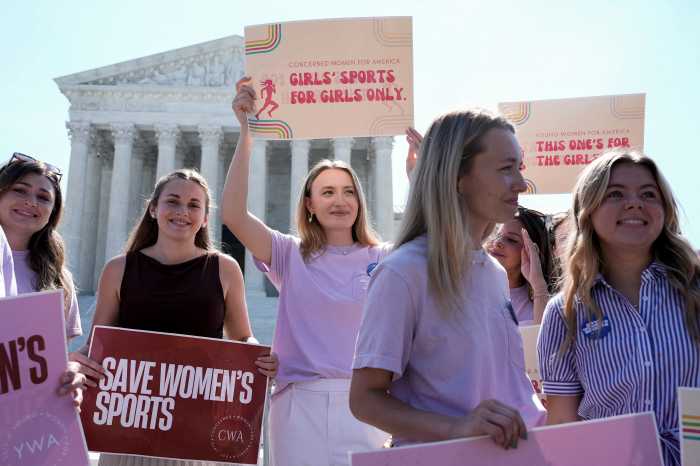
As to Title IX, the Court found that when it was enacted in 1972, there was no doubt that the ban on discrimination because of sex referred to “biological sex.” B.P.J. argued that the Court’s 2020 decision in Bostock v. Clayton County, Georgia, in which it held that firing somebody because of their transgender status violated Title VII’s ban on employment discrimination because of a person’s sex, should carry over to Title IX and include transgender status as a prohibited basis of discrimination by educational institutions. The Court rejected this argument, finding the contexts of education and employment to be different, and leaning hard on the then-Department of Health, Education and Welfare (HEW) regulations adopted shortly after Title IX was enacted to ensure equal opportunity in school sports for women, an issue that had figured in Congress’s consideration of the statute. An HEW regulation, now reiterated by the U.S. Department of Education, specifies that schools can maintain separate teams and facilities for males and females, so long as there is equal treatment and funding. This regulation has been frequently cited in Title IX litigation as justifying excluding “biological males” from women’s sports.
Kavanaugh rejected B.P.J.’s contention that trans girls who wish to compete should be treated on an individual basis, as she had been before the West Virginia statute was enacted. Her school had considered her request to compete and found that she would not pose a risk to anyone or have an unfair advantage, and in fact in those early years she was not a particularly distinguished runner. But Kavanaugh insisted that sports is a “zero sum” activity, in which allowing somebody to compete deprives somebody else of an opportunity, lending credence to the contention that the ban was necessary to preserve opportunities for “biological women.”
Justice Neil Gorsuch, a Trump appointee who wrote the Bostock decision, wrote a concurring opinion emphasizing the differences between Title IX and Title VII. He pointed to the disclaimers in the Bostock decision about not deciding issues that were not presented by that case, which involved only discharges from employment. He also observed that Title IX was adopted under the Constitution’s contracts clause, under which by accepting federal money schools were obligating themselves to meet conditions set out clearly in the statute. In other cases, the Court has made clear that as a matter of contract law a party could only be bound by conditions that were clearly expressed, and he asserted that it was not clearly expressed in Title IX that schools were obligating themselves to treat transgender females the same as “biological females” for purposes of sports competition.
As to the Equal Protection issue, the Court determined that the state laws were excluding trans females on the basis of their sex by limiting participation in women’s sports to “biological women.” Supreme Court precedent requires “intermediate” or “heightened” scrutiny of laws that discriminate based on sex, which means that they must significantly advance important state interests to survive judicial review. In this case, the Court’s opinion emphasized that 27 states and various sports governing bodies have all concluded that competitive fairness and safety concerns justify excluding “biological males” from competing with “biological females.”
Following the precedent of last term’s Skrmetti decision, which upheld Tennessee’s ban on gender-affirming care for minors, the Court took note of some disagreement among experts about the degree to which allowing trans females to compete would pose fairness or safety concerns, but concluded that such disagreement did not make the laws unconstitutional. The lack of data about these problems occurring in those places where trans females have been allowed to compete did not apparently enter into the court’s calculations.
B.P.J. also argued that after Bostock the court should treat transgender status as a prohibited ground of discrimination under the Equal Protection Clause, but the court insisted that it did not view the West Virginia and Idaho laws as engaging in discrimination because of transgender status. Once again following the lead of Skrmetti, the court insisted this was a case of distinction based on sex for Equal Protection purposes, so there was no need for the court to take up the question of how to analyze transgender discrimination claims. The opinion also pointed out that at least three justices have gone on record in other cases as rejecting any claim that transgender status is forbidden by the Equal Protection Clause.
In his concurring opinion, Justice Clarence Thomas repeated his prior arguments that gender identity was a prohibited ground of discrimination under Equal Protection. He argued that it is really about gender dysphoria, a medical diagnosis, which has not been recognized as the basis for an Equal Protection Claim.
Chief Justice Roberts’ decision to assign this opinion to Justice Kavanaugh was a canny move. Kavanaugh has coached women’s sports teams in the past and his familiarity with the subject of school sports was evident throughout his opinion. In addition, Kavanaugh has usually taken pains to show empathy for LGBTQ litigants, even when he was voting against their legal claims, so he maintained a respectful tone throughout the opinion, unlike the snark one might have encountered in an opinion by Alito or Thomas.
Nonetheless, the court’s ruling, to the extent it buys into contentions that Justice Sotomayor argued were not based on a well-supported factual record, marks a severe setback in the struggle for transgender equality by rejecting the argument that a categorical ban was unjustified. In light of the small number of trans girls and women who want to participate in competitive sports, it could have been possible to evaluate people on an individual basis, distinguishing between those, like B.P.J., who did not go through male puberty, and those, like Hecox, who did, and who had only recently begun hormone therapy when she sought to compete as a woman in college. These are very different cases that should not be treated alike.