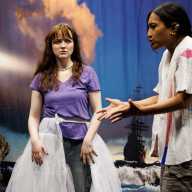
The 2026 installment of the Museum of the Moving Image’s “First Look” series takes the pulse of this moment in independent filmmaking. (In this context, that means 5-figure budgets, not A24 releases.) From the sections I’ve surveyed, reality has become the most attractive special effect. The mockumentary “We Put The World To Sleep,” in which director Adrian Tofei and his wife and co-writer Duru Yücel play filmmakers named after themselves, is a case in point, although it’s wholly fictional. “First Look” is full of films which cross aspects of documentary and fiction. This year’s lineup confirms the place of LGBTQ filmmakers and themes on the cutting edge, with four such films reviewed below.
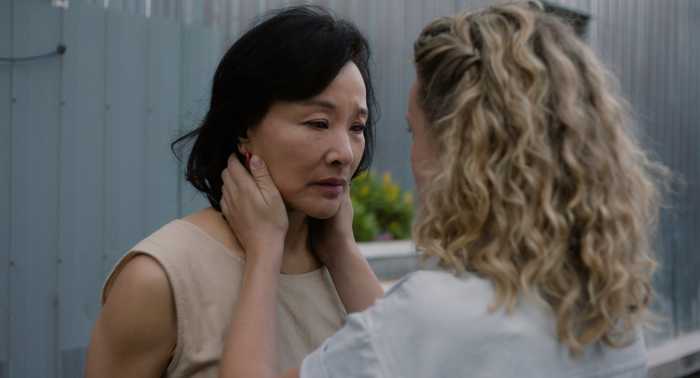
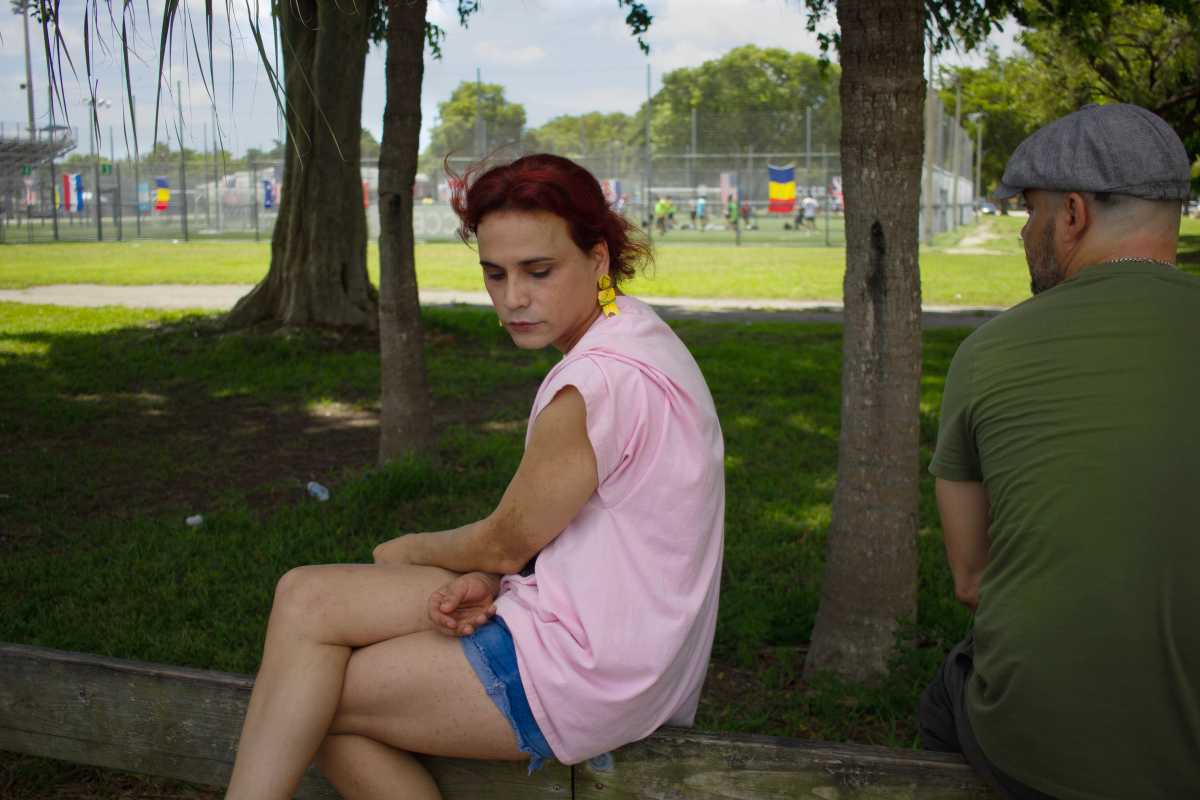
The credits of “Tropical Park” call it “un experiment de Hansel Porras Garcia.” The queer filmmaker came up with an unusual concept, reminiscent of Iranian films like Mania Akbari’s “Ten” and Abbas Kiarostami’s “Taste of Cherry.” In a single 85-minute take, two Cuban siblings speak (in Spanish) about their differences and estrangement while driving around Miami. The camera remains stationary in the car’s back seat. Fanny Gonzalez (Lola Bosch) is a trans woman who arrived in the US a month ago. She’s in a happy relationship with her partner Eugenio. Temporarily, she’s staying with her brother Frank (Ariel Texido) and his “gringa” wife Erika, who are much more conservative. (A Trump 2024 banner flies outside their house.) The dialogue swerves from moments of small talk, as Frank tries to teach Fanny how to drive, to intense emotional outbursts. Frank and Fanny were long out of touch, and he didn’t know that she had transitioned till she arrived in Miami. It turns out that he has some deep secrets of his own.
Both actors’ performances are all the more remarkable because they’re voice-only. (Rarely do we see their faces clearly.) Although “Tropical Park” was shot without a written script, it hits certain beats in a structured manner. It even flirts with melodrama, but the austerity of the filming helps mask its contrivances.
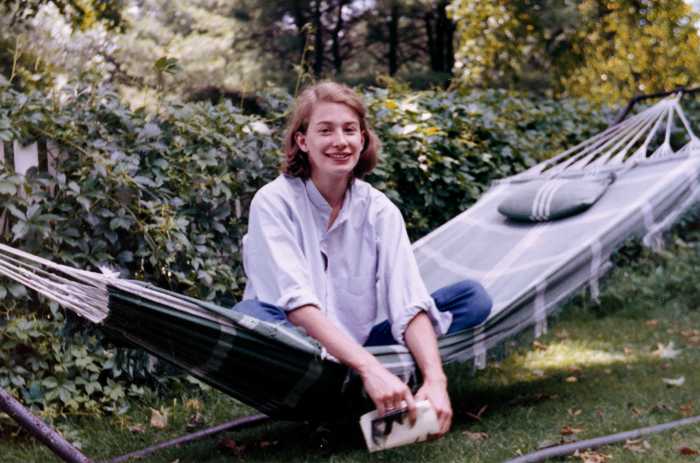
A similarly stripped-down opus of apparently banality, Ashely Connor and Joe Stankus’ “It Goes That Quick” makes a neat segue from “Tropical Park.” Starting in 2016, the directors (who are a married couple) decided to make a film about their families. This is a home movie in the truest word; while it mixes fiction and documentary, even the narrative segments are acted with a lack of poise that professional performers couldn’t match.
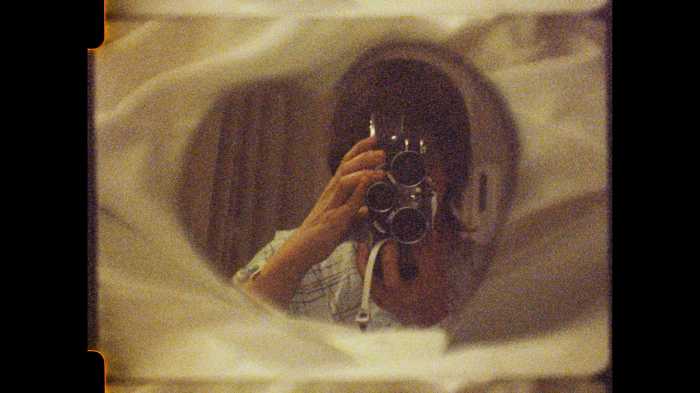
Connor and Stankus directed their relatives acting out their scenarios, edited with actual home movies. (Some have screened previously as individual shorts.) At first, these are quotidian to a fault, such as a trip to the grocery store. The lives of Connor’s gay uncles, Mike Adams and Ed O’Brien, take up much of “It Goes That Quick”: during the section “The Layover,” made in 2017, the two flight attendants memorializing the anniversary of their dog’s death. Later on, the direction becomes more extravagant. Trying to represent dementia, the camera takes on the view of an old man staring out the window as his children discuss his weekly regimen of medication. Inevitability, mortality starts intruding, changing the tone of family meetups. Ending with a close-up of an infant in the back seat of a car seems logical. The film is edited so carefully that the point where it takes on more gravity is imperceptible.
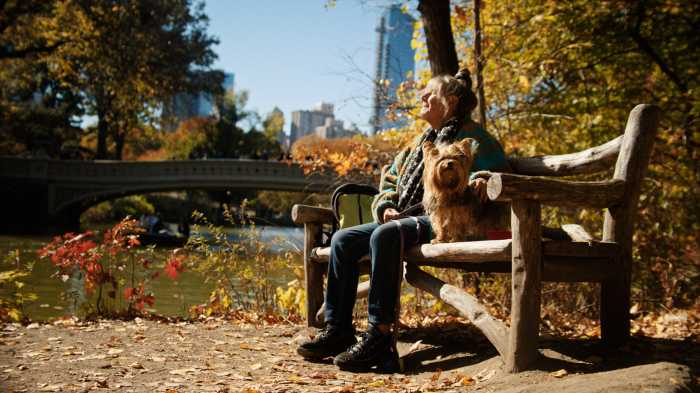
Queer director G. Anthony Svetek was drawn to 19th-century German naturalist Alexander Humboldt for his theory of interconnectedness. Svetek’s documentary “Humboldt USA” demonstrates it with its images and his own voice-over. (It’s delivered in both English and German.) Svetek addresses himself to the scientist, who was gay, as a kindred spirit.
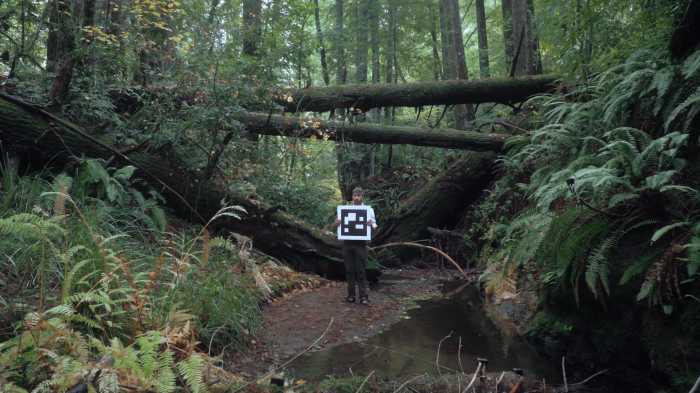
Its three locations — including a Nevada desert and highway in Buffalo — each demonstrate the lingering cultural footprint of Humboldt. (More species have been named after him than any other person, and countless places in America also bear his monicker.) Svetek films landscapes in crisp, handsome cinematography, conveying his ideas in visual terms. More generally, “Humboldt USA” demonstrates the long-term impact of colonialism on this country’s environment: cutting down redwood forests helped create air pollution in Buffalo. Present-day scientists place Go Pro cameras in the woods to simulate the perspectives of rocks and trees. Svetek’s narration risks reducing such eloquent images to B-roll, but it’s used sparingly.
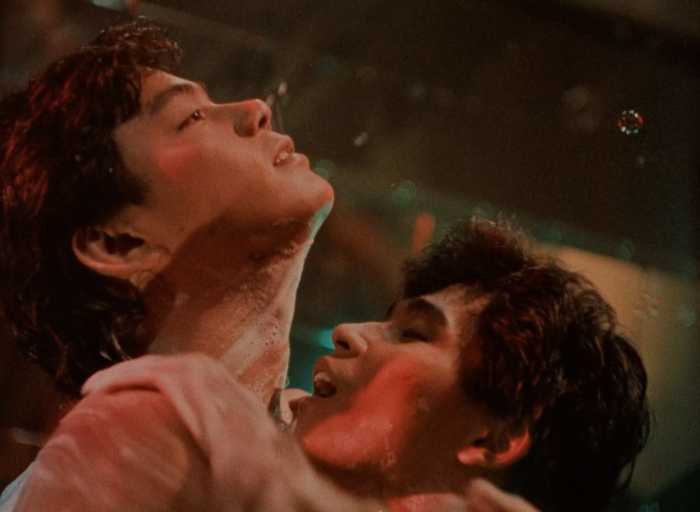
Set in 1970s Manila, trans director Isabel Sandoval’s “Moonglow” mixes film noir and melodrama with tremendous style. She notes that she moved away from her first three film’s social realism towards an engagement with artifice and the role of politics in shaping fantasy, cinematic and otherwise. Sandoval portrays Dahlia, a cop investigating a robbery she actually carried out herself. (The character is a cis woman.) Indeed, she steals from the safe of her own police chief. He sets his nephew Charlie (Arjo Atyade), who was Dahlia’s lover, to investigate the case. It becomes a tangle of political corruption, conflicted by familial ties. Sandoval uses her images to establish a mood of romantic longing and regret. She reaches back to iconography from classic Hollywood: for example, Dahlia places a cigarette in an ashtray, and Charlie then picks it up and takes a drag. “Moonglow” is less effective at storytelling, as vibes take precedence over the film’s other elements. Sandoval and Atyade don’t have the chemistry together which their roles require. The ache found in Wong Kar-wai’s “In the Mood For Love,” an evident influence, never fully arrives.
First Look 2026 | Museum of the Moving Image | April 23rd-May 3rd | Full info and schedule at movingimage.org.