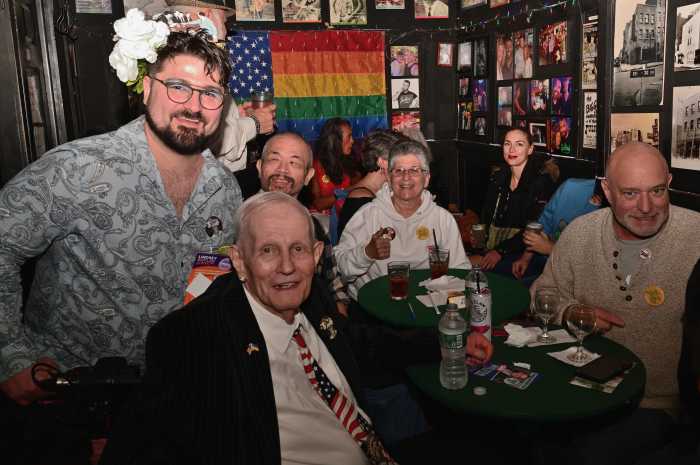
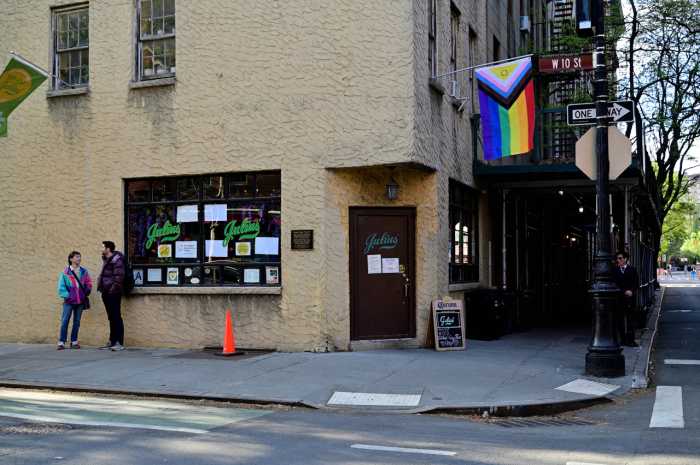
A cheer rang out in Julius’ Bar on the evening of Tuesday, April 21, as New York City’s oldest continuously-operating gay bar commemorated the 60th anniversary of what is considered one of, if not the first, documented acts of civil disobedience in the modern movement for LGBTQ rights.
On the same night in 1966 — three years before the Stonewall riots — a group of gay men belonging to the Mattachine Society set out to challenge homophobic laws that prohibited establishments from serving queer customers, who the State Liquor Authority deemed “disorderly.”
Alongside reporters, the men — Dick Leitsch, Randy Wicker, Craig Rodwell, and John Timmons — declared they were gay and demanded that bars serve them. Their so-called “sip-in” was inspired by the Black civil rights movement’s “sit-ins.”
The first location they planned to visit — the Ukrainian-American Village Restaurant — was closed, having been tipped off about the planned action, and the next two had no qualms serving them. It wasn’t until they reached Julius’ Bar, at the corner of Waverly Place and West 10th Street, that a bartender refused the activists by dramatically placing his hand over a glass in a moment captured by Village Voice photographer Fred W. McDarrah.
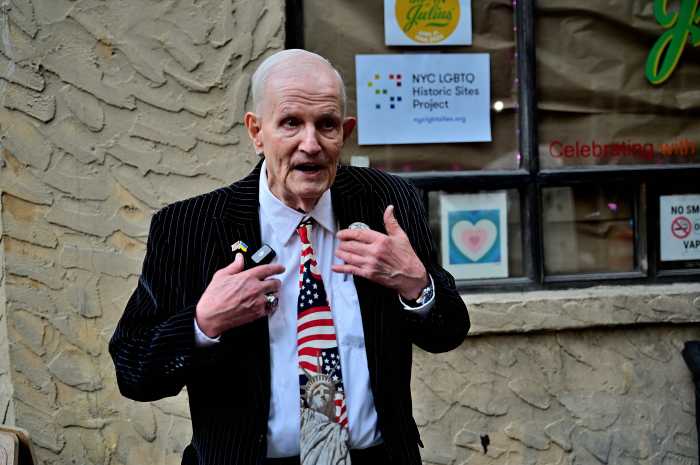
The action was “the most underrated and mislabeled event in all gay history,” Wicker, 88, told Gay City News on April 21.
Despite how it has been broadly characterized, “It wasn’t a sip-in; it was the first time that gay people demanded the right to assemble, to be by themselves,” the activist said. “I grew up at a time when they raided gay parties and took people away in paddy wagons just for having a party.”
Reflecting on the importance of bars like Julius’, he added, “That’s where revolution starts, that’s where neighborhood organizations start, and where our community has always gathered.”
The press coverage of the action was not entirely sympathetic, he noted. The New York Times’ headline, for instance, read “3 Deviates Invite Exclusion By Bars.”
“A bar is one of the places we come together to live our lives,” Wicker said. “And if we are denied that, we are denied the right to exist.”
“It was one of the moments that were cumulative before Stonewall, showing that there was an active LGBTQ rights movement,” said Ken Lustbader, a historian and project director at the NYC LGBT Historic Sites Project. At the time, Julius’ was an example of “a sort of suit and jacket, post-work gay bar,” that, while it quietly tolerated a limited amount of queer clientele, didn’t go out of its way to celebrate or acknowledge them.
“It’s an important milestone of LGBTQ activism — the fact that it was, for the first time, in real time, documented discrimination,” Lustbader added.
In the six decades since that night, Julius’ has transformed into a well-known sanctuary for the LGBTQ community, known for its lively, intergenerational crowd and welcoming ambiance, with historic photos lining its walls, and tasty burgers. It was officially designated an NYC landmark in 2022.
“It’s overwhelming how important this bar is,” its owner for the past 27 years, Helen Buford, told Gay City News.
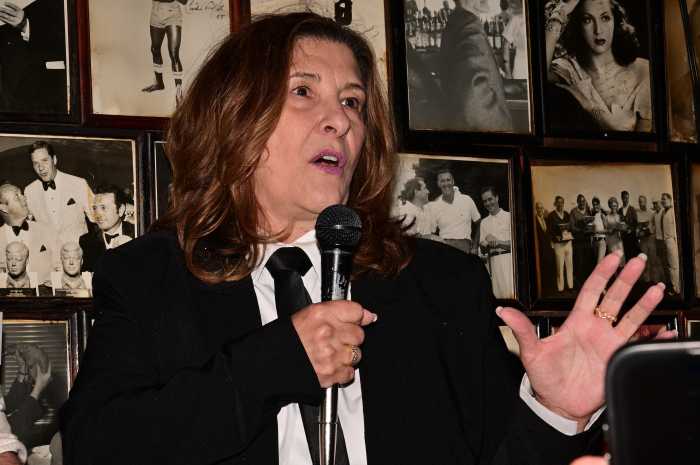
Buford didn’t learn its history until after 2009, when she took over operations from her late husband, and a patron told her sternly, “You don’t know what this bar means,” Buford recalled. “And I said, ‘As long as I’m here, this bar will always be Julius’ [and] always be honored.'”
Visiting the bar should feel “like somebody’s coming to my house; we’re hanging out, having some drinks, telling some stories,” she said. “I think that’s what resonates with the customers.”
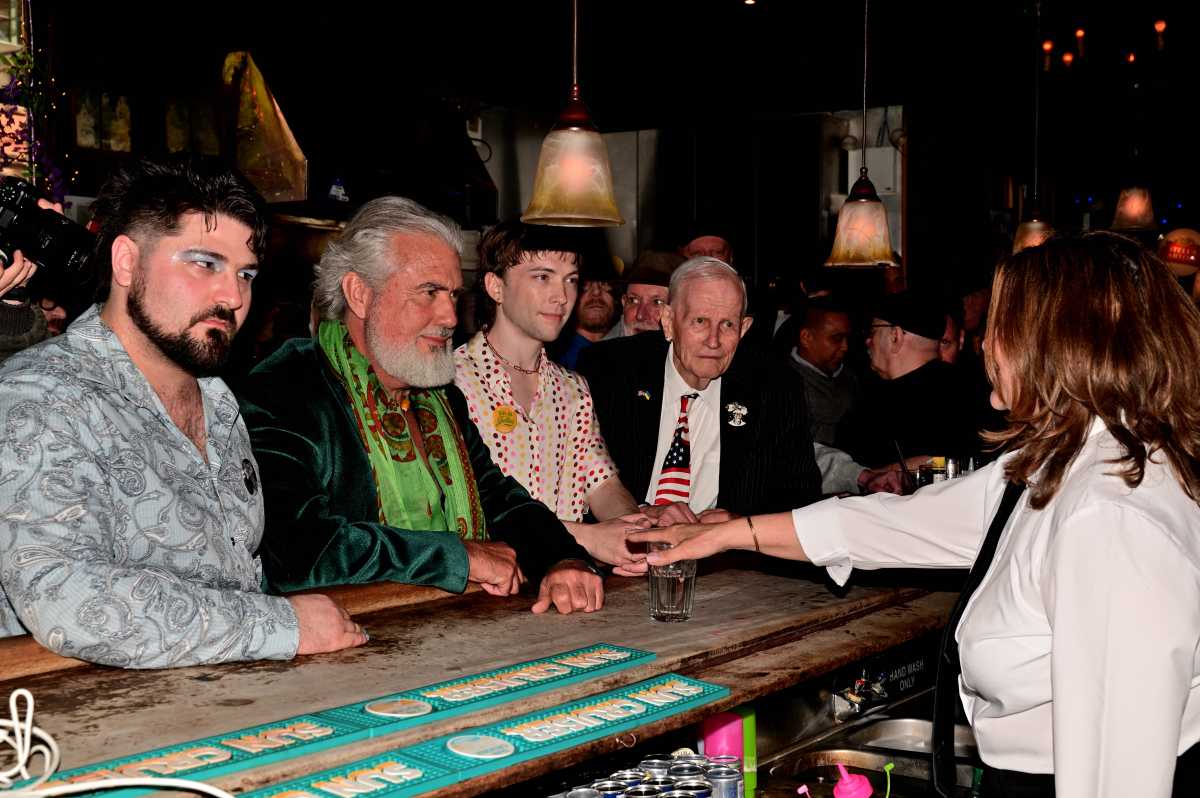
Buford, playing the role of the intolerant bartender, recreated the night’s famous image, across from Wicker, who was accompanied by his archivist, Devlyn Camp, in the place of Craig Rodwell, who ran the Oscar Wilde Memorial Bookstore; activist Steven Love Menendez; and Ryan Grippi.
“I’m so grateful that this bar still exists,” Menendez said. “It’s one of the most non-judgmental bars you can step foot in. And I think that is so important in this day and age. You see all ages; you can run into a Stonewall veteran, and young people that are in college.”
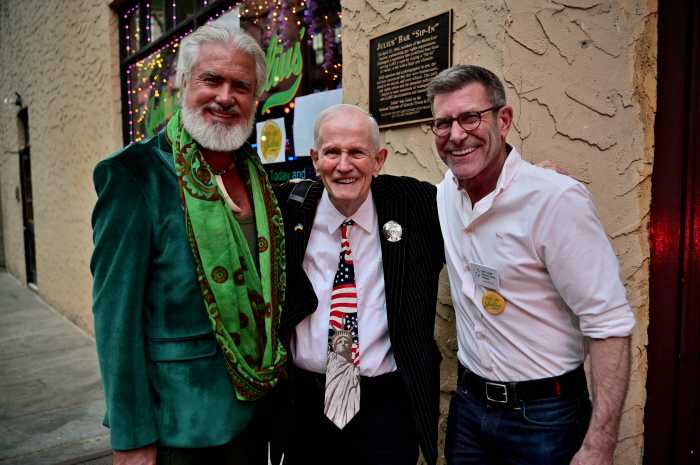
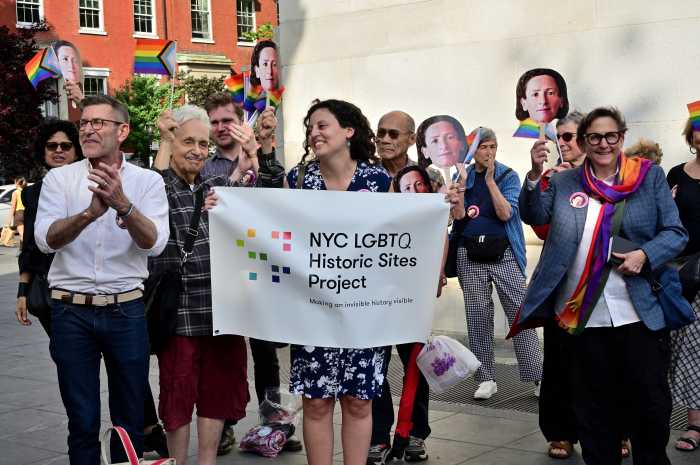
The LGBT Historic Sites Project organized the celebration, which saw the slender bar packed to the brim at points, and culminated in a toast at 7:00 pm that reverberated far beyond its walls.
Through a projector connected to Zoom, bars across the country raised their glasses, from St. Louis to New Orleans.
“With the recent pushback of LGBT rights, we are looking at the ‘Sip-In’ to show what individuals can do collectively, cumulatively, across the country,” Lustbader said. “The job we do is documenting history, but the real passion is disseminating that history and affecting people, so they know that they’re not alone.”
The night ended in a groovy dance party as DJ Yestergay, aka Kyle Supley, spun tunes from the 1960s.