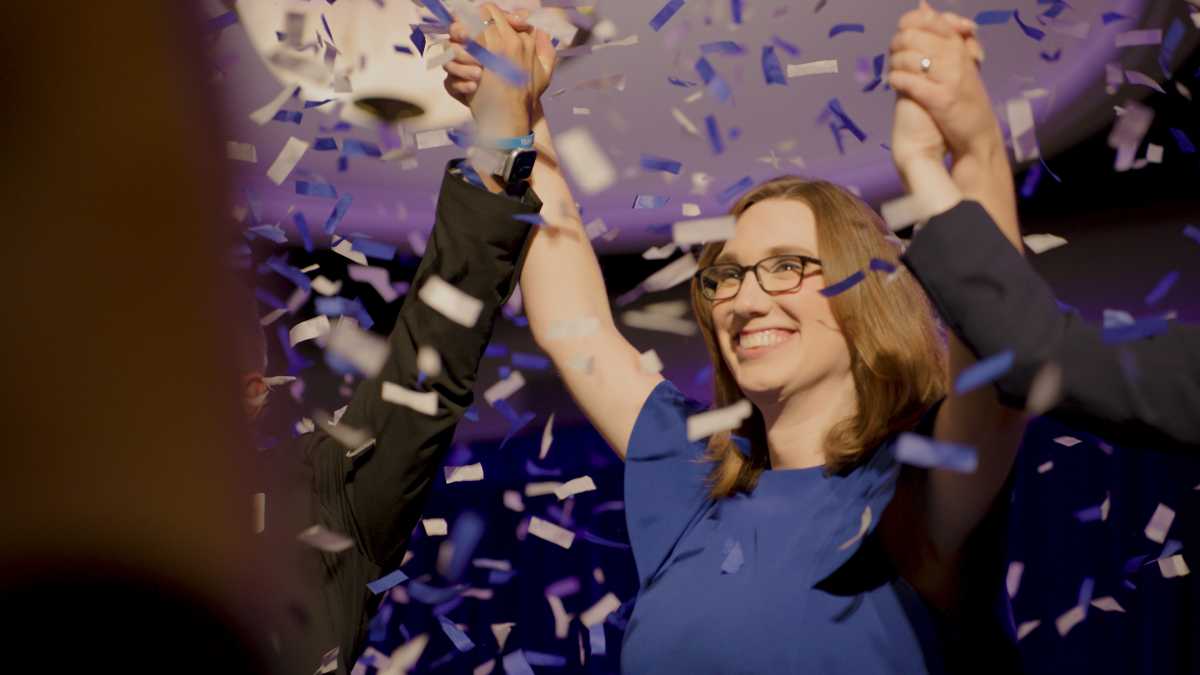
“State of Firsts,” directed by trans filmmaker Chase Joynt, profiles Sarah McBride, the first out trans member of Congress. This admirable documentary, shot in the six-month period between June of 2024 to early 2025, shows that McBride is nobly focused more on representing her constituents in Delaware — and being seen as a “whole human” — rather than engaging with Republicans who foment hate, bigotry, and discrimination because she is trans. The first half of the documentary features McBride on the campaign trail and she balances her hopes with pragmatism. She strategizes how to respond to Marjorie Taylor Greene’s attacks, which extend — after McBride is elected — to anti-trans bathroom rules in the Capitol. How McBride defends her position to comply with the rule shows her grace under pressure. Still, there is a backlash that hurts.
“State of Firsts” also illuminates how McBride must always smile to reflect pride not despair, and not rise to the MAGA bait, such as being misgendered in her new job. (Yes, the documentary features a clip of Keith Self disrespecting her.) Joynt’s film also shows McBride with her incredibly supportive family, having an unexpectedly sweet encounter in a Wawa convenience store, and her election night landslide, which culminates with a call from then-President Biden.
Joynt spoke with Gay City News about this inspiring chronicle of McBride and her political career, which, hopefully, will continue for decades to come.
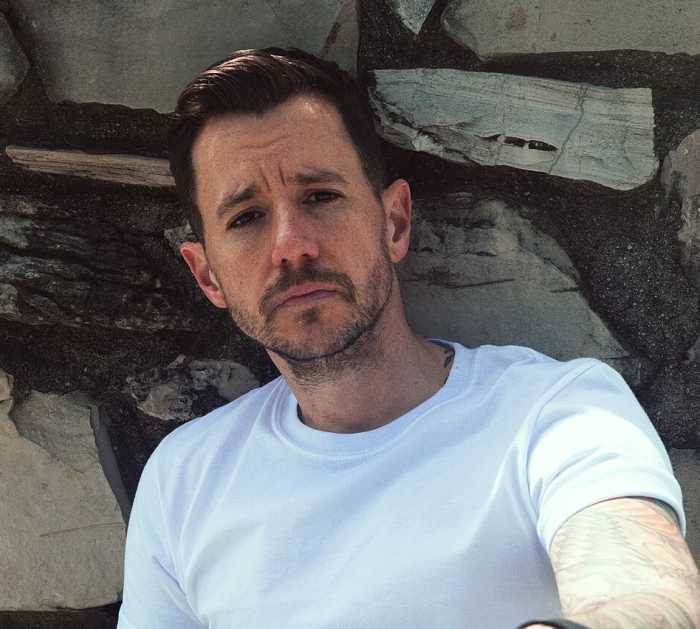
How did you come to make this documentary and gain the trust of Sarah McBride?
Our producer Jenna Kelly went to American University with Sarah, and she has long been tracking the opportunity to make a documentary. Sarah’s congressional run was the most appropriate, and perhaps most momentous, opportunity to make a film. It was really through Jenna that that early trust was brokered. As I met Sarah and we started to connect through shooting, we were negotiating a particular kind of relationship and trust on account of being trans people who were considering these questions and visibilities from that position.
You could not have known all that was going to happen as you were filming. How did you shape the narrative?
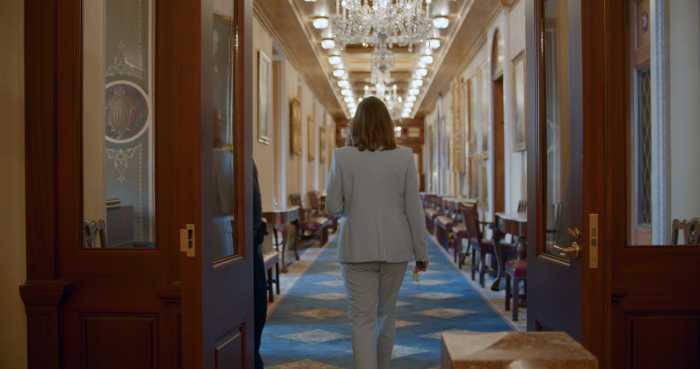
Our film benefitted from the rigidity of congressional and political calendars. We knew when some events were going to take place, and we were going to build access to Sarah and her family around those moments. But, of course, we had no idea what would unfold within those rooms. True to observational and verité cinema-making, we had to go in with a lot of plans and be willing to let them all go in service of the story that was unfolding. In no way did we think that Sarah’s win and historic rise would be without political contestation, but we could not have anticipated the vitriolic turn toward her personally in those moments. We were very much on the ground and in those hallways trying to capture and represent it as it was unfolding.
There is considerable discussion in the film about McBride’s need to represent trans visibility. However, by obeying Speaker Johnson’s bathroom rules, members of the trans community take issue with her compliance. She justifies her decision as a form of self-protection and you give her time to articulate that. Can you talk about including this in the film?
Not all trans people believe in social change in the same way, and not all trans people understand transness in the same way. While I think there was a recognition around transness and storytelling, of course Sarah and I are very different people and politically attuned in different ways. My responsibility as a documentary filmmaker was to position a camera in a place where there was opportunity for Sarah to speak for herself differently than the ways in which she was perhaps speaking to other cameras. One of the places where that emerged was in the car, an environment that was both public and private. We were out in the world but shielded from a visibility that she negotiates in every other place — from Congress, to Wawa, to walking down the street in Wilmington, Delaware. One of the central commitments of the film is to try to situate her in context, and in order to do that ethically, it was very important for me to create opportunities for her to share on her own terms. All I can do is to try to ask the question and set the scene, recognizing that she is hyper-aware of her representation.
Was there a decision about how much Trump and Republican hate to show in the film? The tone is idealistic, but not naïve; it is realistic, but never cynical. Can you talk about the content and the tone?
I appreciate your framing of the film in that way. One thing we reckoned with in the edit was calibration of these very forces. How much vitriolic, transphobic media do we need to show for audiences to understand what she’s responding to? It was a time bound experiment: How could we bring the film into the world and remain in dialogue with the unfolding sociopolitical events?
I will say I hope our film serves as a way in which to watch the machinations of political theater unfold, and the weaponization of certain kinds of rhetoric, and the ways in which trans people were and are scapegoated in this particular moment. The film will ensure as one of many case studies that we can look back on to figure out what happened here.
Is there a concern the film will be dated?
All political docs run the risk of feeling very dated very quickly because of the flashpoint moments, but one of the things that I think will help our film to endure is that the focus on trans people, trans rights, and trans kids endures. Our film will serve as a data point in this much longer trajectory. I think the characters will change, but some of the ideologies will remain.
Can you talk about how you constructed the film using the archival footage and interviews and observational scenes?
I think about [films] as jigsaw puzzles, I think about them as volume dials — where do you crank up the volume or turn down the intensity? One of the central commitments that I made with our extraordinary cinematographer, Melissa Langer, was to always situate Sarah in context. And what that means is thinking about her relation to the foreground and the background. Is she the first thing we see? Do we have to find her in a crowd? Who is structurally in front of her? What kind of buildings, containments, and atmospheres surround her? Those are cues for audience members to think about distance, proximity, suffocation, threat, vulnerability, humor, love. Those are all non-verbal context cues. In a film that is quite literally following her — so we have no prep plan, we don’t know what things look like, we can’t set things up — we have to make all these other choices in order to create a cohesive vision. Then we follow the story and try to stay attuned to the key questions as they change. But those questions are always going to be filtered through, again, this commitment to a visual language and of layering and context.
What can you say about incorporating the video clips and footage to tell her story?
One of the things that we do not do is set you up with a kind of Trans 101 primer on what a transgender identity might mean. Rather, we invite you to join in a conversation that is ongoing, and trust that you will fill in the missing pieces along the way. Similarly, with the media clips, it is very easy to create blocks of context. Our editor, Chris McNabb, had a skill and an eye for the most important, succinct bites that, when strung together, give you a sense of a feeling, of a moment, where we could drop you into the story as it was unfolding. We only ever used that media as a way to punctuate and redraw your attention to something that was unfolding.
What did you appreciate about Sarah, having made this film?
One of the things I take away from the experience is the enduring support that she has from her family. It is important to represent a multifaceted, polyvocal family who have long been in support of their trans kid, and who show up accordingly. That is as important to me as other forms of trans representation, because trans people do not exist in isolation. That kind of support is critical.
“State of Firsts” | Directed by Chase Joynt | Opening June 26 at the Angelika Film Center | Distributed by Suncatcher Productions