Non-binary filmmaker Avalon Fast’s sophomore feature, “Camp,” is a low-budget queer horror movie that gives off more lesbian and supernatural vibes than it actually delivers.
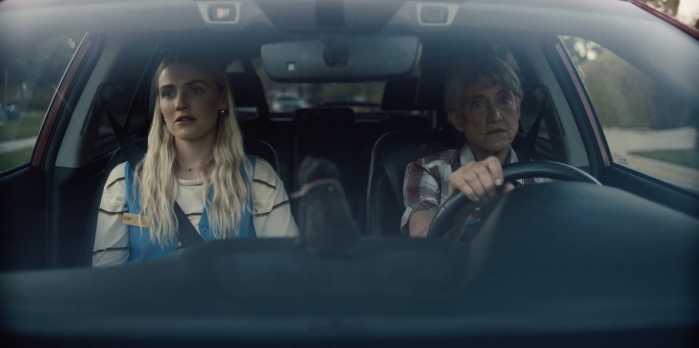
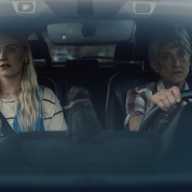
The opening sequence, shot in black-and-white as the credits unspool, has Emily (Zola Grimmer) driving down a country road where she accidentally kills a small child. Curiously, she discloses the tragedy at a game of truth or dare she plays at a party. Leaving the party early with her friend Charlie (Giselle Morison), tragedy strikes again when Charlie ODs on Emily’s coke in the car and Emily feels responsible.
The double whammy of trauma prompts Emily’s father (Michael Tan) to recommend that she go work as a counselor at a camp for damaged kids. Emily may not be up to the task, being damaged herself, but she agrees — only to express concern when she discovers en route that it is a “God camp.” Upon arrival, she befriends the other counselors, Clara (Alice Wordsworth), Rosie (Cherry Moore), Nev (Les Rose Sebastianis) and Hope (Ella Reece), who, it is revealed, have witchy powers.
“Camp” leisurely presents Emily’s “coming-of-age” in the camp, but the low-key energy makes it largely uninvolving. Emily joins the other counselors in the attic one night where they perform a ritual where they “put a wish out into the universe.” Nev hopes to bed Dan (Austyn Van de Kamp), the religious leader of the camp. He is a virgin, which is meaningful to the coven. But the religious themes nestled throughout the film lack impact.
When the kids arrive, there are a few activities and Emily tries to connect with Eden (Izza Jarvis), a queer-coded teen. Emily helps Eden when she has her first period during a swimming test. However, a later episode has Emily chasing Eden through the forest after the teen draws a picture of the female counselors. It is likely a callback to Emily’s past trauma, but it feels underdeveloped.
Much of “Camp” feels half-baked. A sequence where Emily falls asleep around a bonfire but wakes up in her bed, unable to discern what happened and what was real, suggests sinister forces afoot, and there is a peculiar moment when she mistakes what time it is. But whatever is going on goes largely unexplored. A discussion the girls have about another counselor, Kayne (Henri Gillespi), suggests that he is trouble, but nothing really comes of that either. Fast may be deliberately ambiguous here, but viewers will not be invested enough to parse out the meaning of things being teased.
Even Emily’s relationship with Clara — they hang out together and kiss a few times — is unsatisfying because it only hints at the possibility of love’s power to heal. Their relationship also feels more like friends who kiss than two young women forming a relationship.
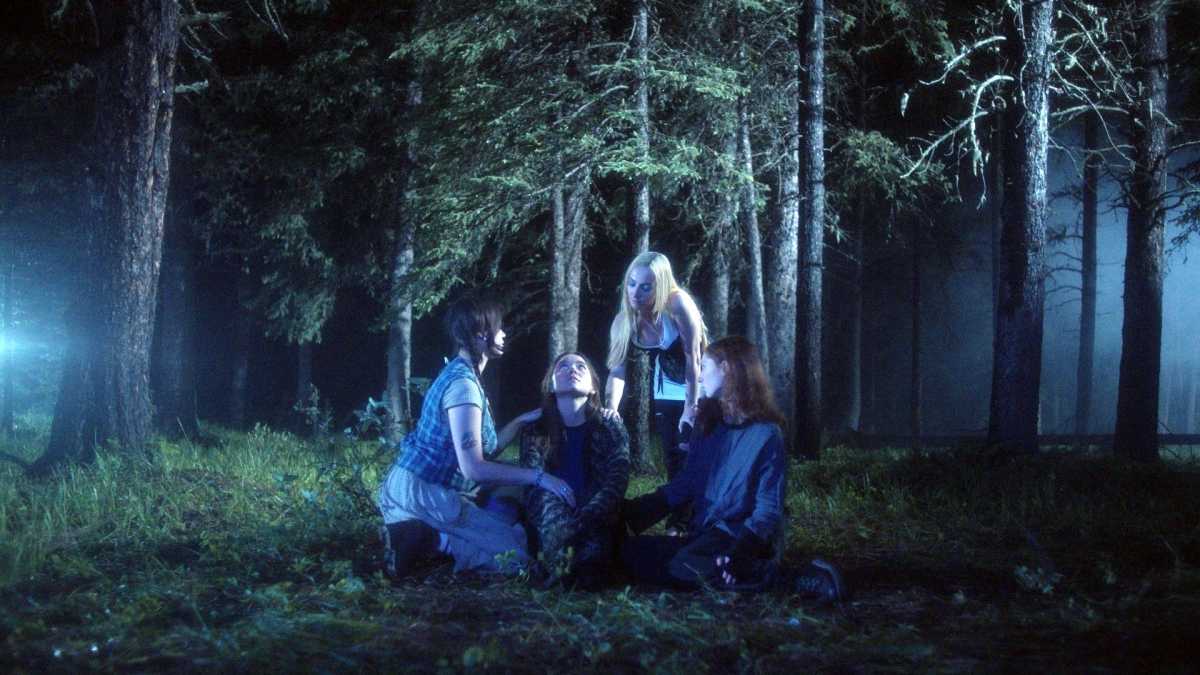
The supernatural storylines have more traction. There are shooting stars and dreamlike sequences bathed in a red light that have an etherealness to them. A candlelight scene in the forest has a haunting quality to it. These are the film’s strongest moments as they harness the young women’s uncanny abilities. There are perhaps hallucinations as well; a shot of blood running down a woman’s legs echoes Eden’s period, but it has no specific context. Nevertheless, Emily experiences a sense of belonging and empowerment with these young women in these scenes, which provide a nice contrast to a moment earlier in the film when she has a “freak out,” and calls her father, claiming that she “feels like I’m losing my mind” — although she may just be homesick.
“Camp” provides a kind of healing for Emily, but it will either enchant or annoy viewers who fall under (or resist) its spell. The acting is uniformly wooden, with most of the cast speaking in a flat, affectless style that is deadpan without the irony. As Rosie, Cherry Moore injects a little enthusiasm into the film in her early scenes. Too much of “Camp,” however, feels devoid of emotion. That may be appropriate for a story of a young woman numbed by trauma, but Fast fails to make it very compelling.
The filmmaker does, however, provide some visual stimulation late in the film as some special effects convey the magic that Emily encounters at the camp. It is just a shame that that queer joy and empowerment may not translate to viewers.
“Camp” | Directed by Avalon Fast | Opening June 26 at the IFC Center | Distributed by Dark Sky Films