
Jan. 20 marked the one-year anniversary of President Donald Trump’s second inauguration, which ushered in an era of unprecedented attacks on transgender individuals and the broader LGBTQ community at the hands of the federal government.
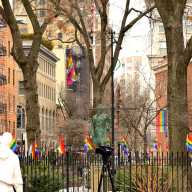
Within hours of taking office, Trump doubled down on his anti-LGBTQ record from his first term and proceeded to kick his legacy of homophobia and transphobia into high gear, pushing to erase transgender individuals from as many areas of life as possible. He immediately targeted gender-affirming care, trans student-athletes, trans service members, and people living with HIV/AIDS, all while erasing and distorting queer history at the Stonewall National Monument.
In just one example of just how far the administration has been willing to go in its campaign against trans individuals, the acting assistant secretary for civil rights in the US Education Department delivered a letter to New York City officials claiming that the city was out of compliance with the president’s interpretation of Title IX, the federal civil rights law implemented in 1972, and warned that funding would be slashed if trans-inclusive policies were not nixed — including policies protecting the right of student-athletes to play sports and use bathrooms and other facilities in accordance with their gender identity.
That letter also highlighted the way in which blue states have been more directly impacted by the Trump administration in the second term. Less than a month after Trump took office, an executive order calling to bar federal funds for gender-affirming care for individuals under 19 years of age prompted multiple New York City-based private hospitals to either cancel appointments or otherwise pull back on care.
Going back to the very beginning, one of the most alarming and consequential executive orders Trump signed on day one of his second term was entitled “Defending Women From Gender Ideology Extremism and Restoring Biological Truth to the Federal Government,” which set out to erase trans people from any recognition or rights under federal law. On the same day he signed a slew of anti-LGBTQ executive orders, Trump also rescinded guidance and policies set forth by his predecessors that clarified that trans students could be called by their preferred name and referred to with their preferred pronouns. He even barred his administration from recognizing World AIDS Day — and imposed massive funding cuts on HIV/AIDS services domestically and internationally. Trump also ordered trans inmates to be housed in accordance with their sex assigned at birth and stripped them of gender-affirming care, reversing the Biden administration’s policies and prompting a firestorm of legal challenges.
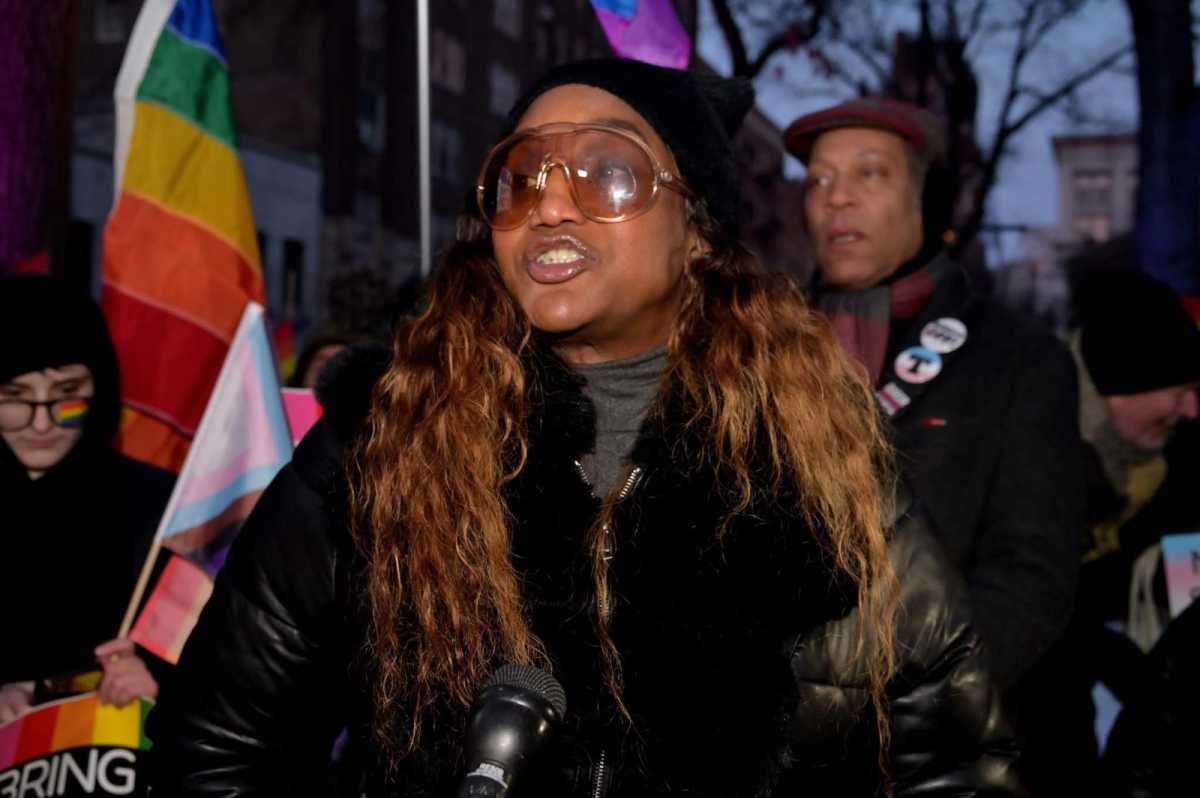
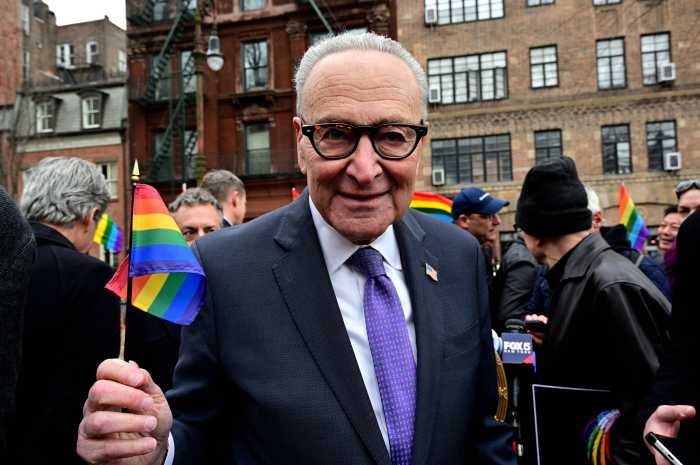
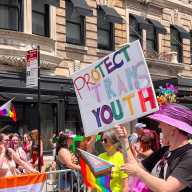
On top of it all, even Pride events have faced fierce headwinds during the second Trump era. Many cities have cancelled their Pride plans outright, while others, like New York City Pride, scaled back some events last year after corporate sponsorship revenue dipped significantly. That budget shortfall was driven by cutbacks to DEI and because they “expressed concern for potential blowback from this current administration,” according to Heritage of Pride, which runs NYC Pride.
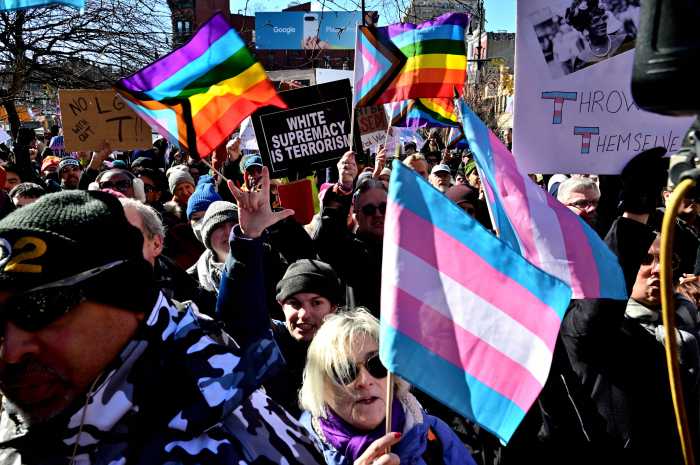
The administration’s extensive list of actions targeting the community prompted the Human Rights Campaign (HRC) to issue a report this month detailing how LGBTQ rights have deteriorated since Trump started his second term. HRC and the Movement Advancement Project also presented survey responses from community members who offered insight into how their lives changed during the administration’s first year back. Equipped with that data, HRC created a roadmap intended to help the LGBTQ community fight back against the attacks.
In just some examples cited by HRC, the Trump administration cut $800 million in funding for LGBTQ health research, nixed a suicide prevention lifeline for LGBTQ youth, ordered all government entities to stop collecting data on LGBTQ Amerians, directed the US Navy to rename the USNS Harvey Milk, fired an employee for displaying a Rainbow Flag on his desk, and proposed to ban all gender-affirming care for youth. The Equal Employment Opportunity Commission even moved to dismiss cases involving workers who alleged gender identity discrimination — despite the 2020 Supreme Court ruling barring employment discrimination on the basis of gender identity and sexual orientation.
The survey responses — drawn from the Annual LGBTQ+ Community Survey featuring nearly 15,000 US adults, including 10,000 LGBTQ+ adults — offered some insight into some of the effects of the administration’s actions: Four in 10 workers in the survey say that their employer has made at least one DEI-related change in the last year, while 57% of LGBTQ workers with employers that scaled back DEI say they have experienced stigma or bias at work. Furthermore, the survey found LGBTQ adults are nearly twice as likely as non-LGBTQ adults to say their financial situation worsened in the last year. Moreover, nearly half of LGBTQ adults report being less out in their lives over the last year, including in workplaces, healthcare settings, and other public spaces.
The survey is reminiscent of a separate one conducted in May and June of 2025 by the Movement Advancement Project, which found that 9% of trans individuals and 5% of LGBTQ people said they moved to a different state, and 43% of trans people have considered moving to another state. Notably, 24% of transgender individuals and 8% of LGBTQ people in that survey said they have traveled to another state to receive care. Furthermore, 55% of trans people and 24% of LGBTQ folks said in that survey that they have taken steps to be less visible in their community.
HRC released a 16-page playbook offering ways pro-equality candidates can respond — or get ahead of — anti-LGBTQ political forces during what is shaping up to be a pivotal midterm election year. HRC is calling on pro-equality candidates to “neutralize the attacks by going on offense and responding with strength.”
HRC surveyed 1,000 voters in battleground House districts to develop effective messaging, ultimately leading the organization to develop a five-part framework: Candidates should share their background stories early and often; lead with values, such as fairness, safety, autonomy, and equality; address concerns directly; gain voters by promoting legislation against discrimination, backed by survey result showing that at least three-quarters of respondents support such laws; and “go big,” citing examples like New York City Mayor Zohran Mamdani, who emphasized in his election night victory speech the importance of standing up for immigrants, trans people, Black women, and single mothers.
Heading into the heart of the midterm election year, HRC has scheduled trainings and dispatched organizers to help campaigns, following up on the organization’s 2025 election work in which its supporters “carried out more than 200,000 actions, from knocking doors to mailing postcards.”