
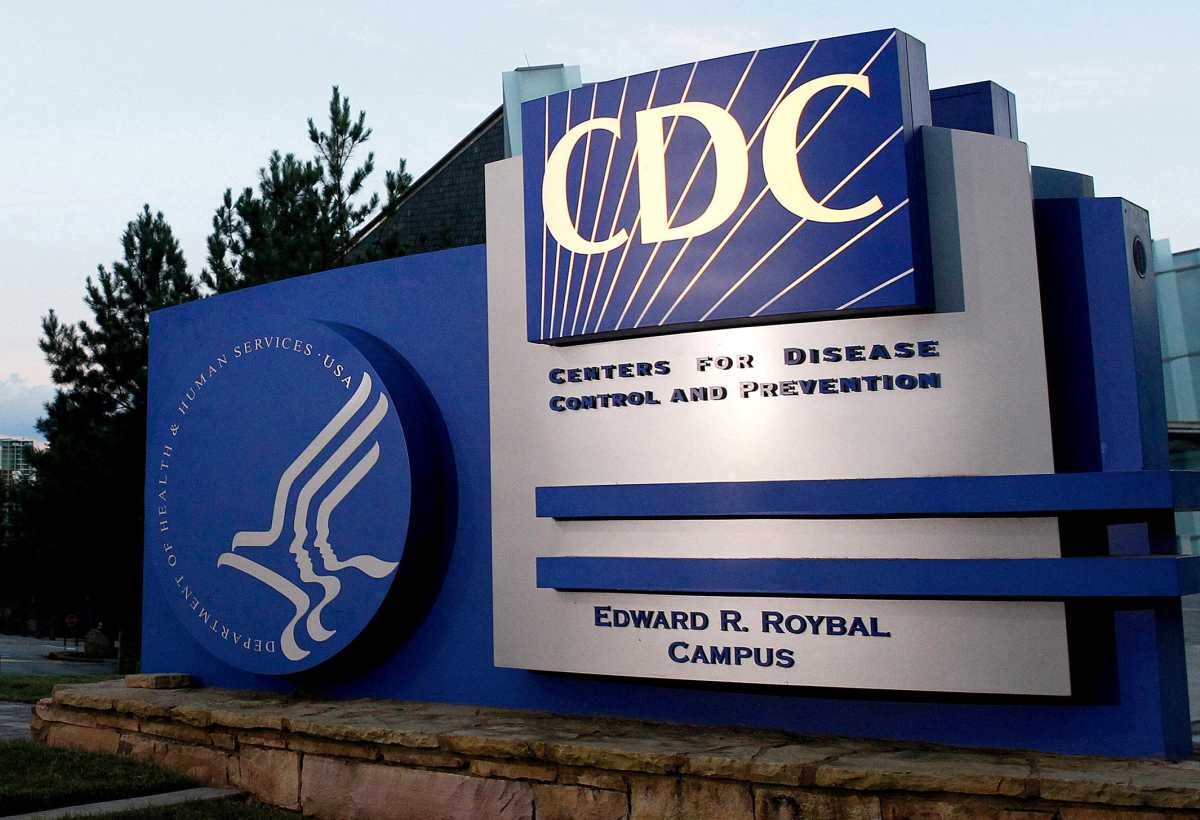
Facing staff shortages, the Centers for Disease Control and Prevention (CDC) has, for now, halted testing for rabies and pox viruses such as mpox, the New York Times reported.
Until now, the CDC has been helping states and local municipalities by offering a wide range of tests — especially in areas where such testing is lacking — but the agency’s rabies and pox teams have shrunk so much as of late that there are no longer any individuals equipped to handle pox cases and just one individual working on rabies cases, according to the New York Times.
The CDC is indicating that at least some testing will be available again within a matter of weeks.
“Several infectious disease tests are temporarily paused as CDC evaluates these assays as part of our routine review to uphold our commitment to high quality laboratory testing,” a CDC spokesperson told Gay City News on April 2. “CDC maintains regular communication with state and local health departments and can assist in coordinating testing through alternative laboratories if needed. We anticipate some of these tests will be available through CDC labs again in the coming weeks. In the meantime, CDC stands ready to support our state and local partners to access the public health testing they need.”
Many labs are able to perform preliminary tests for pox viruses, such as mpox, but the CDC is typically utilized to confirm those infections, according to the New York Times, which also reported that the CDC is the only agency tracking diseases across the US.
The New York State Department of Health told Gay City News that the testing pause puts certain states and cities in a vulnerable position if they lack sufficient lab resources due to the loss of federal assistance. The Wadsworth Center, which the state said is a national reference center for infectious diseases, environmental hazards, and toxicological threat testing and detection, is stepping up to help in the meantime.
“As the CDC scales back testing for many pathogens, Wadsworth has stepped in to assist with antibody testing for a range of viruses including influenza, pox and rabies,” the state Department of Health said in written statement. Under Governor Hochul’s leadership, New York State continues to be at the forefront of disease surveillance and testing which is vital to effectively respond to public health threats.”
Mpox first broke out across the US in 2022 — particularly in New York City, where officials were tracking 100 cases per day at one point that year. At the time, the Biden administration faced significant pressure to increase the supply of the two-dose Jynneos vaccine, prompting the White House to roll out batches of shots and announce a two-member mpox response leadership team. One of those members was Dr. Demetre Daskalakis, who worked for the CDC at the time but now serves as chief medical officer of the New York City-based Callen-Lorde Community Health Center, which delivers comprehensive care for LGBTQ individuals.
“Mpox testing remains available through commercial, local, and state public health labs, but we should not underestimate the strain on the system,” Daskalakis told Gay City News on April 2, referring to the CDC’s pause on testing. “Even small increases in demand could challenge our ability to test and track cases quickly. CDC laboratories are the nation’s safety net, the lab of last resort for complex tests that can’t be done anywhere else. Any hit to their capacity or expert staffing puts critical public health functions at risk. We need to protect and support these labs now to ensure we can continue responding at the speed that outbreaks require.”

After the 2022 outbreak subsided, New York City declared an end to the outbreak in early 2023. But cases were never completely eliminated. Last year, cases crept up in New York City during the spring and summer before peaking at 63 cases in the month of October. Cases then dipped again, but mpox continues to circulate nonetheless: There were 16 cases of mpox in New York City between Feb. 8 and March 7 of this year.
Last month, New York City announced its first case of mpox clade I, which can lead to more severe outcomes than the more common clade II.