When the Centers for Disease Control and Prevention first reported what would later be called AIDS in 1981, public narratives narrowly centered on white gay men. Women were present in the epidemic from the start, but their experiences were marginalized in surveillance and public discourse. Even as HIV spread through communities of color, the early data failings obscured the epidemic’s reach. The data from four decades ago, including a 1986 report revealing the disproportionate impact of HIV and AIDS on Black and Latino communities, held warnings that have yet to be fully addressed, sparking an intensifying epidemic for women of color today.
As we observe National Women and Girls HIV/AIDS Awareness Day, we must confront the reality that Black and Latina women continue to bear a disproportionate burden of HIV, driven by systemic inequities that shape access to prevention, testing, care, and survival.
Historically, women accounted for about 8% of AIDS diagnoses in 1981. By 2001, that share had grown to nearly 30% of new infections, signaling the epidemic’s deep reach into heterosexual communities. Today, women represent approximately 22% of people living with HIV in the U.S. — more than one in five. Globally, women account for more than half of all people living with HIV.
Despite HIV diagnoses declining overall in the past decade, the stark racial disparities remain entrenched. Black women account for about 50% of new HIV diagnoses among women while representing 13% of the US female population. Latina women account for roughly 20% of new diagnoses and have HIV diagnosis rates nearly six times that of white women. The rate of new HIV diagnoses among Black women is ten times that of white women.
In New York, these patterns are magnified. Women make up about one in five people living with HIV statewide, and Black and Latina women represent the vast majority of those diagnoses. In New York City, women of color experience elevated rates of late diagnoses and greater socioeconomic vulnerability — factors that compound risk and undermine long-term health outcomes. Black and Latina women represent 90% of all new AIDS cases among women in New York City.
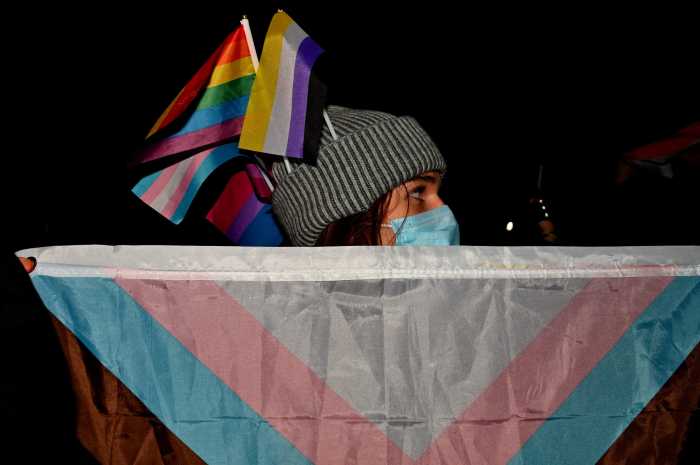
We also cannot ignore transgender women — especially Black and Latina transgender women — who are among the most profoundly impacted by HIV in the United States. In a CDC surveillance study across seven U.S. cities, about 42% of transgender women surveyed were living with HIV, with the highest prevalence among Black transgender women.
Prevention exists, but access is unequal. We now possess tools early generations could only hope for. Pre-exposure prophylaxis (PrEP) can reduce the risk of acquiring HIV by 99% when taken as prescribed. For women, long-acting prevention options (such as injections, implants, or medications that provide protection against acquiring HIV for weeks, months, or up to a year) could be transformative, offering not just convenience but increased flexibility, discretion, and a sense of empowerment by removing the need for a daily pill. A recent PrEP study found that, among people using oral PrEP, 7% are women, while among people using injectable PrEP, 12.5% are women. This gap suggests that, compared with oral PrEP, injectable PrEP is reaching a relatively higher proportion of women.
Yet PrEP remains dramatically underutilized among women at risk for HIV. Women account for a much smaller share of PrEP users than their share of new HIV diagnoses, pointing to persistent gaps in access, awareness, and uptake.
In New York, Medicaid is the backbone of access to antiretroviral therapy, PrEP, testing services, reproductive care and the wraparound supports that stabilize families. Medicaid is HIV infrastructure. Any cuts or restrictions to Medicaid are not abstract budget items — they are immediate threats to health equity and the achievement of New York’s Ending the HIV/AIDS Epidemic goal.
At Amida Care, Harlem United and Latino Commission on AIDS, we see firsthand that integrated care and coverage continuity improve outcomes. Women living with HIV with stable Medicaid coverage achieve viral suppression, maintain employment, support their families and live healthy lives. When coverage is threatened, gaps in care quickly follow: missed medications, interrupted preventive services, and rising medical complications. These effects disproportionately harm women of color and gender-diverse individuals who already face economic and health inequities.
Ending the unequal burden of HIV on women and girls requires decisive policy action: investing in community-led, culturally responsive care in Black and Latina communities; making testing and PrEP education a routine part of all women’s health care; and protecting and strengthening Medicaid as the backbone of prevention and treatment access. Forty years after the CDC first documented racial disparities, ignorance is no excuse. We know who is most affected and what works. Ongoing inequities are not a scientific failure — they are a policy choice.
National Women and Girls HIV/AIDS Awareness Day should be more than symbolic. It should be a renewed commitment to equity in treatment, prevention, care and survival. New York has led the HIV response before. Now it must lead again — for every woman still bearing the epidemic’s unequal burden.
Jacqui Kilmer is the CEO of Harlem United and board chair of Amida Care; Aracelis Quiñones is the program coordinator of Poder Latino at the Latino Commission on AIDS; and Sandrine Blake is the assistant director of member events at Amida Care.