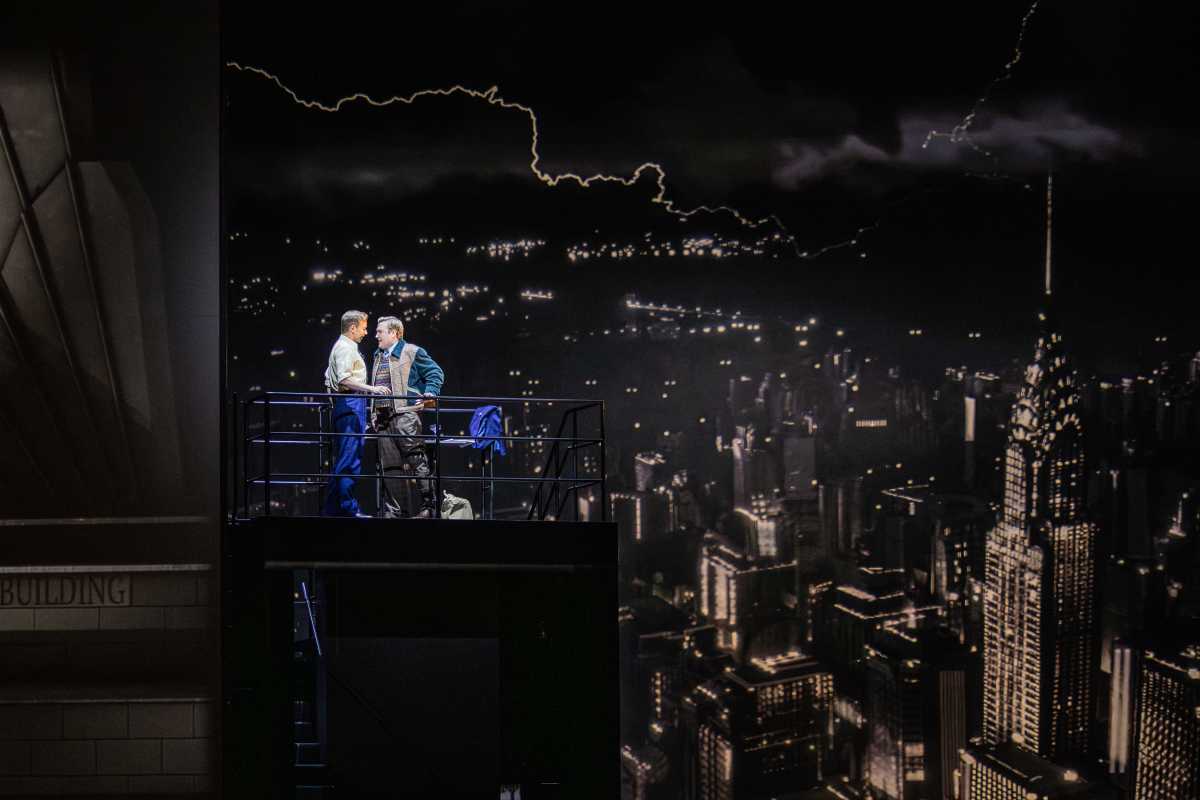
Last fall the Metropolitan Opera debuted a new opera, “The Amazing Adventures of Kavalier and Clay,” composed by Michael Bates, with a libretto by Gene Scheer, who adapted Michael Chabon’s Pulitzer Prize-winning novel, and conducted by Yannick Nézet-Séguin. Now, The Met Live is giving audiences a chance to see a filmed version of this production in cinemas on Jan. 24, with encore presentations on Jan. 26.
The opera, which is performed in English, is ambitious and entertaining. It incorporates themes of belonging, art, and trauma into a story that has the Jewish Joe Kavalier (baritone Andrzej Filończyk) escaping Prague in 1939 via a coffin to go live with his cousin, Sam Clay (tenor Miles Mykkanen), in Brooklyn. Joe has left his teenage sister Sarah (soprano Lauren Snouffer) behind, but he promises to send for her and their parents.
In New York, Joe and Sam create “The Escapist” comic book featuring a superhero who fights fascism. It becomes wildly successful, and a radio production of “The Escapist” features actor Tracy Bacon (baritone Edward Nelson), who falls in love with the equally smitten Sam. Meanwhile, Joe meets Rosa Saks (mezzo-soprano Sun-Ly Pierce), who runs the Transatlantic Rescue Agency, which helps Jews sail to America from war-torn Europe. As the romances develop, a tragedy occurs and, for different reasons, Joe and Tracy enlist to go fight overseas, leaving Rosa and Sam back home.
“The Amazing Adventures of Kavalier and Clay” is an impressive-looking production. The sets and visual design (by 59 Studios) are imaginative; some images are seen being drawn in “real time.” Various comic book panels from “The Escapist” also come to life on a big screen like giant Roy Lichtenstein canvases. There is even an actor playing the caped and masked superhero who dances and battles evildoers on stage.
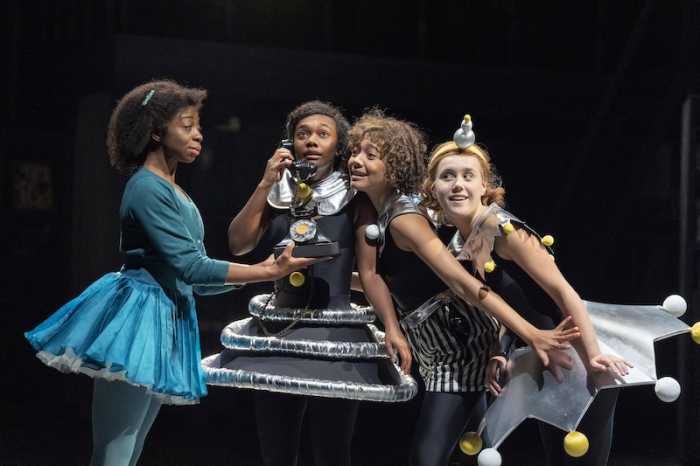
In addition, there is a fabulous set piece of the radio play, complete with a foley artist, and a later sequence of another comic book character floating down from the sky that has a dreamlike quality. The opera really hits its stride with these wondrous moments, and the period-themed music heightens the energy of these scenes. While an extended sequence in Act II, set in the Western Front, is quite elaborate, and features dozens of soldiers on a giant moving stage, that episode tends to be a bit repetitive narratively and musically, which is a drawback.
The first act is stronger, with many of the early scenes moving the busy story along. Joe campaigns Sam’s boss to create “The Escapist,” which is fun, and there are some romantic sequences that generate sentiment, but very few episodes, like the powerful end of Act I, captures both drama and emotion at once. This may be a function of trying to shoehorn a 600-page book into a 150-minute production. At times it can feel overstuffed and underwhelming, but it does not always feel operatic.
Joe’s relationship with Rosa is developed during an amusing sequence featuring them and Salvador Dali at an art exhibit, and various scenes of Nazis targeting Joe’s family in Prague play into Joe’s need to save his sister, further drawing him to Rosa. But while the arias performed as the couple woo each other are nice, none are particularly distinguished.
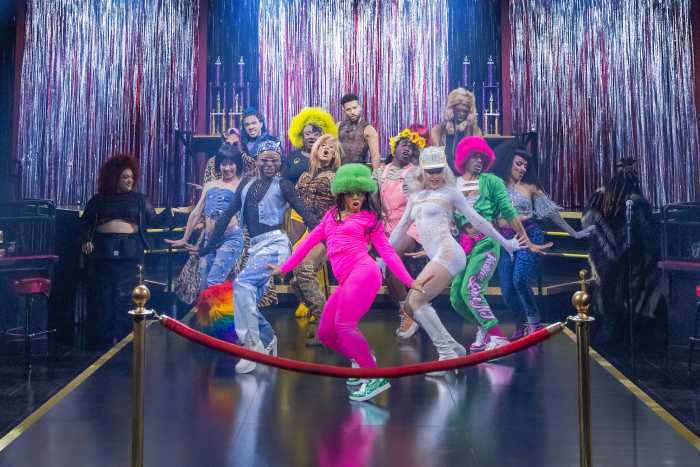
In comparison, the romance between Sam and Tracy is more poignant, if less of the opera’s focus. The two men connect when they make plans to “drink champagne on a train” if/when “The Escapist” goes to Hollywood. (The comic has been optioned for a movie version.) Sam steals a kiss from Tracy atop the Empire State Building in a particularly enchanting moment. But a scene in Act II, set in a gay bar with shirtless men dancing together, is clumsy — especially given a musical aside about a gay congressman named Dick Johnson. The episode ends with a police raid and abuse that makes this salient point that these gay men are hunted and rounded up in ways that echo the terror faced by Joe and his family in 1939 Prague.
“The Amazing Adventures of Kavalier and Clay” is notable for letting Tracy and Sam express their desire for same-sex love to be “beautiful and natural.” Both queer characters yearn about their sexuality in secret, with Tracy singing that he wishes that he “could be myself,” and Sam confessing, he “doesn’t want what other guys want.” These provide touching moments that showcase the actors well.
All four leads have vibrant, powerful voices, and they are a pleasure to listen to. Edward Nelson is excellent as Tracy and he has fun with his character, especially in the Empire State Building scene and in the gay bar sequence, where he has a showstopping moment. He is well matched by Miles Mykkanen who has the more sensitive role of Sam, an anxious gay man who has polio and fears he will end up alone. As Rosa, Sun-Ly Pierce gets many of the opera’s big, emotional moments and she handles them well. In his Met debut, Andrzej Filończyk delivers a powerful, dramatic turn as a man haunted by tragedy. In support, Lauren Snouffer is excellent as Sarah, who appears in several Prague scenes.
“The Amazing Adventures of Kavalier and Clay” was recorded during a live production at the Met and includes the audience’s laughter and applause as well as an intermission. (There is also an introduction and some behind-the-scenes videos.) The filmed version allows for closeups of the performers which capture their emotions and expressions, which informs their performances, a strength of the filmed production format.
While “The Amazing Adventures of Kavalier and Clay” is a bit uneven, it still has many worthwhile moments.
“The Amazing Adventures of Kavalier and Clay” (opera) | Composed by Michael Bates; Librettist Gene Scheer; Directed by Bartlett Sher | The Met Live January 24 and January 26 at various AMC theaters | Find your local theater at https://www.metopera.org/.