Who doesn’t love a good antique? Cue the conventional chorus: “Young people!”
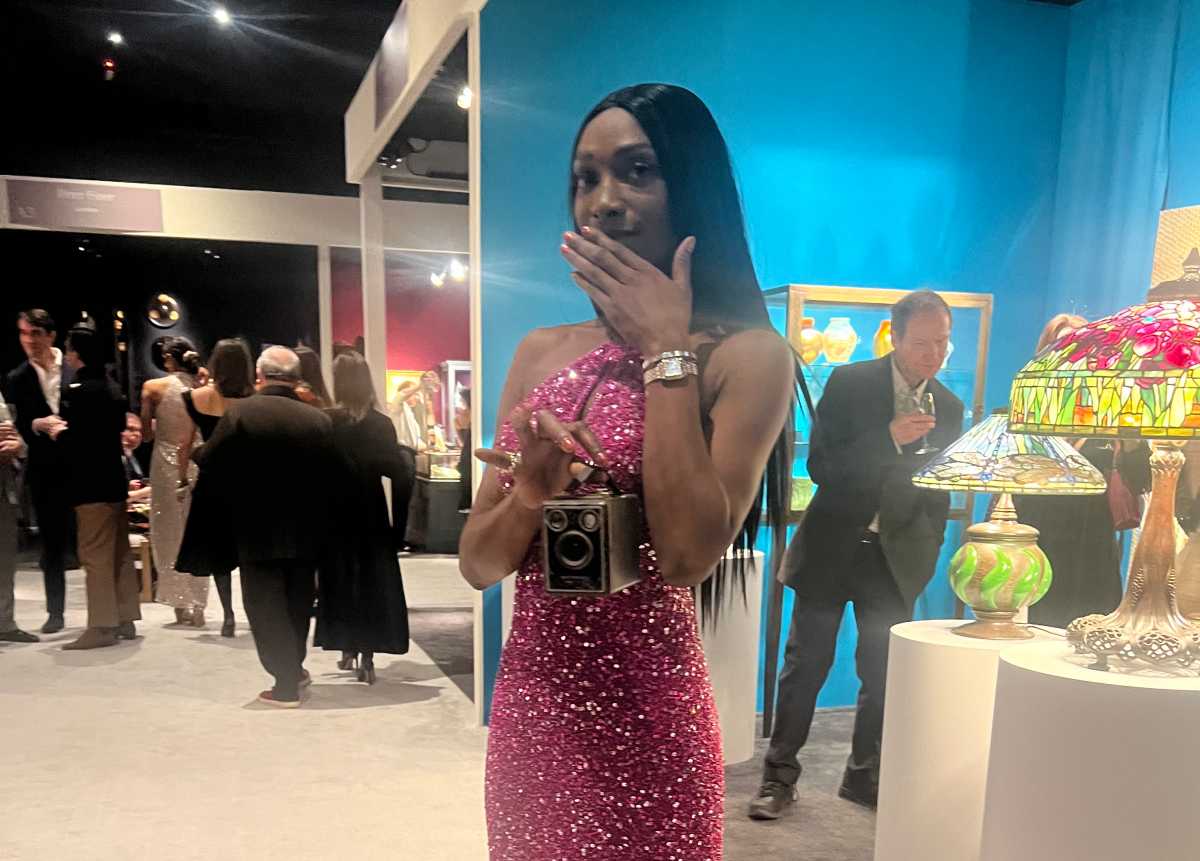
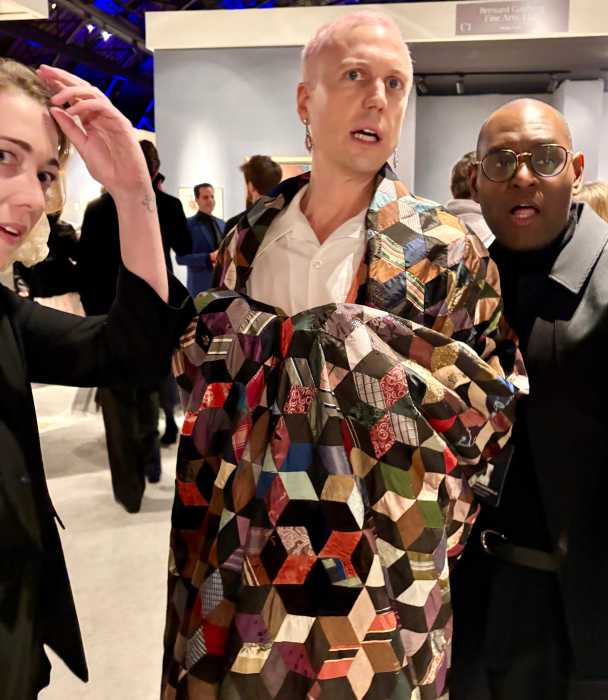
To dispel this widely-held notion that younger people have little to no interest in antiquarianism, the Young Collectors Night of the art and antique fair, The Winter Show (formerly The Winter Antiques Show), returned to the Park Avenue Armory last week, touting itself as “the ultimate gathering for the next generation of collectors, tastemakers, and art-world insiders.”
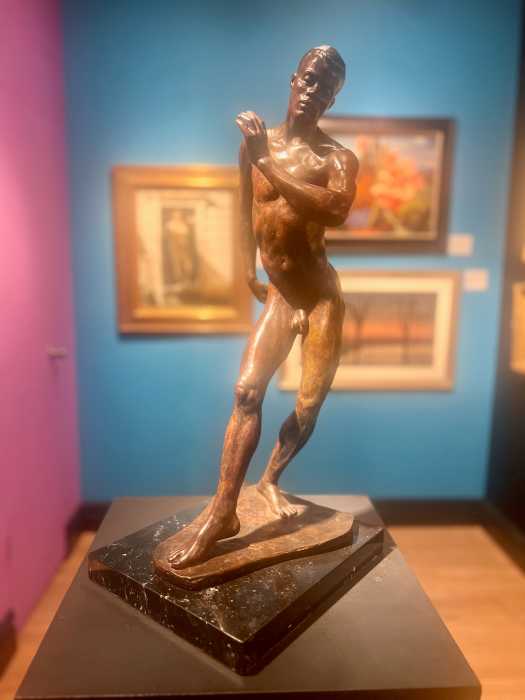
Attendees consumed scrumptious canapés as they strolled from booth to booth of the over 70 international exhibitors. From rare books and maps, to paintings and tapestries, to jewelry, sculpture, even a suit of medieval armor complete with shield and glaives (an antiquated weapon), the past was on display, preserved in objects as old as 5000 years.
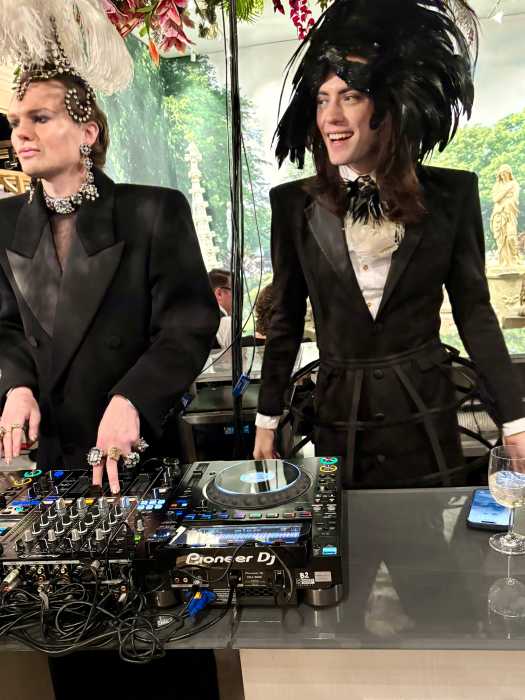
The Muses, the genderfluid deejay duo of Jack James Busa and Daniel Walters, filled the airwaves with their catchy mélange of retro and contemporary sounds, clad as they were in gigantic festooned headdresses.
It truly was an amalgam of old and young.
“I think one of our biggest mistakes is thinking that the past represents conservatism and that the present moment something inherently progressive or radical,” said Michael Diaz-Griffith, vice-chairperson of The Winter Show and author of “The New Antiquarians: At Home with Young Collectors” on a podcast ahead of the opening. “Could not be further from the truth.”
Founded in 1954, the Winter Show is one of America’s longest running art, antiques, and design fairs. Each year, its ticket sales have gone to benefit East Side House Settlement, a social services organization based in the Mott Haven section of the South Bronx, serving communities in the Bronx and upper Manhattan.
The event’s honorees were fashion designers Laura Kim and Fernando Garcia, both under 45, longtime co-creative directors at the fashion house Oscar de la Renta, who in December announced their departure to focus on their own brand, Monse. They exude the kind of kinetic upstart energy the Young Collectors Night aims to both generate and harness.
Jose Reyes, a student ambassador for East Side House Settlement, shared his reaction to a piece at the fair. “This painting really resonates with me,” he said, gesturing to “Menemsha,” a serene pastoral painting by the mid-20th century Missourian artist Thomas Hart Benton, exhibited by New York-based Avery Galleries. “In the wavy pattern, you can basically see the music. As a person who turns to music whenever I feel stressed and overwhelmed, looking at this painting brings me some kind of balance and some kind of peace.”
Roving historian Kwasi Hope Agyeman, who holds a master’s degree in museum studies, posted live from the show on his Instagram page, Kwasihope. “You know how sometimes you go to the museum and they say, ‘Don’t touch! Back, back, back!”? Here, if you see something you like, you can buy it and take it home with you,” he gushed.
Easier said than done. Price tags mostly started in the quintuple digits and skyrocketed. Some of the treasures once belonged to the pedigreed or powerful, adding zeroes to their sale prices. Whether or not a purchase was within reach, the payback, organizers contend, was not solely in dollars but sense.
“My goal is not for everybody just to buy things,” Diaz-Griffith said on the podcast. “It’s also about appreciating the stuff that’s in museums, understanding how it’s ours. You know, it wasn’t just Marie Antoinette’s.”
Nicholas Boston, Ph.D., is a professor of media sociology at Lehman College of the City University of New York (CUNY). Follow him on Twitter @DrNickBoston and Instagram @Nick_Boston_in_New York