Well over a year ago, I was introduced to Ian Bradley-Perrin, an HIV/AIDS historian curating an exhibition about how communities responded to the AIDS epidemic through the visual language of posters and ephemera. He had heard of my recent book, “GETTING IN: NYC Club Flyers from the Gay 1990s,” and was curious if I had any vintage invites with AIDS themes.
Did I ever. Gay dance clubs, besides offering sweaty, blissful spaces to let loose, served as safe havens during the darkest days of the crisis. Places where the LGBTQ community gathered for emotional support, to share vital information, and to raise money for AIDS groups like ACT UP, GMHC, and amfAR. Many club invites during this era reflected that ethos, and within weeks Ian selected a few eye-popping examples from my archive for the exhibition.
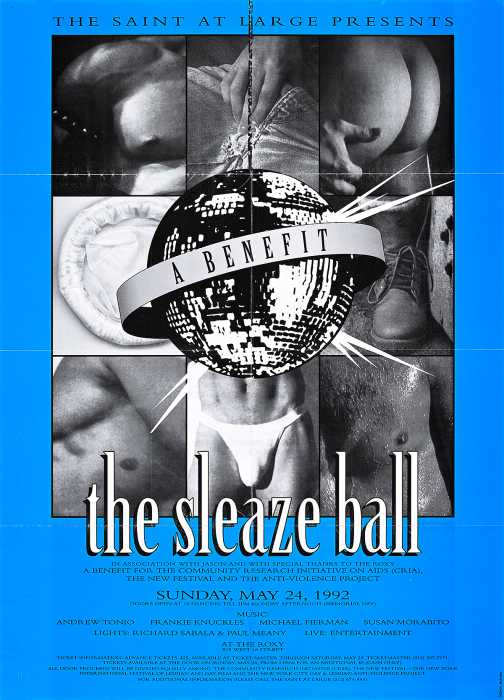
Flash forward to March 13, 2026 when the Poster House Museum in Chelsea debuts Love & Fury: New York’s Fight Against AIDS, which documents the harrowing yet hope-infused story of the visual response to the AIDS epidemic through posters, flyers, and other graphics.
As the “gay cancer” began decimating young gay men in the early 1980s, local groups identified the danger while public health authorities, including Republican president Ronald Reagan, blatantly ignored the crisis. The early term, GRID (Gay-Related Immune Deficiency), biased public perception, implying the syndrome could only afflict “homosexuals.” It was time for LGBTQ people to, per the LGBTQ community’s battle cry, “Get out of the closets and into the streets.”
It is supremely sobering that many of the poster creators were cut down in their prime due to complications from HIV/AIDS.
I recently caught up with Ian to discuss how Love & Fury revisits the images that emerged in the ’80s and ’90s during one of the city’s most devastating health crises. The interview has been condensed and edited.
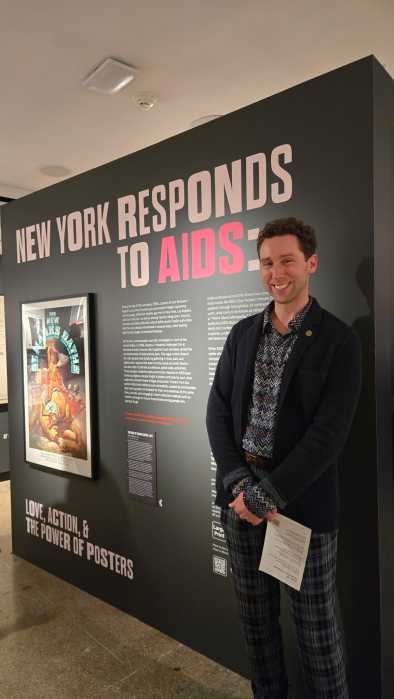
The pieces are visually stunning and deliver potent messages. Can you describe the overall mission of the exhibition?
It tries to do a few things. Primarily I want to recreate the visual landscape of the city during the AIDS epidemic. The various communities’ responses and the government’s response to AIDS played out in the visual sphere through advertising via posters, stickers, and flyers. I think that we can introduce new audiences to this extraordinary chapter in the city’s history. I also hope it draws people who lived through that period and generates poignant reflections on the era.
Can you talk about the curation process?
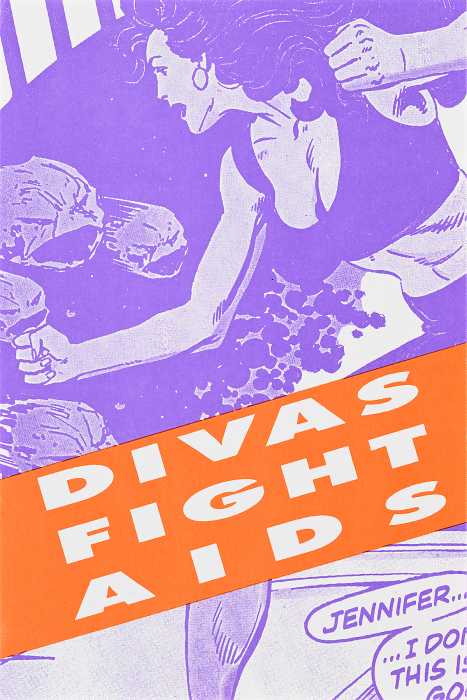
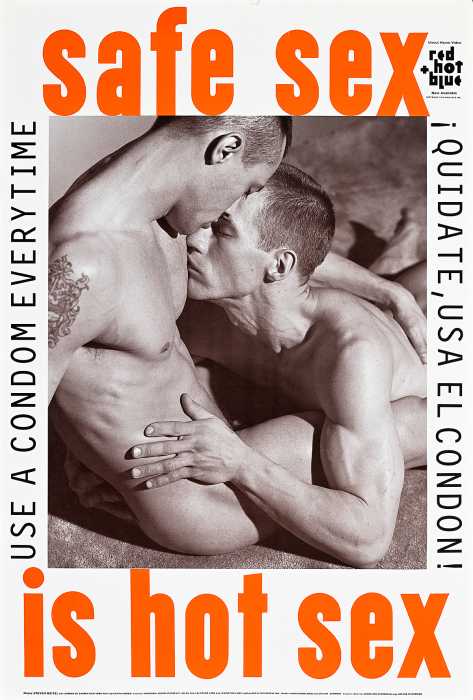
When we started, there were already a few posters in the museum’s permanent collection. The museum then acquired a number of posters through various auctions. Thinking about how we could cogently tell the story, we settled on four main themes. The first section focuses on AIDS education messaging, including safer sex practices from organizations like GMHC (Gay Men’s Health Crisis), and early messaging from city and state government agencies. The second section examines activist responses, particularly the work of Gran Fury and ACT UP. The third looks at the response of creative industries in New York — fashion, theater, and music — including groups like the Design Industries Foundation Fighting AIDS (DIFFA), and the Red Hot organization. The final section covers nightlife and fundraising, showing how traditionally queer spaces put their mission to work for the cause.
Can you name some of the artists who are represented?
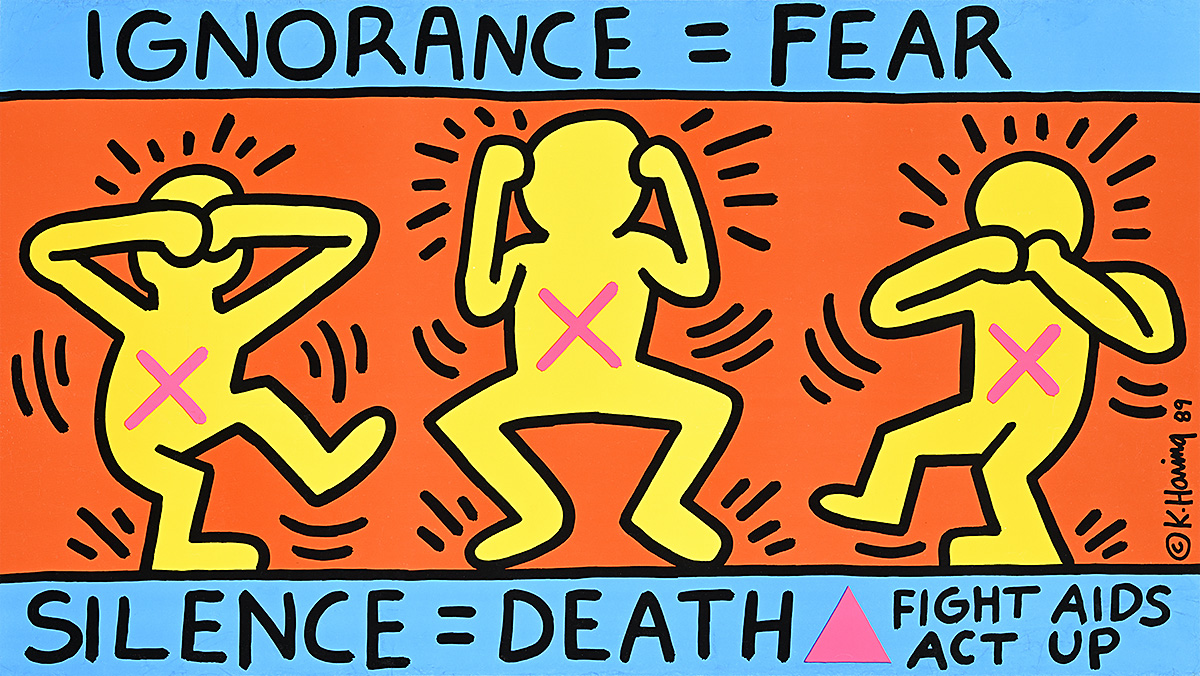
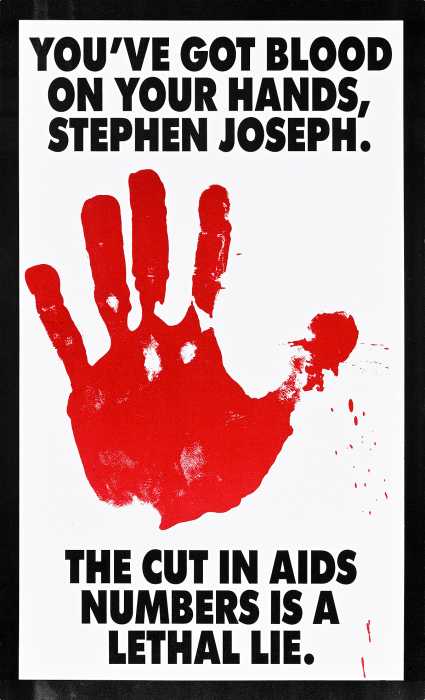
The exhibition features several prominent artists and designers. Keith Haring is perhaps the most famous, with his AIDS Dance-a-Thon and Ignorance = Fear posters. Milton Glaser, known for designing the iconic “I Love New York” logo, created the Angels in America poster. Enno Poersch, a founder of GMHC who was living with HIV, designed both the Barnum & Bailey Circus and The World’s Toughest Rodeo posters for early 1983 GMHC fundraisers. Gran Fury, the graphic design arm of ACT UP, created multiple works, including the “Blood On Your Hands” poster. Julian Schnabel designed the Love Ball II poster. Steven Meisel and Steven Klein each produced safer sex posters that are featured in the fashion response section.
Do you have any personal favorites?
One poster I want to draw attention to is the Paul Davis poster, A Gala Night for Singing, from 1985. It is a pre-ACT UP fundraiser poster for an event in the Hamptons that depicts a stylized vocalist. There is something about the beautiful visual and the timing of the poster that conveys this early feeling of grassroots response to the AIDS epidemic.
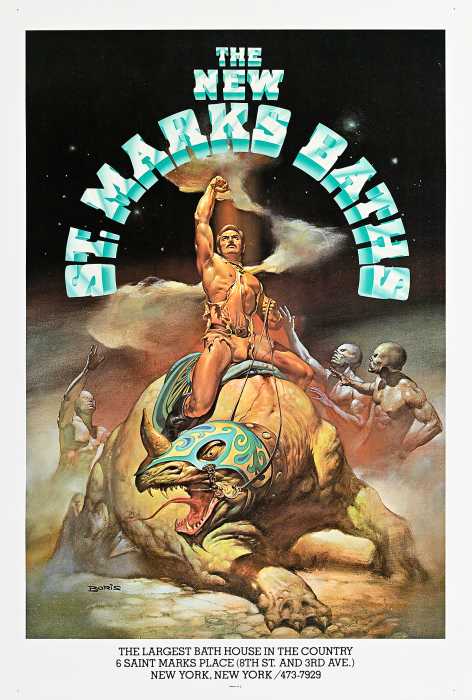
One poster from 1979 advertises “The New St. Marks Baths,” showing an idealized muscular man in a triumphant pose. How does this relate to the theme of the show?
It’s the only poster that encapsulates the period before the epidemic. It represents the incredible landscape of sexual behavior in the gay circuit, backrooms, bars, and bath houses. All of these unique, exciting, and culturally specific spaces where gay men would gather for sexual intimacy and community. This is the world from which the AIDS epidemic emerges. It raises questions around how can we protect intimacy and make sexuality safe in the context of a deadly sexually transmitted disease. This is why the gay community developed the concept of safer sex. And then the poster itself — the visuals [by Boris Vallejo] are incredibly striking.
I’m honored to have pieces of my NYC club flyer collection to be included. Why include them, when many are cards, not posters?
The Poster House typically includes ephemera supporting its exhibitions, and there was plenty of room for the smaller handbills. When I heard about your collection, I knew we were going to have a nightclub section, so it would fit perfectly. I think almost more than posters, the club handbill feels like the ’90s version of an invitation to a ball. It’s a ticket into this wondrous world. Certainly they were used to promote specific events, but they allowed you to put it in your pocket and take home as a memento. It felt really important for me to have these. It’s like trace evidence, not just that these events happened, but that people went to them. This handbill was passed from one person to another. For people who lived through this era, seeing the handbill can feel very powerful because it will evoke memories. For younger generations, it will be like, “What is this?” It will be an object of curiosity, because printed handbills are no longer in common use.
Did the poster makers anticipate their work would end up in museums?
There’s a wide range among the poster makers in the show. Some were already established artists who might have anticipated preservation, but many were unknown designers, perhaps interns. Even established artists often worked unpaid because the AIDS crisis was so deeply personal to the artistic community. The collective grief and anger around the epidemic joined together both established artists and unknown creators in a shared effort to bring about change.
Love & Fury: New York’s Fight Against AIDS | Poster House Museum | 119 W. 23rd St. (6th Ave.) | March 13 – September 6, 2026 | Open Thursdays – Sundays at 10 a.m.