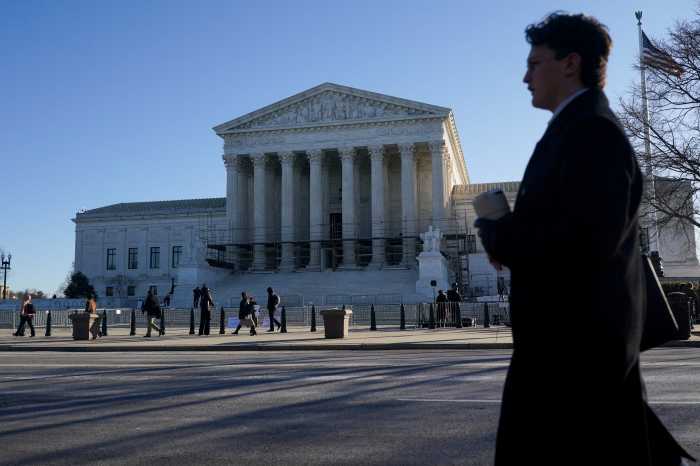
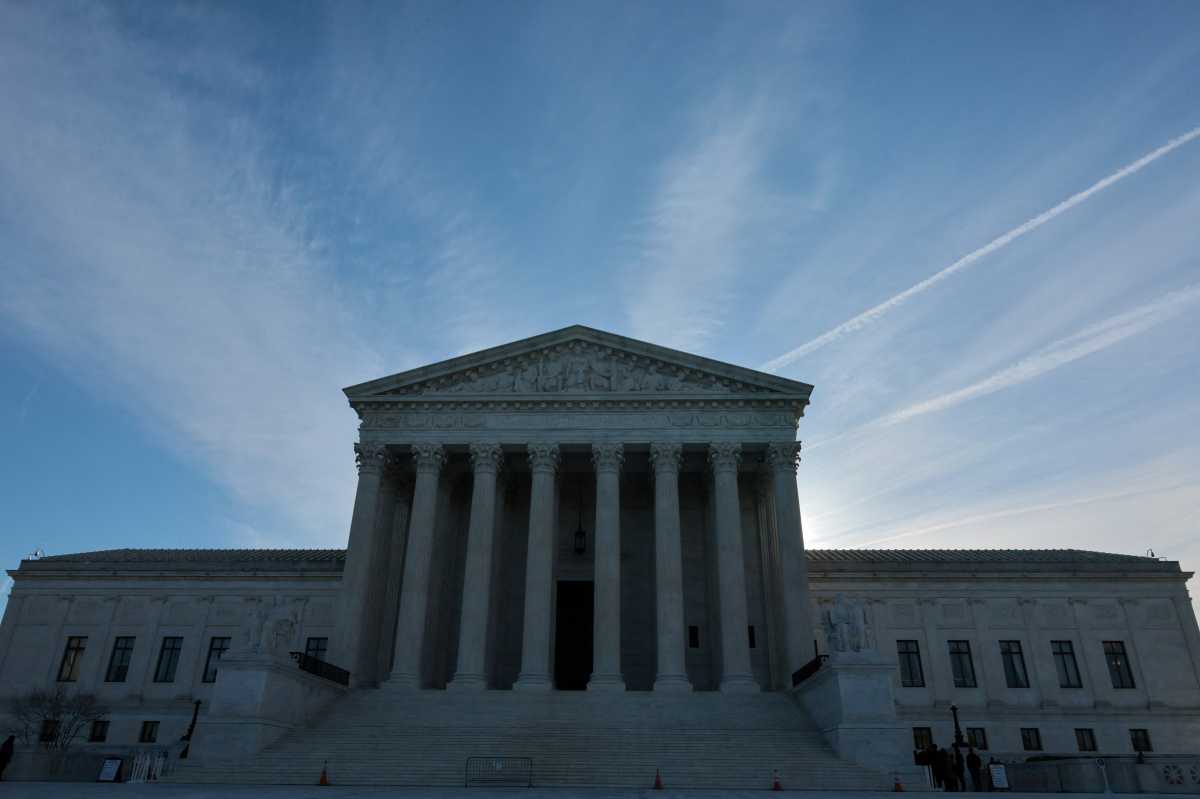
The Supreme Court on March 31 ruled against a Colorado state law banning the use of conversion therapy on minors, with nearly every justice siding with a Christian therapist on free speech grounds.
Justices ruled 8-1 in favor of the plaintiff, Kaley Chiles, an evangelical Christian therapist who sued Colorado in 2022, saying she was unable to work with minors who sought to live their lives “consistent with their faith,” according to the New York Times. Chiles, who was supported by the Trump administration, argued in court that she did not seek to “cure” clients’ attractions to the same sex, but wanted to assist them in achieving goals, including “seeking to reduce or eliminate unwanted sexual attractions.”
Justice Ketanji Brown Jackson was the only justice to dissent in the case, known as Chiles v. Salazar.
The Supreme Court announced in March of last year that it would review a 2024 decision by a three-judge panel of the US Court of Appeals for the 10th Circuit, which rejected Chiles’ challenge to Colorado’s conversion therapy law. In that decision, the 10th Circuit found that the law did not violate Chiles’ freedom of speech or free exercise of religion.
In explaining the Supreme Court’s decision, Justice Neil Gorsuch first acknowledged that the question of how to best help minors “struggling with issues of gender identity or sexual orientation” is “a subject of ‘fierce public debate.'” From there, however, he laid out why he and other justices ruled against the law.
“But Colorado’s law addressing conversion therapy does not just ban physical interventions,” Gorsuch wrote. “In cases like this, it censors speech based on viewpoint. Colorado may regard its policy as essential to public health and safety. Certainly, censorious governments throughout history have believed the same. But the First Amendment stands as a shield against any effort to enforce orthodoxy in thought or speech in this country. It reflects instead a judgment that every American possesses an inalienable right to think and speak freely, and a faith in the free marketplace of ideas as the best means for discovering truth.”
Gorsuch added: “However well-intentioned, any law that suppresses speech based on viewpoint represents an ‘egregious’ assault on both of those commitments.”
According to the Associated Press, the case was sent back to a lower court to determine if it meets a limited legal standard.
The ruling could have a significant impact on the nearly two dozen states with laws against conversion therapy on minors. New York State banned conversion therapy among minors in 2019.
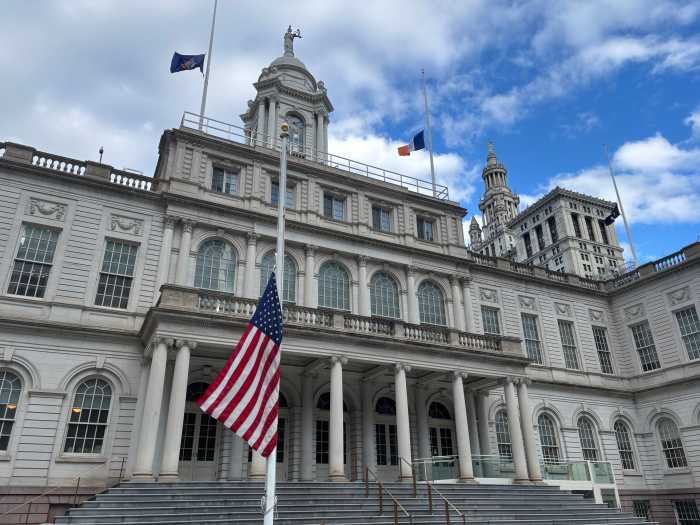
In 2017, New York City enacted its own ban on conversion therapy, but it was more expansive and not limited to minors. City lawmakers moved to repeal it two years later out of fear that potential lawsuits against it could reach the Supreme Court and lead to an unfavorable ruling. The Alliance Defending Freedom — a far-right anti-LGBTQ legal group — targeted the city’s law in a 2019 lawsuit. The Alliance Defending Freedom represented Chiles in this case.
Tim Schraeder Rodriguez, a survivor of conversion therapy who lives in New York City and is the author of the forthcoming book and memoir, “Conversion Therapy Dropout,” said the Supreme Court ignored decades of medical consensus and the lived experience of survivors like him.
“This ruling elevates ‘professional speech’ over the safety of children and gives new legitimacy to a practice that has been widely discredited and condemned,” he said. “That this decision was issued on International Transgender Day of Visibility is not lost on our community. This is not about care — it is about erasure. I survived eight years in so-called ‘conversion therapy’ and spent the next decade navigating the depression and substance abuse it left behind. I share my story so LGBTQ youth know this truth: you are not broken, and you are not alone.”
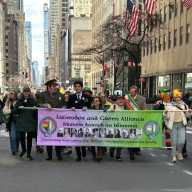
Polly Crozier, who serves as the director of family advocacy at GLBTQ Legal Advocates and Defenders (GLAD Law), criticized the decision but said there are still ways to push back against conversion therapy.
“This is a dangerous practice that has been condemned by every major medical association in the country,” Crozier said in a written statement. “Today’s decision does not change the science, and it does not change the fact that conversion therapists who harm patients will still face legal consequences, and that family advocates, mental health practitioners, and all of us who care about the wellbeing of youth will continue working to shield LGBTQ+ young people and their families from this dangerous practice.”
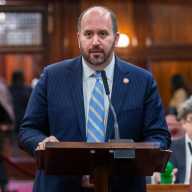
Out Manhattan Borough President Brad Hoylman-Sigal, who carried the state’s legislation to ban conversion therapy when he was in the State Senate, ripped the Supreme Court’s decision.
“Conversion therapy is a discredited, harmful practice that puts LGBTQ+ young people at risk,” Hoylman-Sigal wrote on X. “New York will keep doing what’s right and protect our kids and continue to stand firmly on the side of dignity, safety, and equality. I’m proud to have written the legislation alongside @DeborahJGlick to ban this practice for our youth in New York State.”
Out Assemblymember Deborah Glick, who carried that same legislation in New York’s lower house, also condemned the decision as “disraceful” and “hateful,” writing on X that the Supreme Court ignored “all evidence of the crucial damage visited upon young people by destructive Conversion Therapy practices.”