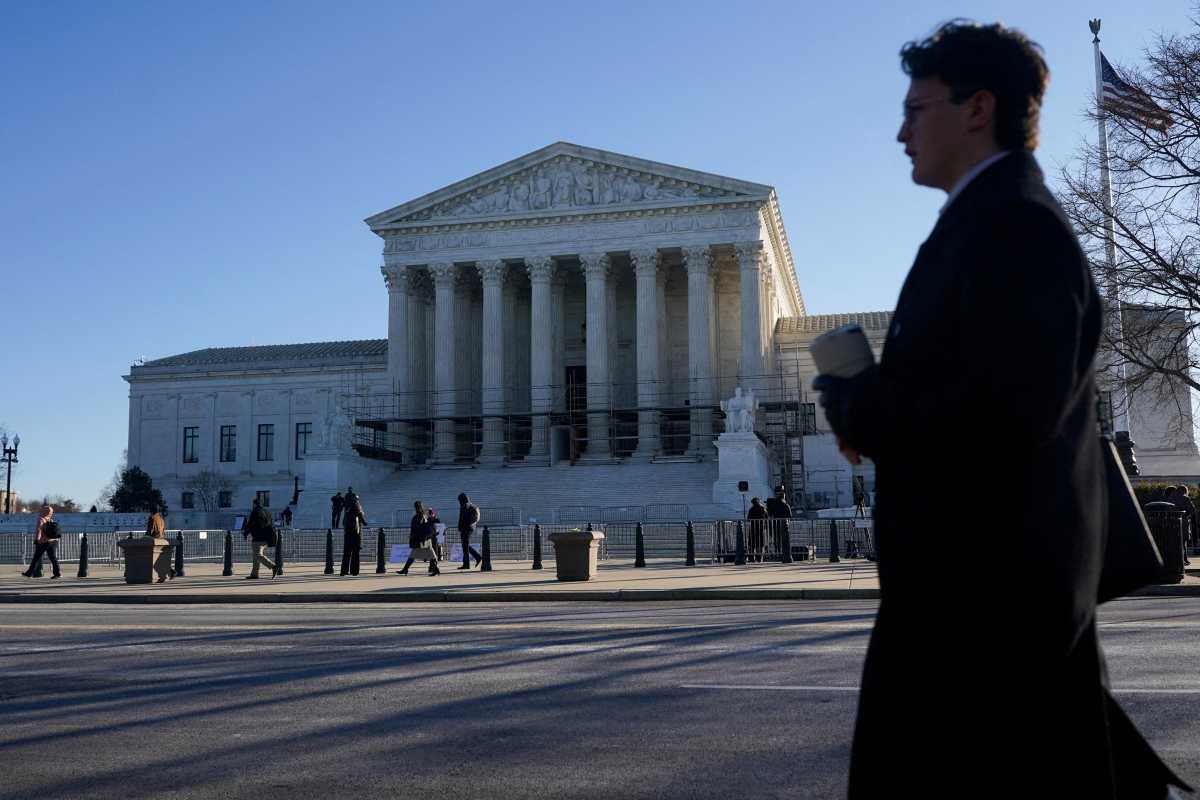
On March 2 the US Supreme Court overruled a panel of the San Francisco-based US Court of Appeals for the Ninth Circuit, thus blocking California from enforcing a law that was intended to protect the confidentiality of public school students who may identify as transgender and request their school to recognize their preferred name and pronouns without being involuntarily outed to their parents.
The court was taking action on its “shadow docket,” a nickname that critics of the court have given to what is sometimes called the “emergency docket,” in which litigants in lower courts ask the Supreme Court to intervene on their behalf in an ongoing case.
In a blog posting, Erin Reed (Erininthemorning@substack.com) pointed out that this is the fifth anti-transgender ruling by the Supreme Court during the new Trump Administration, pointing to rulings last year to let Trump’s ban on transgender military service take effect while a challenge was being litigated, to uphold Tennessee’s ban on gender-affirming care for minors, to allow parents to “opt-out” their children from exposure to LGBTQ curriculum, and to allow the State Department to implement a passport policy that would deprive transgender and non-binary people of passports consistent with their gender identity. Still pending at the court as of March 2, argued earlier this term, are cases about conversion therapy and transgender women’s participation in sports competition. The Trump Administration’s war on “gender ideology” has surfaced with a vengeance at the Supreme Court, with a majority of the justices seeming disposed to rule against transgender interests.
In this case, Mirabelli v. Bonta, a group of teachers and parents of some California school children brought a lawsuit seeking to block enforcement of a California statute that caused school districts to adopt policies restricting teachers and other personnel from informing parents that their children were seeking to use names and pronouns different from the sex designation on their birth certificate, unless the child specifically authorized school officials to inform their parents. Some teachers argued that the policies violated their free speech rights and the parents’ rights concerning the raising of their children. Some claimed that the policy was forcing them to lie to parents if they were questioned about their students’ sexuality.
US District Judge Roger T. Benitez signed an order on Dec. 22, 2025, issuing a permanent injunction after trial in which he restricted California Attorney General Rob Bonta and several state and local officials from implementing the statute or any educational institutions from misleading the parent or guardian of a minor child in the education system about their child’s gender presentation at school. The order broadly describes “misleading” as any action to conceal, lie, or fail to disclose that a child was using different pronouns or names or undergoing social transition without their parents’ knowledge. The state appealed to the Ninth Circuit Court of Appeals, where a three-judge panel issued a stay of the injunction while the case was pending on appeal. The plaintiffs (parents and teachers) then asked the Ninth Circuit to reconsider that ruling by a larger panel of judges (“en banc review”) and at the same time filed an application with the Supreme Court to vacate the Ninth Circuit Court of Appeals’ order staying the permanent injunction.
During the trial, Judge Benitez had certified the case as a class action, designating four distinct classes: parents with religious objections, parents whose objections are not religious, and similarly, teachers with religious objections and those without religious objections but rather free speech objections. In the end, he decided that all four classes of plaintiffs should benefit from a statewide injunction, premising his ruling on religious freedom and due process for the parents and religious freedom and freedom of speech for the teachers.
The Supreme Court granted the plaintiffs’ application in part, only as to the two parent classes. Apparently, the court was not interested in taking on the question of constitutionality of restrictions on teacher speech in this opinion. Technically, all the court was doing was vacating the stay issued by the Ninth Circuit panel and was not issuing a ruling on the merits. The issue for the court, as it was for the Ninth Circuit panel, was whether the plaintiffs were likely to succeed in their appeal of Judge Benitez’s ruling and, if so, whether it was appropriate to block enforcement of the state law and school district policies while their appeal was pending; who would be harmed or helped by either granting or denying the stay?
The majority of the Supreme Court, all six Republican appointees, agreed that the stay should be vacated as to the parents’ claims that the challenged policies violated their rights to Free Exercise of Religion under the 1st Amendment and parental rights as part of the liberty protected by the 14th Amendment Due Process Clause.
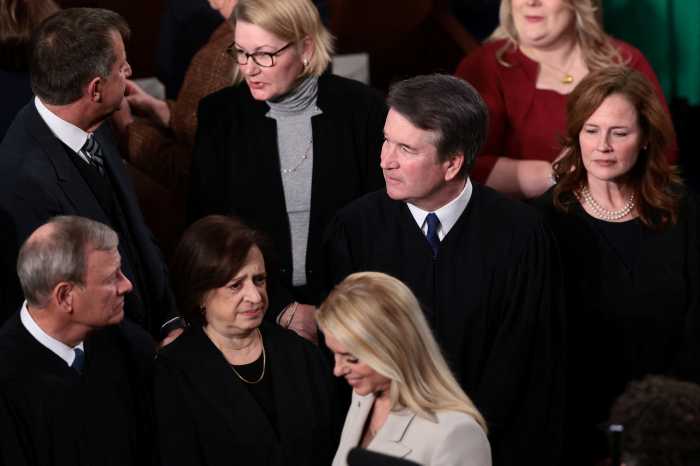
Two of the justices — Clarence Thomas and Samuel Alito — would have granted the application in full, extending the ruling to the teachers. Justice Elena Kagan dissented in an opinion joined by Justice Ketanji Brown Jackson. Justice Sonia Sotomayor indicated that she would have denied the application and let the Ninth Circuit stay of the injunction remain in effect through the appellate process. It is likely that the ultimate ruling on the merits of the plaintiffs’ challenge to the state policies will be appealed to the Supreme Court, no matter which way the Ninth Circuit rules, so the court may well address these issues again down the road.
In the meantime, however, the court published this opinion on its website, and it is likely to affect around 40 lawsuits now pending in the lower federal and state courts in which parents are challenging confidentiality policies that school boards and state legislators have adopted to protect transgender students. Although technically the court’s March 2 ruling is not a decision on the merits of these issues, it is a signal that six members of the court think that parent groups are likely to prevail in their constitutional challenges to the contested policies. Parent groups have generally been losing these cases in the lower courts, with Judge Benitez’s decision to issue an injunction being a distinct outlier.
The Supreme Court usually does not issue an opinion when it grants or denies an application on the emergency docket, but in this case it issued a short opinion per curiam (which means “by the court” without attributing it to any particular justice) giving some explanation. The court pointed to its decision last year in Mahmoud v. Taylor, in which the court held that parents with religious objections to homosexuality or transgender status have a constitutional right to be informed when schools adopt curricula about these subjects and to elect to “opt out” their children from exposure to those curricula. Thus, the policy of the school district in that case was subjected to “strict scrutiny,” which the court held required it to be stricken because the state could not, in the opinion of the majority of the court, showing a compelling interest to present this materials to students over the protests of their parents.
The court explained that parents would similarly have a right to be informed about their children having asked to use different names and pronouns or to socially transition at school, rooted in the Free Exercise Clause for parents with religious concerns and more broadly for all parents in the Due Process Clause, which has been interpreted since the 1920s to protect parental rights, including in the context of educating their children. The court suggested that California’s policy would not likely survive “strict scrutiny” as it had been applied in the Mahmoud case.
Justice Kagan, while disclaiming a firm view about the constitutionality of California’s policy, chided the court for departing from its usual procedures in this case. Normally, the Supreme Court will not intervene when a party has initiated an appeals process in a lower court. In this case, the parents had already urged the Ninth Circuit to vacate the panel’s stay for reconsideration by a larger group of judges. Kagan pointed out that this is a heavily litigated issue around the country, and there is already a petition on file with the court to review a final decision on this issue by the First Circuit Court of Appeals. Why dispose of a complicated issue on the “emergency docket” with its rushed procedure and lack of the usual briefing and oral argument when the opportunity exists — if the court is eager to resolve this issue — to grant the pending petition and schedule the usual more deliberative approach towards reaching a decision? Why the rush while an appeal is pending in the Ninth Circuit?
Justice Kagan also noted the contrast between the court’s solicitude for parental rights in this case, and its decision last term not to consider the parents’ due process claims in the Skrmetti case, where the court rejected a challenge to Tennessee’s ban of gender-affirming care for minors in a case that was brought by parents who wanted to provide this care for their transgender children. When it came to judicial review, the court in Skrmetti denied petitions by the parent groups from Tennessee and Kentucky who originally filed the cases from those states and instead granted a narrow petition from the US Solicitor General (Biden Administration) that raised only an Equal Protection argument, entirely bypassing the issue of parental rights.
Kagan also pointed out that the court’s discussion of the parents’ due process rights seemed contrary to many of its recent decisions cutting back on substantive due process, most dramatically when it overruled Roe v. Wade, the abortion rights precedent, in the Dobbs case. She quoted opinions by several justices criticizing substantive due process and calling for the court to abandon the theory. This provoked Justice Barrett to write a concurring opinion dealing with substantive due process, joined by Chief Justice Roberts and Justice Brett Kavanaugh, disclaiming the intent (voiced most prominently by Justice Thomas) for the court to overrule all its substantive due process decisions, including the important gay rights decision in Lawrence v. Texas (sodomy laws) and Obergefell v. Hodges (same-sex marriage).
The bottom line of the March 2 ruling is that the California policy is now enjoined and schools cannot promise confidentiality to students who want to try out social gender transition at school without involving their parents. And, because what the court decided on the emergency docket sends a signal to the lower courts about what the justices might rule if this issue come before them in a fully-argued case on the merits of parents’ constitutional claims, the court’s ruling may affect the Ninth Circuit’s possible reconsideration of the Ninth Circuit’s panel to issue the now-vacated stay.