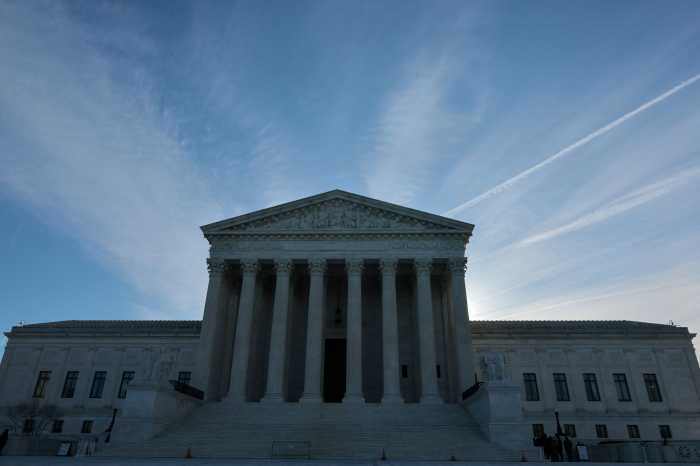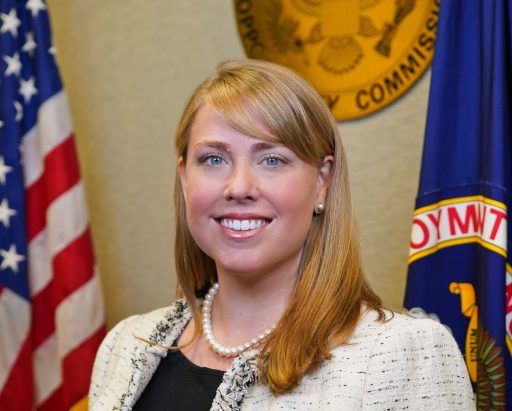
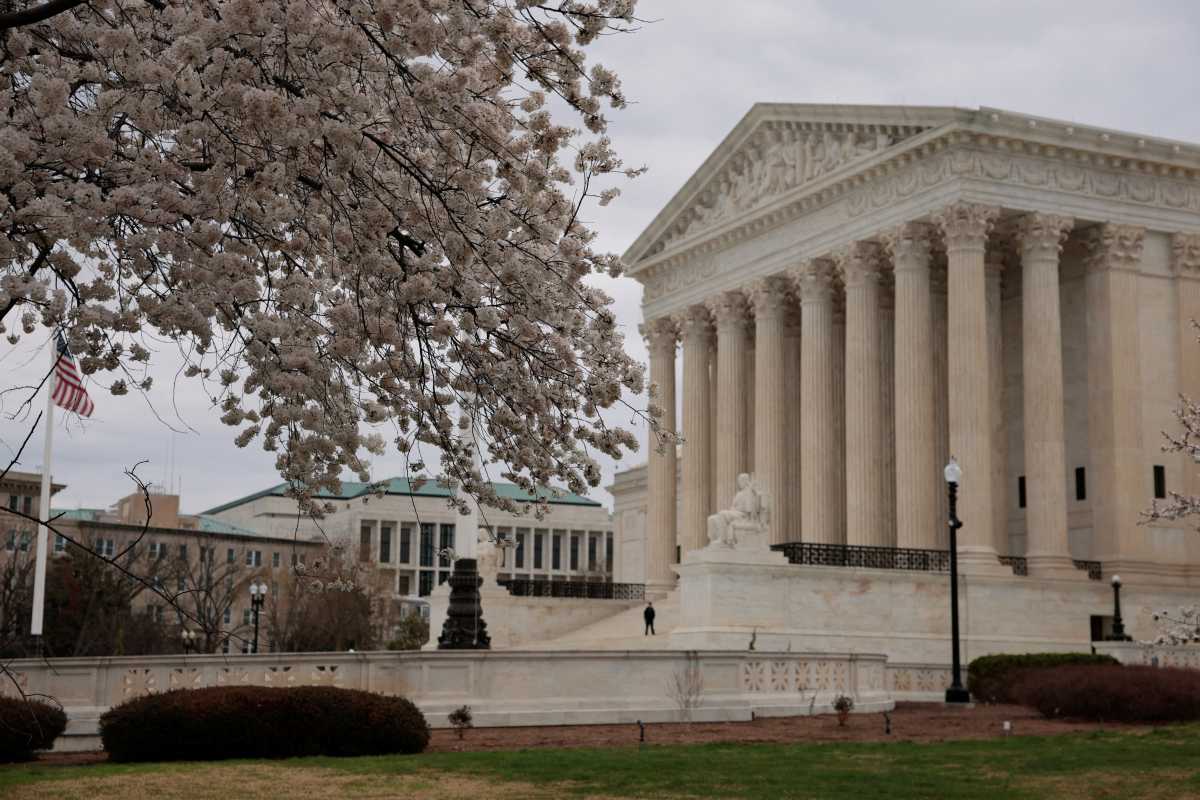
The US Supreme Court voted 8-1 in an opinion issued on March 31 in Chiles v. Salazar that the district court should have granted counselor Kaley Chiles’ motion for a preliminary injunction to block enforcement of the Colorado Minor Conversion Therapy Law while Chiles’ lawsuit challenging the law on First Amendment free speech grounds was litigated.
Technically, the opinion by Justice Neil Gorsuch held that U. S. District Judge Charlotte Sweeney did not apply “sufficiently rigorous First Amendment scrutiny” in determining that Chiles was not likely to prevail on her free speech claim. But, as a practical matter, it is likely that lower federal and state courts will treat this ruling as a definitive pronouncement by the Supreme Court that laws such as Colorado’s, which are in effect in many states (including New York), are subject to “strict scrutiny” as viewpoint-based restriction of speech and likely unconstitutional.
From the middle of the 20th century onwards, psychiatric practitioners sought to “cure” patients of “homosexuality” through crude methods such as lobotomies, shock therapy, and aversion therapy, as well as talk therapy, more commonly the domain of psychologists. There was no evidence that these efforts worked, and eventually, after a concerted campaign during the 1960s and 1970s, the American Psychiatric Association voted in a referendum of its members to approve its Board of Directors’ action in removing the “homosexuality” from the list of mental disorders in the Association’s Diagnostic and Statistical Manual. One newspaper headline proclaimed that thousands of homosexuals had been “cured” overnight.
The referendum passed by a clear majority, but a substantial minority of mental health practitioners continued to believe that “homosexuality” and, eventually, “gender dysphoria” could be “cured.” Although the cruder methods were mainly abandoned when professional associations in health care repudiated them as part of a standard of care, “conversion therapy” practitioners, sometimes operating under the rubric of “sexual orientation change efforts,” continued their practice, despite the lack of scientific evidence to show that “cures” were possible.
Over the past few decades, as evidence mounted about the harm that being subjected to such treatment had inflicted, particularly on minors, many of whom were consigned to such treatment by their parents without knowing the psychological risks they were taking, LGBTQ rights advocates were able to persuade many states and municipalities to pass laws banning the practice of conversion therapy on minors. Colorado passed its law in 2019, outlawing all types of conversion therapy on minors. Kaley Chiles, a licensed counselor who alleges that she practices only talk therapy, and then only on patients who want to change their sexuality, believed that her practice could subject her to prosecution by Colorado. She filed this lawsuit claiming that her “talk therapy” was protected by the First Amendment’s prohibition on the state abridging her freedom of speech. She did not contest the constitutionality of the law as it applied to other treatments, just her talk therapy.
Chiles sought a preliminary injunction to block the application of the law to her while the case was proceeding. Judge Sweeney denied the preliminary injunction, relying on judicial opinions rejecting such free speech arguments by federal courts in other parts of the country. Under those precedents, bans on conversion therapy were seen as a regulation of medical practice with an incidental effect on the speech of the practitioner. As such, the law was likely to be upheld because the state was acting based on accumulating evidence of harm to minors who were subjected to the practice. Because this was a pretrial ruling, the judge based her decision on the factual claims asserted in Chiles’ complaint and her allegations about the nature of her practice.
Judge Sweeney’s decision, announced in December, 2022, was affirmed in 2024 by a 2-1 vote of a three-judge panel of the Denver-based 10th Circuit Court of Appeals. Chiles was represented at that point by Alliance Defending Freedom (ADF), a right-wing litigation group that frequently litigates challenges to laws protecting LGBTQ rights. ADF filed a petition with the Supreme Court to take up the case, which was granted on March 10, 2025, and the case was argued on October 7, 2025. The issue for the Court to decide was whether Judge Sweeney and the 10th Circuit panel majority erred in refusing to grant a preliminary injunction against enforcement of the law against Chiles while her case was pending. A preliminary injunction will only be granted if the trial judge believes that the party seeking the injunction is likely to prevail after a full trial on the merits of the case. Having lost her motion, Chiles claims that she has not performed her talk therapy because the law was in effect and she feared prosecution.
Writing for the Court, Justice Neil Gorsuch based his summary of the facts, as had the lower courts, on Chiles’ factual allegations in support of her motion for preliminary injunction. Although he briefly mentioned that “the term ‘conversion therapy’ may evoke physical techniques such as ‘electric shock’ therapy aimed at changing an individual’s sexual orientation or gender identity,” referring to the brief filed by Colorado in opposition to the petition to the Court, Gorsuch’s opinion is bereft of the wide body of evidence presented to the Colorado legislature about the harm caused by conversion therapy. Instead, he focuses on Chiles’ interpretation of the statute as abridging her freedom of speech because of its content and point of view.
To the court, all the harm here was directed at Chiles, who was forbidden to practice her alleged type of conversion therapy out of fear of losing her counseling license or incurring financial penalties. And since her speech would be abridged because of its content and point of view, said the court, it was subject to “strict scrutiny,” which is almost always fatal to the survival of the law, as it requires the state to show a compelling interest sufficient to outweigh the burden on freedom of speech. But since there was no trial on the merits while the appeal of the denial of preliminary injunction was proceeding, the formal record in this case does not include the evidence that the state would be presenting at trial to justify the statute. Gorsuch’s opinion is instead full of the rhapsodic language that judges use to celebrate the centrality of freedom of speech in American jurisprudence.
The sole dissenter was Justice Ketanji Brown Jackson, whose dissent was substantially longer than Gorsuch’s opinion, partly because it supplies what was conspicuously lacking from that opinion, a detailed description of the documented harm caused by subjecting minors to conversion therapy – including “talk therapy” – that would make it justified for the state to outlaw it, in light of the lack of scientific evidence that it is beneficial. Furthermore, Justice Jackson pointed out that the court had misconstrued its own precedents on state regulation of medical practice that may incidentally affect speech, arguing that the district and circuit courts had correctly applied those precedents to reject the motion for preliminary injunction because of the likelihood that Chiles’ challenge would fail under these existing precedents.
It was unfortunate that this issue came to the Supreme Court in the procedural posture of an appeal from a denial of a preliminary injunction, which left the court with an incomplete factual record that prompted it to conclude that the state would be unable to justify enacting the law. Although this was not a case from the court’s emergency docket that has generated so many unfortunate rulings over the past year on “emergency applications” by the Trump administration to allow actions of dubious legality to go into effect despite contrary rulings by the lower courts, it has much of the same odor of an opinion arising from ignorance rather than an objective evaluation of a completed trial court process with pretrial discovery and a district court opinion basing fact finding on a full litigation record.
On the other hand, the narrow focus of the opinion on Chiles’ free speech claim leaves plenty of room for continued challenges to conversion therapy. In a statement released shortly after the opinion was announced, the National Center for Lesbian Rights’ Legal Director, Shannon Minter, pointed out that the opinion does not declare conversion therapy to be “safe, effective, or ethical,” does not prevent survivors of conversion therapy from suing their therapists for damages on theories of consumer fraud (a theory that prevailed in the New Jersey courts several years ago), medical malpractice (since conversion therapy violates the standards of care established by the nation’s leading professional associations), and infliction of emotional distress.
The opinion does not “strip licensing boards of authority to investigate and discipline practitioners whose conducts falls below professional standards of care,” said Minter, and does not “invalidate consumer protection laws that prohibit fraudulent and deceptive practices.” It also does not change the professional clinical consensus against conversion therapy. Minter observed that NCLR and other civil rights and political organizations are working on other strategies to protect LGBTQ youth from conversion therapy by enacting appropriate legislation.