Writer/director Charlie Polinger makes an auspicious feature debut with his potent psychological thriller, “The Plague.”
On his first day of a second term of a summer water polo camp coached by Daddy Wags (Joel Edgerton), 12-year-old Ben (Everett Blunck) is seen treading water. It is an apt metaphor for what is to come, as he will either sink or swim amid the other boys.
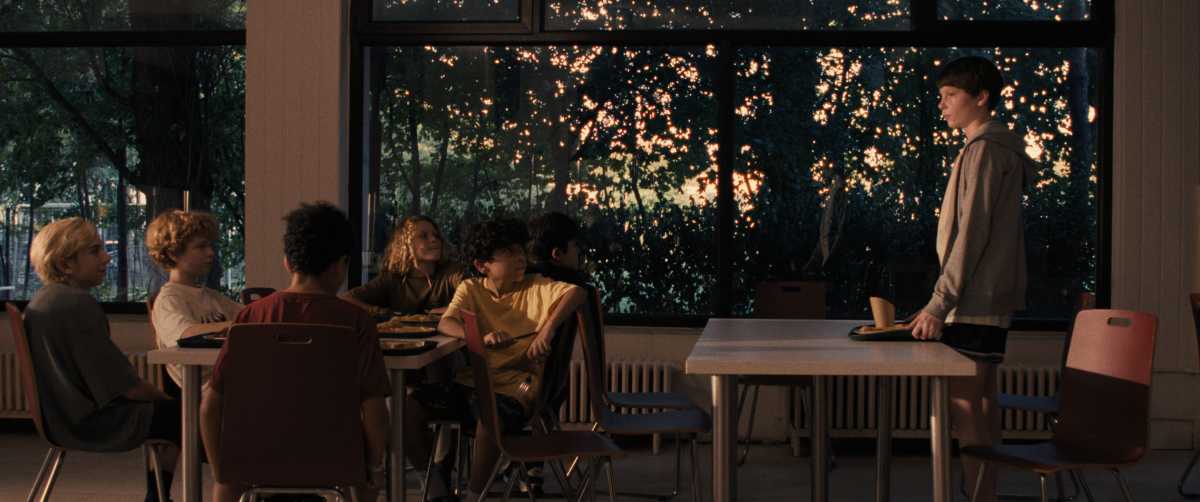
An early test comes in the camp’s lunchroom where a handful of campers move tables when Eli (Kenny Rasmussen) arrives to sit with them. Eli, Ben learns, has “the plague,” a probably imaginary disease that reportedly starts with pimples, develops into a rash, then causes the loss of motor skills before brain rot. Significantly, there is no cure. If someone with the contagious plague touches you, you must wash immediately to avoid infection. Any parallels to the fear of AIDS cannot be unintentional.
“The Plague” uses the hothouse atmosphere of the camp to also address themes of bullying and peer pressure. At the lunch table, Jake (Kayo Martin) is the alpha male. He taunts Ben, who may have said “Sop” not “Stop” in a conversation, and nicknames him “Soppy,” which all the other boys call him thereafter. Ben takes the ribbing as good-natured, because he desperately wants to belong, and, he insists, teasing is what friends do to each other. In contrast, Eli is an outcast who wears a swimming shirt (for a rash he developed) and who plays a practical joke on Ben that piques the noob’s curiosity about this strange kid.
Polinger slowly ratchets up the tension as Ben feels torn between the cool kids, who are not very nice, and having sympathy for the social pariah who is ridiculed — most notably when Eli pops a boner during a water polo practice session. How Daddy Wags handles that particular episode — he can’t quite control ringleader Jake — shows the uneven and uneasy power dynamics at play in this crucible.
Throughout the film, the boys ask each other “Would you rather” questions, including one Eli poses to Ben: “Would you rather f–k a dog and no one ever knows about it, or not f–k a dog and everyone thinks you did?,” which gets at the root of the bullying and how social behavior is formulated in youth where kids champion cruelty and have no pity for the weak ones they exploit.
“The Plague” is all about shame and how Jake the bully is able to manipulate others based on their words and/or actions. Ben, who is teased by Jake for being a vegetarian, defends his practice by advocating his empathy for the animals. However, his claim, “You can’t go around killing innocent cows just because they are different,” falls on deaf ears. After Ben helps apply cream to Eli’s back, Jake lets the other kids “connect the dots” and deduce that Ben now has “the plague” as well.
As Ben grapples with being ostracized, “The Plague” gets more intense and disturbing. Ben is humiliated, and in one particularly upsetting scene, tortured by the other kids. As he becomes more depressed by the situations that develop, Ben tries to escape, only to be given an uninspiring pep talk by Daddy Wags who urges him to just “be yourself.” The depth of his despair lingers on Ben as he starts to cry.
Polinger shrewdly conveys the “fear of difference” in how the scenes are framed. Visually, the film’s crisp cinematography, by Steven Breckon, emphasizes reflective surfaces and provide cues that illustrate how Ben perceives others and how others perceive him. After Ben is “infected,” he is seen isolated in the pool; no one will pass the ball to him. In the showers, he is given a wide berth because of fear of contact. Ben is also avoided in the lunchroom and the locker room — not unlike how Eli was treated in previous scenes. Ben tries to shift the balance of power in an exchange he has with an apologetic Jake as well as during an intense physical altercation that occurs during a water polo game. But as Ben becomes emboldened, will he himself turn into a bully?
Blunck, who starred as a gay teen in “Griffin in Summer” earlier this year, gives a pitch-perfect performance here, capturing the uneasiness Ben feels as he is verbally, physically, and emotionally abused. Blunck makes Ben a sensitive, compassionate pre-teen who tries to put on a brave face as he encounters bad behavior and works out the ethical dilemmas he encounters. He skillfully manages Ben’s efforts to alternately give into peer pressure or march to the beat of a different drummer. His scenes with Kenny Rasmussen’s Eli are especially well played and tense.
In support, Kayo Martin delivers a breakout turn as Jake, who provokes anger or loyalty as he instills fear in everyone. Martin never overplays his role as the villain, which is what makes him so good in the role.
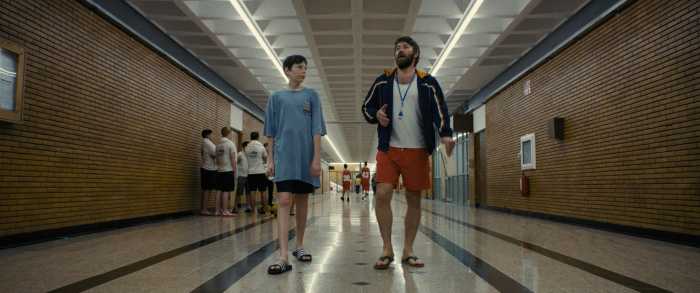
As the sole adult on screen, Joel Edgerton’s Daddy Wags is appropriately out of his depths with his young charges. His character provides yet another illustration of masculinity, which adds depth to this film about how codes of male behavior are formed.
While not a gay film per se, “The Plague” is certain to resonate with queer viewers who have experienced bullying and feelings of being different. It is a troubling and haunting drama.
“The Plague” | Directed by Charlie Polinger | Opening December 24 at the IFC Center | Distributed by Independent Film Company