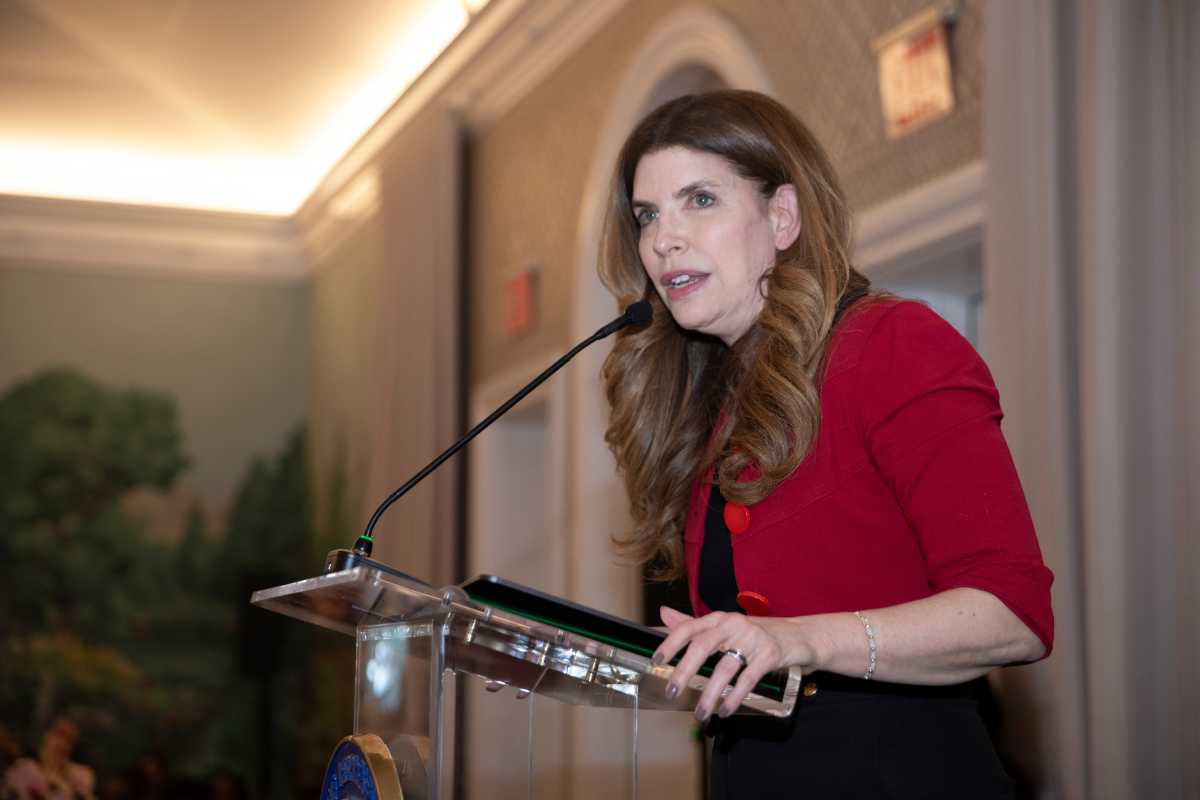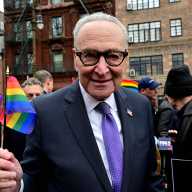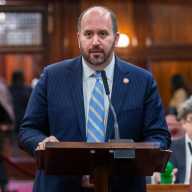
Speaking at an event marking the 40th anniversary of the enactment of a law that added sexual orientation to New York City’s human rights law, Lillian Bonsignore, who was appointed commissioner of the city’s Fire Department (FDNY) by Mayor Zohran Mamdani, noted that it was not that she was a woman or a lesbian that prompted some right wingers to object. It was that she was never a firefighter.
“Whether I was a woman, whether I was gay, whether I was EMS, turns out EMS was the controversial one,” Bonsignore said at the March 26 event that was held at the LaGuardia Performing Arts Center at LaGuardia Community College in Long Island City. Roughly seven out of 10 calls to the department are seeking emergency medical service.
Bonsignore joined the FDNY in 1991 as an emergency medical technician. She rose through the ranks over time and was appointed chief of the Emergency Medical Services in that department in 2019. She retired in 2022. Bonsignore is the second woman to run the FDNY. Laura Kavanaugh ran the department from 2022 through 2024.
It was not only the 1986 amendment to the city human rights law, which now has 14 protected classes and bars discrimination in employment, housing, and public accommodations, that made Bonsignore’s successful FDNY career possible. Brenda Berkman sued the city in federal court in 1977 to force the FDNY to allow women to take the entry exam for firefighters. It took five years to win that case. Berkman was a captain in the FDNY when she retired in 2006. In 1998, Tom Ryan was the first openly gay firefighter and in 2011 Brooke Guinan was the first transgender firefighter.
“There are these magical moments where one person decides to be the change,” Bonsignore said. “It’s only because of these people that we have become better.”
The opposition to the amendment, which was first introduced in the City Council in 1971 and took 15 years to be enacted, was fierce. The Roman Catholic Archdiocese of New York, then headed by Cardinal John O’Connor, and the police and firefighter unions fought against the change. Tom Cuite, a devout Roman Catholic who represented a Brooklyn district and was the City Council majority leader, refused to allow a vote in the council. The amendment passed by a vote of 21 to 14 in what was then a 35-member City Council. Peter Vallone, who represented a Queens district and became the City Council leader in 1986 after Cuite retired, allowed a vote.
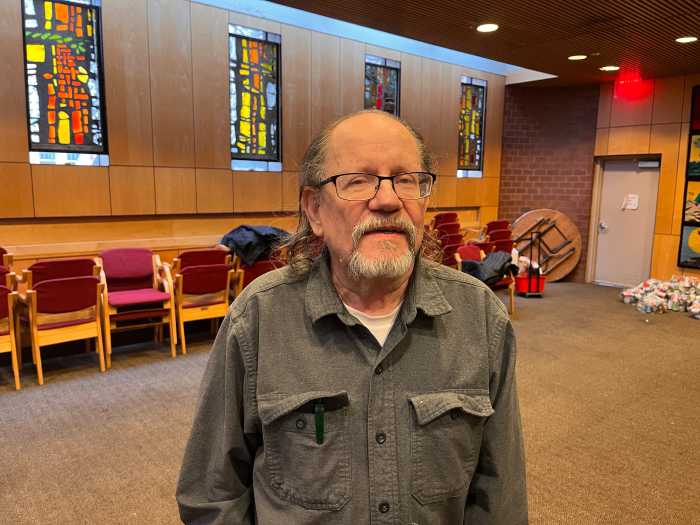
“Tom Cuite was an appendage of Cardinal O’Connor,” said Sal Albanese, who represented Bay Ridge in the City Council and was one of the 22 yes votes on the legislation in 1986. O’Connor ran the archdiocese from 1984 until his death in 2000. He was a consistent opponent of any goal sought by the LGBTQ community, though his influence in New York City waned over time. After sexual orientation was added to the human rights law, commissioners at city agencies “became more responsive” and businesses in the city showed greater respect for LGBTQ New Yorkers, Albanese said.
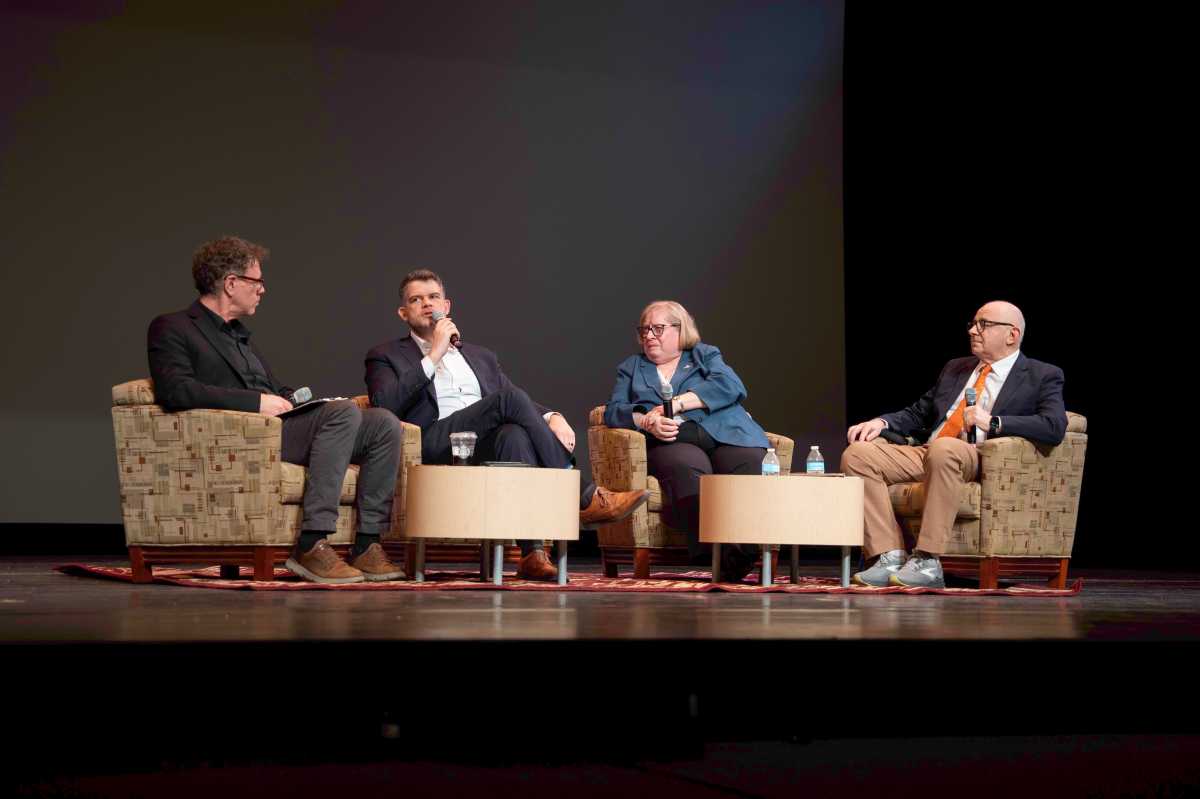
Bonsignore was interviewed alone by Stephen Petrus, a historian and the director of Public History Programs at the LaGuardia and Wagner Archives. After she left, Ryan Merola, the NYPD chief of staff, Marianne Duddy-Burke, executive director of DignityUSA, an organization of LGBTQ Roman Catholics, and Albanese joined Petrus on the stage.
Albanese was first elected to the City Council in 1982 representing a conservative district. He had conversations with O’Connor prior to the vote and the cardinal was “not very happy…not very warm,” Albanese said.
“He knew that my base of support was very much against the bill,” Albanese said. “I never thought I would survive, but I couldn’t vote against the bill.”
Albanese continued to represent that district until 1997, suggesting that the 1986 vote was not as damaging to him as he thought it would be.
The change in the human rights law had a limited impact on religious institutions, if at all, but the loss was the start of declining influence of the Roman Catholic church in New York City. Church policy and doctrine regarding the LGBTQ community, which is made at the Vatican, is unchanged since 1986. The real change has been in the tone adopted by Pope Francis, who died in 2025, and Pope Leo, who is continuing the more accepting posture adopted by Pope Francis.
“Hopefully, this is going to open the windows…and lead to a change in doctrine,” Duddy-Burke said. “What Francis and now Leo represent is a huge turn.”
What the successful vote did do is prompt DignityUSA to speak out more forcefully and more often.
“We had to develop a voice that was stronger…both in our church and in society,” Duddy-Burke said.
While the NYPD has improved its relationship with the LGBTQ community since 1986, it still has occasional issues that flare up. It has also taken steps to repair that relationship. In 2019, then commissioner James O’Neill opened Pride month by apologizing for the raid on the Stonewall Inn in 1969. The raid was conducted to shut down a blackmail scheme that was targeting gay men. In 2018, he apologized to a woman who was raped in 1994 and accused by Mike McAlary, a columnist in The Daily News, of fabricating the rape to promote an LGBTQ rally. Members of the LGBTQ community accused McAlary of fabricating his columns with the assistance of the NYPD.
“To the community, I said [to the commissioner] then and I say now ‘Thank you,’” Merola said.