Charlie Spickler, a longtime filmmaker, recently set out to create what he thought would be a new documentary about the American healthcare system. But just as he rolled up his sleeves, he read an article that piqued his interest and changed his entire game plan.
Soon enough, Spickler’s trail of curiosity led him into the depths of the homelessness crisis in New York City, where hundreds of thousands of people are unhoused. As he dug deeper, he realized the extent of what he described as the “staggering” amount of homelessness in the city and initially considered pivoting his project to focus on families experiencing homelessness.
“Then, as I focused more on that, I came to sort of this realization that really, the most affected is the homeless LGBTQ community,” Spickler said in a recent interview with Gay City News.
That moment marked the beginning of a major project — just not the one he originally had in mind. In the end, Spickler’s detour culminated in his forthcoming documentary, set to air on PBS TV station on Dec. 6, called “Outcast Nation: LGBTQA+. Homeless. Unseen. In New York City.”
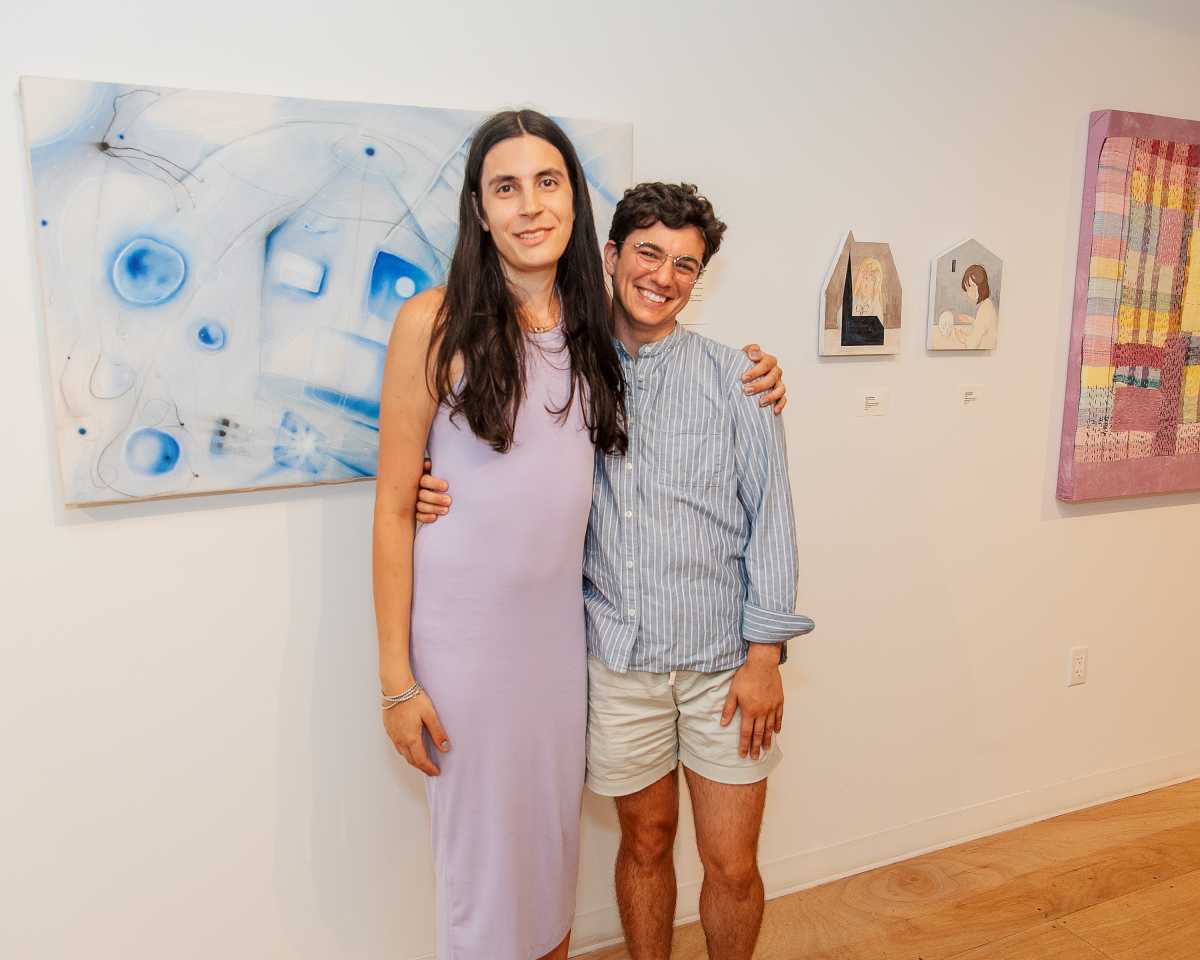
Spickler had already created five documentaries, but he knew this endeavor would be “different than any of the movies I made before,” so he enlisted the help of Dr. Caitlin M. Krenn, a licensed clinical social worker, direct service practitioner, and a psychotherapist by training, who Spickler said “knows everything about the subject.”
“I basically said, ‘I’m making this movie. I’d like to talk to you,’” Spickler recalled. “[Krenn] literally emailed me the next morning. ‘What can I do? How can I help you? How can I help you make your movie?’ And eventually, she became a producer, and now we are producing partners.”
Together, Spickler and Krenn entered the community, connected with non-profit organizations serving LGBTQ New Yorkers, and interviewed individuals who had experienced homelessness. Through discussions and extensive research, the documentary challenged the structural systems surrounding homelessness and considered various pathways to prosperity — all while confronting many of the myths and the broader stigma associated with unhoused populations.
The filmmakers worked with organizations such as New Alternatives, The Door, and Covenant House.
“[Spickler] just asked me if there was anyone that I could connect him to, and so I connected him with a couple of different folks in different arenas, whether that was research, whether that was public health, whether that was more direct service professionals — and it kind of just snowballed from there,” Krenn told Gay City News.
The filmmakers praised solution-focused approaches, such as Housing First, which involves providing immediate housing and services without requiring prerequisites like maintaining sobriety or employment, and questioned others, like the Staircase Model, which advances the idea that individuals can achieve independent living once they reach certain benchmarks.
“People will tell you that the first thing they need is a roof over their heads,” Krenn explained. “It’s really hard to go on that interview in the morning when you were sleeping out on the street that night and you haven’t showered in five days — it’s impossible. How are you supposed to present successfully for that interview to be a cashier at Chipotle when you have nowhere to brush your teeth, when you have nowhere to keep your belongings because you had to remove them all with you in the shelter that morning?”
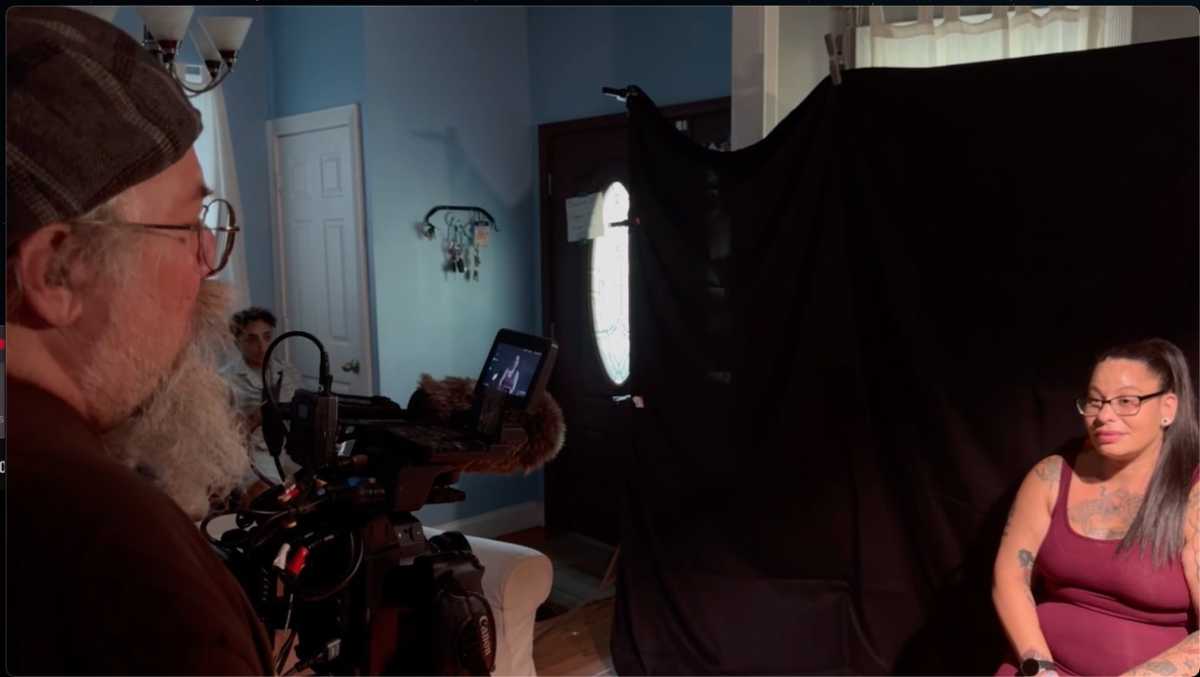
In order to facilitate the best possible environment for interviews, the filmmakers took special care to shape the conditions around the set. Most of the interviews took place in Spickler’s living room, complete with large black lights and what he described as a “very, very cozy” environment.
“One of the things that is extraordinarily important in doing any kind of clinical work is creating what we call relational safety,” Krenn said. That includes fostering a space “that feels safe, that feels comfortable, that feels welcoming, that doesn’t feel pressuring, that doesnt feel rushed, that doen’t feel uncomfortable,” Krenn noted.
Spickler, already taken aback by the homelessness crisis, felt that the urgent nature of the issue warranted a more direct approach to interviews than he had employed in the past. For this film, he directed his interview subjects to speak directly to the camera.
“I wanted them [to tell] their stories to the people that are watching it,” Spickler said.
The documentary will be available for streaming after it airs on PBS TV stations in early December. It will also be available on YouTube. See a brief trailer below: