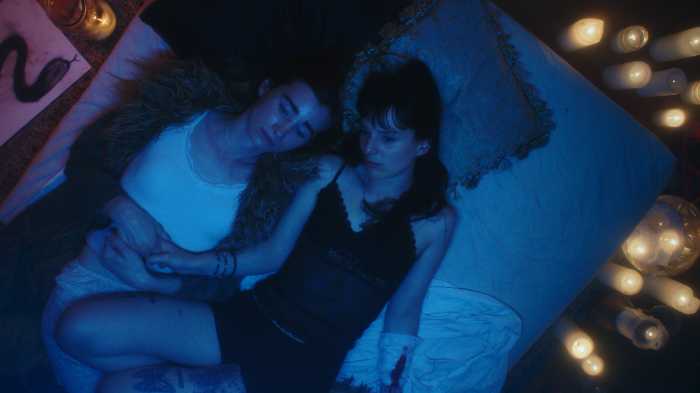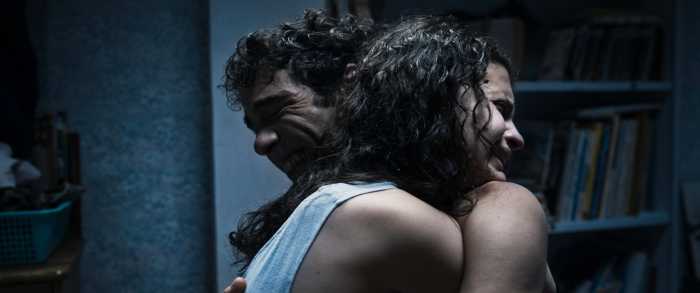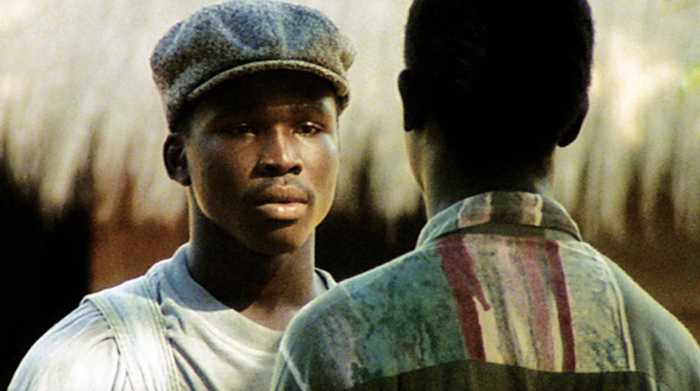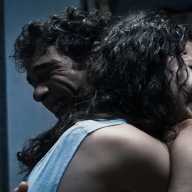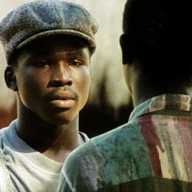
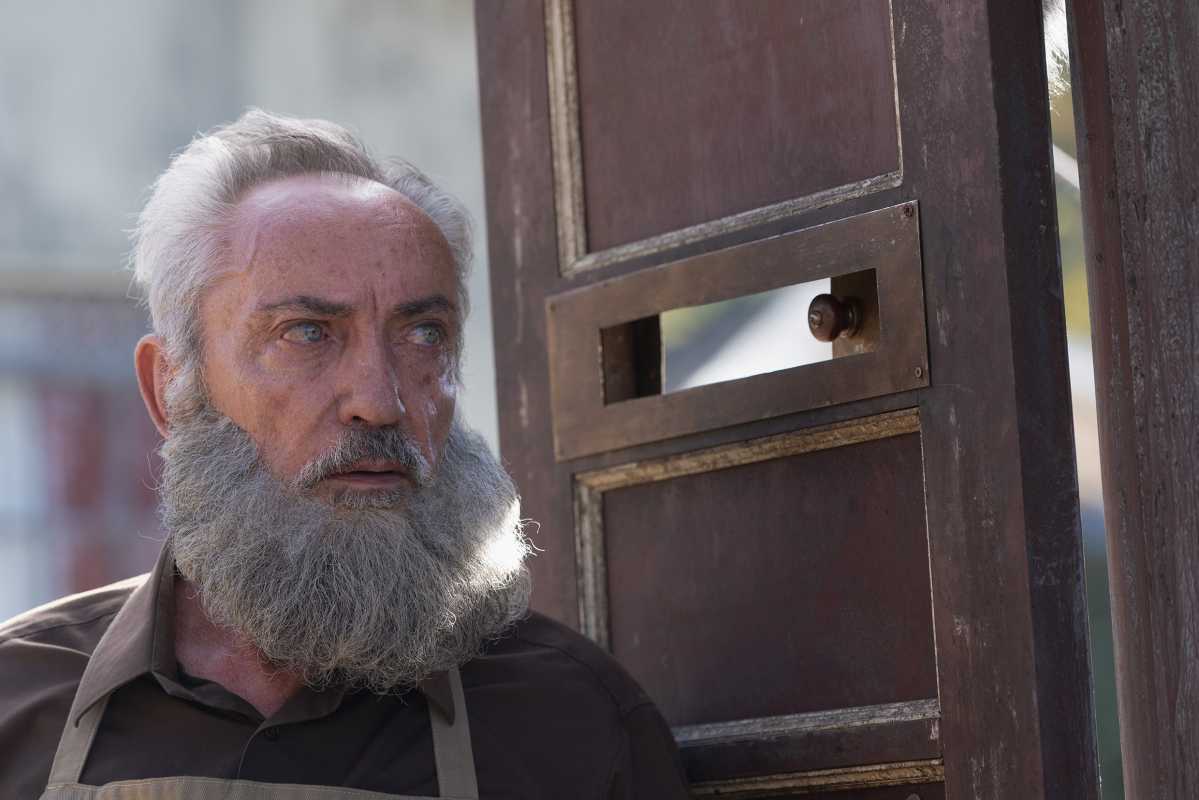
The Quad Cinema is hosting a mini-retrospective for the late great gay actor Udo Kier in the week leading up to the release of one of his last films, “My Neighbor Adolf.” The theater will screen four of Kier’s iconic films, including the Andy Warhol/Paul Morrissey films “Blood for Dracula” and “Flesh for Frankenstein,” as well as “Bacurau” and “Melancholia.” For tickets, dates, and showtimes, visit: quadcinema.com.
Kier commands the screen whenever he appears on screen in the offbeat comedy-drama, “My Neighbor Adolf.” As Mr. Herzog, Kier is menacing and slightly pathetic as a man his neighbor, Mr. Polsky (David Hayman), in 1960s South America, believes is Adolf Hitler in hiding.
The film opens in Eastern Europe 1934, introducing Mr. Polsky and his family before cutting to the 1960s, where Polsky alone has survived the Holocaust. He lives modestly, tending to a bush of black roses (his wife loved them), and playing chess, which he loves, via the local newspaper.
When Frau Kaltenbrunner (Olivia Shihavy) arrives one day with news about the house next door being rented to “a distinguished gentleman from Buenos Aires,” Polsky is taken aback. His peace is disturbed, especially when his new neighbor, Mr. Herzog’s dog, Wolfie, breaks through his fence and damages his roses. Complaining about this unfortunate situation, Polsky learns that his rose bush actually sits on Herzog’s property line and the fence needs to be moved. It is one of several indignities Polsky will experience over the course of the film.
“My Neighbor Adolf” is comic — Polsky slapstick-ily slips on a bar of soap in his shower while piqued by Herzog in one scene, and his difficulty urinating prevents him from pissing on his neighbor’s car out of spite in another. But the film’s humor also extends to wordplay as Polsky and Herzog argue like 12-year-olds when it comes to things such as a letter Polsky wants Herzog to write and a game of chess Herzog wants Polsky to play.
Polsky wants to take the letter to the intelligence office to prompt an investigation of his claim that Herzog is Hitler. However, his suspicions are met with skepticism by the officer (Kineret Peled), so Polsky decides to spy on Herzog himself to prove he is right.
“My Neighbor Adolf” asks viewers to accept this premise, with very flimsy evidence. Herzog is German, and a painter, as Hitler was, and has the same breed of dog that Hitler did. As Polsky snoops around his neighbor’s home, he discovers a locked box that he thinks contains something incriminating. Studying up on Hitler, Polsky becomes more convinced, but viewers may not share or care much about his obsession, which makes the men’s subsequent encounters less interesting instead of more intense.
An episode where Polsky foolishly breaks into Herzog’s home to steal a painting descends into a silly farce followed by a cruel act of violence. Better are scenes where Herzog starts drinking and expresses himself to Polsky, seeking friendship and compassion, not competition. When Herzog asks if Polsky finds Frau Kaltenbrunner attractive, it could be friendly guy talk or even a thinly veiled gay pass.
The film could have used more ambiguous moments like that because director Leon Prudovsky features too many tonal shifts meant to keep viewers off guard. One minute, the neighbors are buddy-buddy and Herzog is painting Polsky’s portrait. A few scenes later they are enemies, with Polsky seeking revenge on Herzog for the death of his family. If the film wants to make points about justice, Prudovsky buries them too deep; they lack impact.
“My Neighbor Adolf” picks up a little steam as Herzog’s identity is compromised by a visitor who gives a Nazi salute, and the intelligence officer arrives on Polsky’s doorstep to reconsider what might just be the rantings of a cranky old man. Thankfully, an exchange between Polsky and Herzog is satisfying even if the film feels like a cop out.
Of course, Kier’s performance is the reason the film succeeds to the degree it does. In one of his last screen roles, the actor seems to be having fun playing the enigmatic, scraggily-bearded Mr. Herzog. In an early scene where he and Polsky get into a scuffle and Herzog loses his sunglasses, Kier flashes his piercing blue eyes. It is an arresting moment — and one Polsky claims confirms Herzog is Hitler; he saw those unforgettable eyes in the camps. But Herzog downplays the incident, trying to protect himself and his privacy. As Herzog gets more emboldened over the course of the film, in his drinking scenes, Kier’s performance gets more excessive, but he never becomes unhinged. The role will make fans miss seeing the actor give juicy performances that let him go wild.
In contrast, David Hayman has the more difficult part as Polsky because he has to adapt to all of the narrative tonal shifts. Hayman does his best with the role, which requires him to ham it up a bit in his fights with Herzog, his discussions with the intelligence officer, and even his exchanges with Frau Kaltenbrunner. Hayman’s best moments, however, are his quiet ones, when he is alone on screen, reflecting on his late wife and family.
“My Neighbor Adolf” is a modest film but only modestly entertaining — mostly because Kier delivers such a compelling turn.
“My Neighbor Adolf” | Directed by Leon Prudovsky | Opening January 9 at the Quad Cinema | Distributed by Cohen Media Group