
This month, Gay City News reviews the latest albums by controversial gay rocker Morrissey and queer, non-binary indie folk artist Anjimile.
Morrissey | “Make-up Is A Lie” | Sire | March 7th
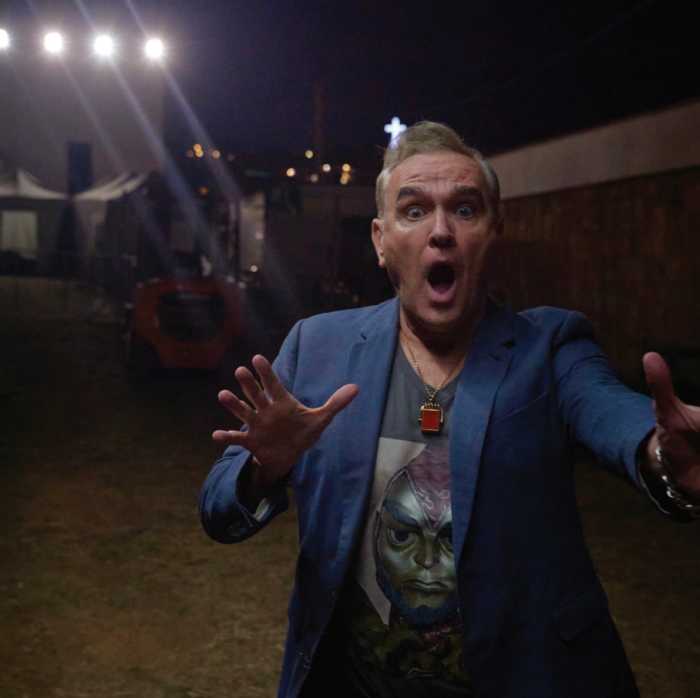
Morrissey brings exactly what we’ve come to expect with his new album’s opening lines: “I want to move away from those who stare at screens all day/I want to speak up and not be trapped by censorship.” (Capitol Records dropped him in 2022, and he claims that no label will release his song “Bonfire of Teenagers.”) But apart from one song, anyone looking for provocation will come away from “Make-up Is A Lie” disappointed. Morrissey’s history of racist remarks and support for Nigel Farage have tarnished his legacy beyond repair. (For a good summary of his turn towards the far right, have a look at this article.) While his recent public statements suggest an enormous victim complex, little on “Make-up Is A Lie” excites much emotion. He’s settled down into a legacy act, wallowing in nostalgia. When he adopts the voice of a husband struggling through an unhappy marriage, his words have no sting.
Reminiscent of the Pet Shop Boys, “Notre-Dame” sports the album’s most attractive melody. Too bad its spare lyrics espouse conspiratorial dog whistles about the 2019 fire at France’s Notre Dame cathedral. (The evidence indicates that it was an accident.) Morrissey made it a little bit blunter when he performed it live, singing “before investigations, they said ‘it’s not terrorism.’” The album version replaces the word “terrorism” with “there’s nothing to see here.” While the song doesn’t break out into open racism, anyone can figure out what skin color and religion “Notre-Dame, we know who tried to kill you” refers to. Purely on a musical level, the long instrumental passages and two-line verses leave this resembling a half-finished demo.
Joe Chiccarelli’s production mixes jangly guitars with leanings towards funk and dance music. None of this breaks a sweat: The rhythm section remains stiff. If these backing tracks were offered to Morrissey in the ‘80s, he probably would’ve hated them. His vocals never find a connection to the music.
Lyrically, he gazes towards the past in more benign ways than “Notre-Dame.” His song about rock critic Lester Bangs pays tribute to two of his ‘70s influences, Roxy Music and the New York Dolls, while he covers the former’s “Amazona.” He can’t write about his love of animals without making himself sound like a saint: “zoom zoom the little boy/he only sings about joy.” He’d be more honest if he admitted the flipside of this affection: a misanthropy that can be usefully weaponized.
In the ‘80s, Morrissey’s music with the Smiths meant a lot to me and other gay teenagers. I still listen regularly to the Smiths’ self-titled album and “The Queen Is Dead.” But “Make-Up Is A Lie” is as drab as listening to your Fox News-addled uncle reminisce about how great the ’90s were. The 2004 “You Are The Quarry” was his last solo album lively enough to justify any consideration about separating the art from the artist. The only thing worse than a reactionary is a boring one.
Morrissey link: https://junkee.com/articles/morrissey-ruined-career
Anjimile | “You’re Free To Go” | 4AD | March 13th
Two life experiences have shaped Anjimile’s music: getting sober and transitioning. While they had dropped several releases before the 2020 album “Giver Taker,” they now consider it their official debut. Written during a stay in rehab, it brought a new maturity to their music, asking questions about spirituality and reflecting their African heritage.
At a glance, their third album “You’re Free To Go” feels warm, even comfortable. Several songs begin with little more than vocals and fingerpicked acoustic guitar, progressing gradually. Some of this music rings out with a peaceful mood. They sing “I don’t want to be a son of a bitch” sweetly, with gently picked guitar, phrasing “exquisite skeleton” so that each syllable pops out. The song develops into anguished worry, repeating “don’t turn your back on me.” The softness of their voice becomes its own source of strength.
“Waits For Me” is a key track, expressing Anjimile’s childhood realization of their trans identity. They sing “when I was a little girl/I wanted to be real.” By the song’s last verse, the perspective has shifted from trying to please their mother to living out their true self. Anjimile changes the lyrics to “when I was a little boy, I wanted to be free.” It’s not the only song addressing parental figures: “Point of View” is gently panicked.
With roots in folk music and leanings towards baroque pop, Anjimile has long been likened to gay singer/songwriter Sufjan Stevens. Both sing with vibrato, and just as importantly, both keep religious faith on their minds. “Destroying You” addresses the “god of wisdom.” With many songs following similar arrangements and tempos, “You’re Free To Go” runs the risk of coming across twee. (Rocking harder, “Like You Really Mean It” switches up the tone.) As it nears the end, the energy level flags, although Anjimile introduces distorted, glitchy passages into their guitar work. Still, it feels more complex and engaging, because Anjimile has mastered the art of speaking their negative emotions with a soft voice.