Over 31 years, “Rendez-vous with French Cinema,” co-presented by Unifrance and Film At Lincoln Center, has become a New York institution. While the programming rarely takes huge chances, it allows us to catch up with filmmakers who have fallen out of fashion (this year, Olivier Assayas and Arnaud Desplechin) and new directors alike. The 2026 lineup is particularly queer, with gay director François Ozon’s Albert Camus adaptation of “The Stranger” on opening night. While I wasn’t able to preview it, I did get to watch four LGBTQ-themed films, with Anna Cazanave Cembat’s “Love Me Tender” the standout.
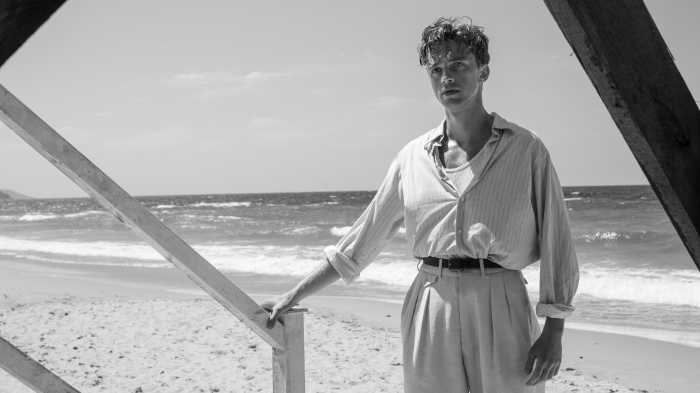
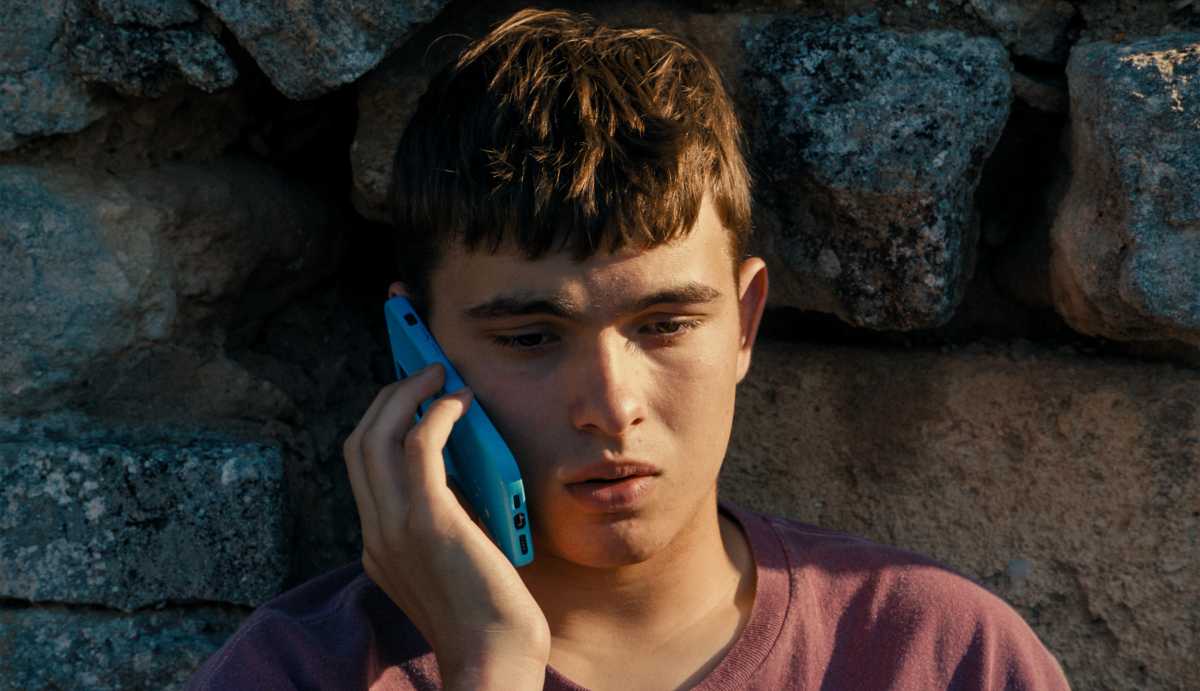
With “Enzo,” gay director Robin Campillo works in the shadow of André Téchiné. A troubled 16-year-old boy, Enzo (Eloy Pohu) has angered his Italian parents by dropping out of school to work in construction. He’s much wealthier than the other laborers, who include several Ukrainians. His dreams are impossible to pin down, but he feels miserable. The only visible source of this angst is his father’s demand that he conform to upper-middle-class aspirations. Constant sun and pretty surroundings just make his pain cut deeper.
Campillo thinks of “Enzo” as a posthumous collaboration with co-writer Laurent Cantet, who was originally slated to direct this but died during pre-production. It’s credited as “a film by Laurent Cantet, directed by Robin Campillo.” Despite this, its themes look back to Campillo’s 2013 “Eastern Boys,” which chronicled a relationship between a gay French man and a Ukrainian sex worker. Enzo develops a crush on Vlad (Maxim Slyvinski), a Ukrainian worker in his 20s. He touches Vlad’s chest as he sleeps, although Vlad refuses to respond to him sexually. The boy keeps pushing his buttons.
“Enzo” never attempts to make the character likable. While his torment is real, he lives such a charmed life that he skates away unscathed after several attempts to harm himself and others. Rather than viewing him as a puzzle that can be cracked, “Enzo” simply observes him in a stone-faced case study.
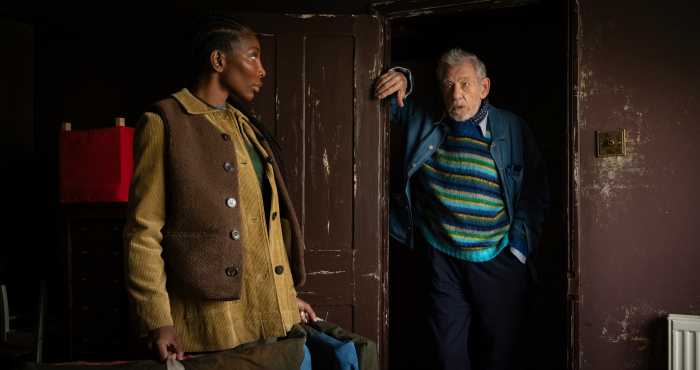
Leyla Bouzid’s “In a Whisper” follows Lilia (Eya Bouteraa) from Paris back to her native Tunisia when she returns to attend her uncle Daly’s (Karin Rmadi) funeral. Although she arrives with her French girlfriend Alice (Marion Barbeau), who stays in a hotel, her sexuality is a secret to most of her family. Daly’s gayness made him the family’s black sheep, and he may have been killed in a gay-bashing. Lilia sees traces of her own life in his. “In a Whisper” blends the family drama and detective story, as Lilia meets Daly’s former lover and goes to a gay bar. Back at her family house — which belongs to Bouzid’s grandmother — her childhood memories come back to life. (Despite the many rules women are required to follow, the home is a women’s space.) The film hits many of the expected notes: family secrets and coming out, with Tunisia’s criminalization of gay men coming under the microscope. It breaks a taboo: Bouzid writes that “no film has yet explored female homosexuality in an Arab and Muslim territory.” Striking such new ground could’ve led to an innovative style, but “In a Whisper” feels surprisingly placid. Rather than being angry, it’s tasteful to a fault.
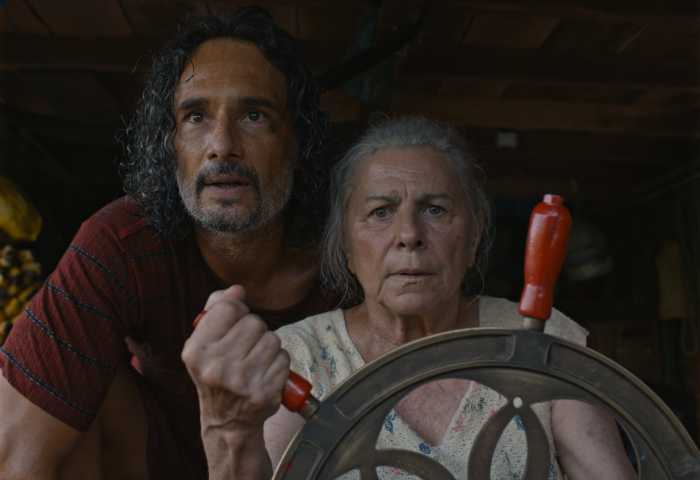
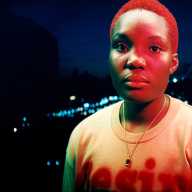
Fatima, the protagonist of Hafsia Herzi’s “The Little Sister,” has a distinctive way of carrying herself. She gazes off into the distance, as though she were more comfortable looking at the world from afar than participating in it. Is she introverted or depressed? Over the course of a year, spanning high school graduation, the start of college and her first relationship with a woman, Fatima travels farther on a path towards knowledge of herself, but “The Little Sister” stops short of a final destination.
Adapted from Fatima Daas’ novel “The Last One,” “The Little Sister” sets Fatima in a crowded apartment with her mother, an Algerian immigrant. A devout Muslim, Fatima prays before dawn. Her school is full of boys engaging in hypersexual — and not particularly believable — boasting about sex. They can sense that she’s not attracted to them. She begins dating Ji-Na (Park Ji-Min), a medical technician, but their relationship collapses because of Ji-Na’s issues with depression.
A few times, “The Little Sister” gets too blunt about Fatima’s internal struggle. She watches one of her professors lecture about emancipation, then goes to a lesbian club. However, Herzi respects her character’s quietude. Although films about teenagers coming out long ago fostered their own cliches, “The Little Sister” gets past them. The sight of Fatima’s stare remains haunting.
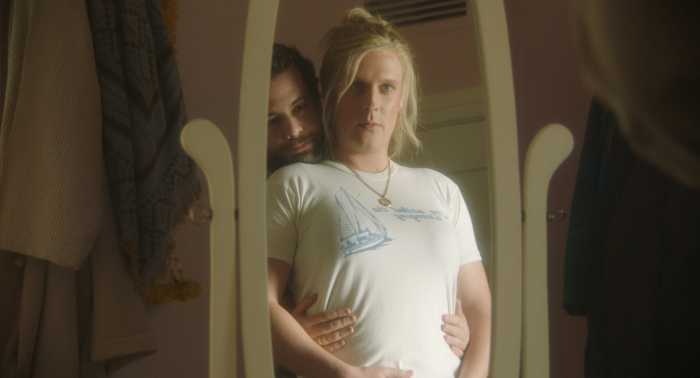
When “Love Me Tender” begins, lawyer-turned-novelist Clémence (Vicky Krieps), lives in limbo. Separated from her husband Laurent (Antoine Reinatz) for several years but not legally divorced, she now lives as a lesbian. When she finally informs him about this fact, he prevents her from seeing their son Paul (Viggo Ferreira Redier.) After his false accusations of incest and pedophilia, she has to wait 18 months just to get supervised visits, where she sits with Paul and two social workers. This strain takes an enormous toll on Clémence’s life.
Laurent’s a shadowy presence in “Love Me Tender.” The film avoids explicit confrontation and anger, but it shows a façade of “nice guy” tolerance crumbling. Instead of obvious drama, it zooms in on the subtler effects of living under such unbearable circumstances. Laurent and the French legal system punish Clémence for taking on “masculine” traits: casual sex, splitting up with her spouse, establishing herself as an artist. More subversively, the film questions whether a woman placing motherhood at the center of her life is doing herself any favors.
Slow camera movements help set up a mood of loneliness and depression. Even in a crowded grocery store or street, Clémence looks alone, almost physically ill. Only when swimming does she seem peaceful. “Love Me Tender” seethes with a quiet intensity.
“Rendez-vous with French Cinema” | Film at Lincoln Center | Runs March 5th-15th | For more information, visit https://www.filmlinc.org.