
The Equal Employment Opportunity Commission (EEOC), a federal agency that enforces federal employment discrimination statutes, issued a ruling on March 24 stating that the federal employee insurance plans are not required to cover the costs of gender-affirming care for federal employees and their dependents.
The ruling came in an administrative case filed by four transgender federal employees, each of whom sought gender-affirming care but were denied the coverage, despite an existing EEOC precedent from 2024, Lawrence v. Office of Personnel Management, which held that excluding gender-affirming care was an unlawful form of sex discrimination.
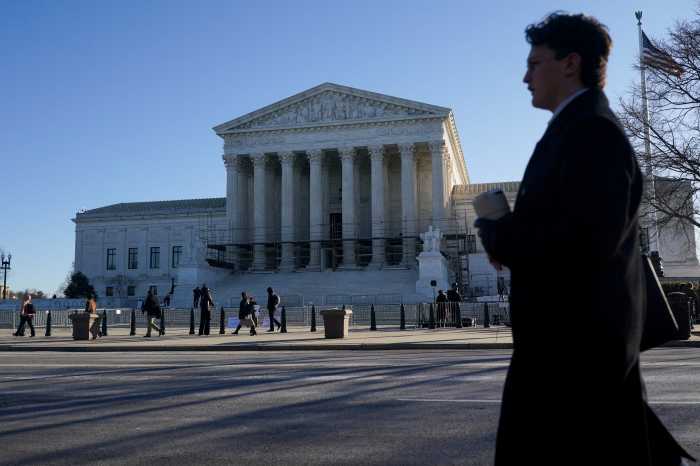
However, last spring the Supreme Court ruled in Skrmetti v. United States that Tennessee did not violate the equal protection rights of transgender youth by denying them gender-affirming care, in an opinion by Chief Justice Roberts that stated that Tennessee’s policy did not discriminate on the basis of sex or gender identity. Roberts opined that discrimination, if there was any, was on the basis of age (because Tennessee allowed adults but not minors to access gender-affirming care) and medical diagnosis (because Tennessee allowed gender-affirming care for other conditions but not for gender dysphoria). Because the Supreme Court did not consider “age” or “medical diagnosis” to be “suspect classifications,” the Court held that the state’s exclusion was upheld as a rational policy judgment by the legislature, which has authority to regulate the practice of medicine.
Now the EEOC has imported that reasoning into the interpretation of Title VII and the Rehabilitation Act (a federal statute that forbids the federal government from discriminating against persons with disabling conditions), maintaining that the Supreme Court’s opinion holds that policies against covering gender-affirming care for people with gender dysphoria is not a form of sex discrimination. This is an oversimplified statement, given the specific facts in the Skrmetti case.
The EEOC comments that after deciding Skrmetti, the Supreme Court granted petitions for review from two states who had lost on this issue of insurance coverage in the courts of appeals, vacated those court of appeals decisions, and sent the cases back for “reconsideration” in light of Skrmetti. This has already resulted in a panel of the Fourth Circuit Court of Appeals reversing a district court decision from West Virginia, where the Fourth Circuit has been asked to grant “en banc” review. The panel that made that decision consists entirely of Republican appointees, but a majority of the Fourth Circuit was appointed by Democratic presidents, and that circuit has generally taken a strongly supportive role for transgender rights.
The Department of Health and Human Services has announced that Medicare and Medicaid will not cover gender affirming care as a treatment for gender dysphoria, and lawsuits will be challenging Secretary Robert F. Kennedy’s announcement to that effect, as well as any formal regulation proposed by HHS.