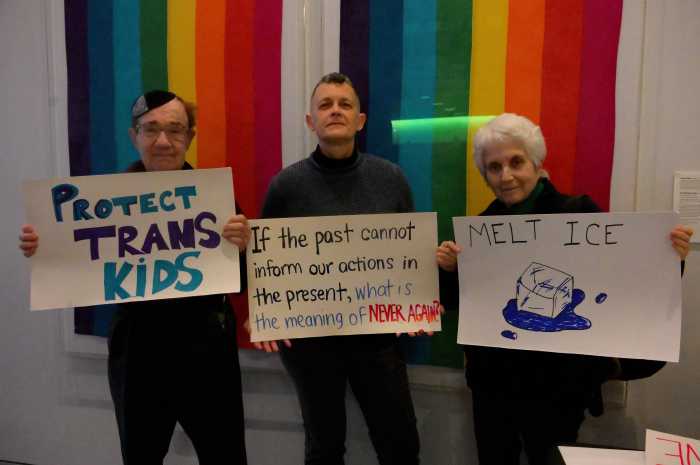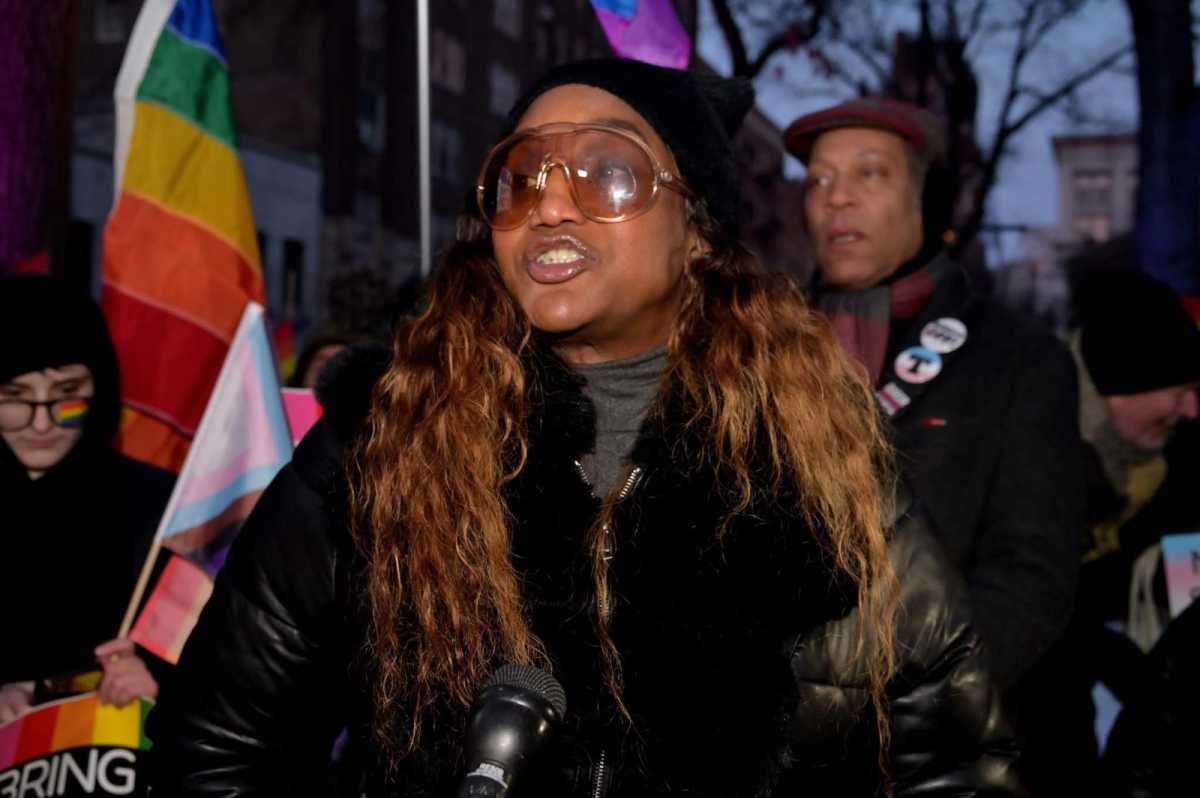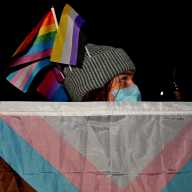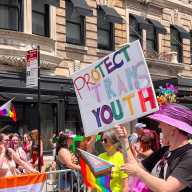
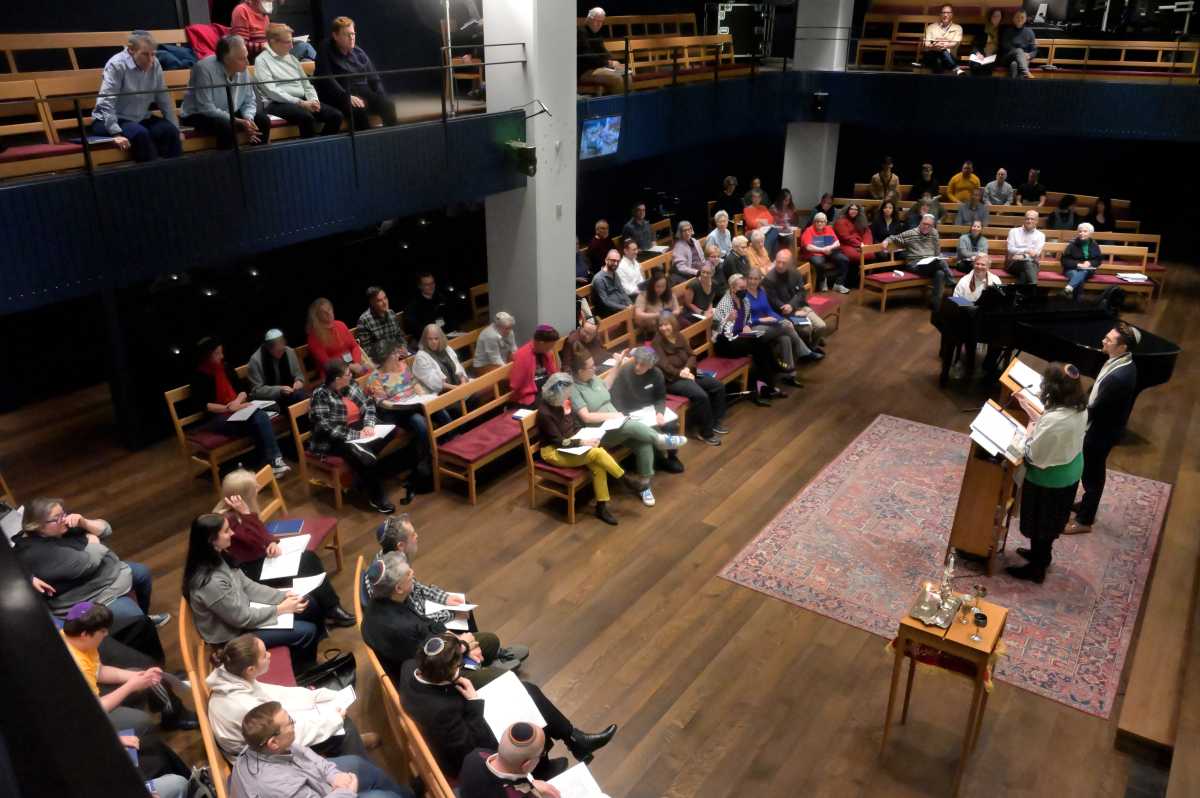
Congregation Beit Simchat Torah (CBST) kicked off Shabbat services on Friday, March 27, by observing two important facts about the date: One, that it was Shabbat HaGadol, the last Shabbat before Passover, and two, that it was Transgender Day of Visibility (TDOV), an equally important celebration within CBST’s diverse community.
Cooperberg-Rittmaster Rabbinical Intern Alana Krivo-Kaufman marked TDOV as “a time at CBST when we celebrate trans liturgists and rabbis, gender-expansive rabble-rousers, and gender non-conforming community members and beloveds,” drawing a connection between TDOV and Shabbat HaGadol as a taste of freedom amidst otherwise trying times. TDOV is observed annually on March 31.
This interpretation extended into embracing kin and chosen family as an authentic part of Friday night’s service, starting with a candle-lighting led by CBST’s trans and non-binary community group, which is open to all ages and gender identities.
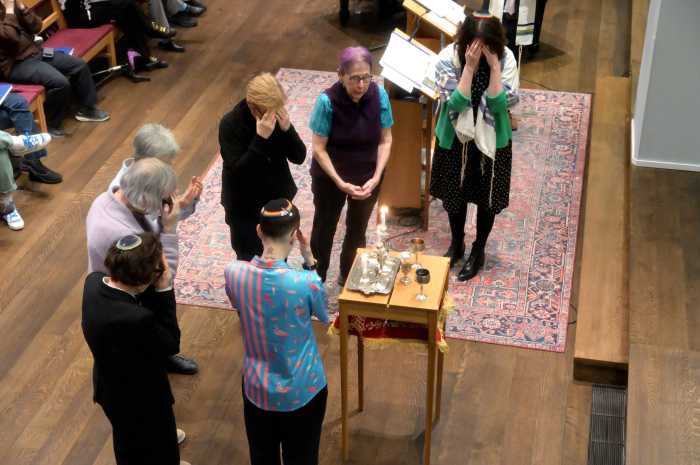
Next up, a group of CBST teens spoke about their recent trip to the US Southern Border in Arizona, where they worked alongside humanitarian groups to learn about injustices in the US immigration system.
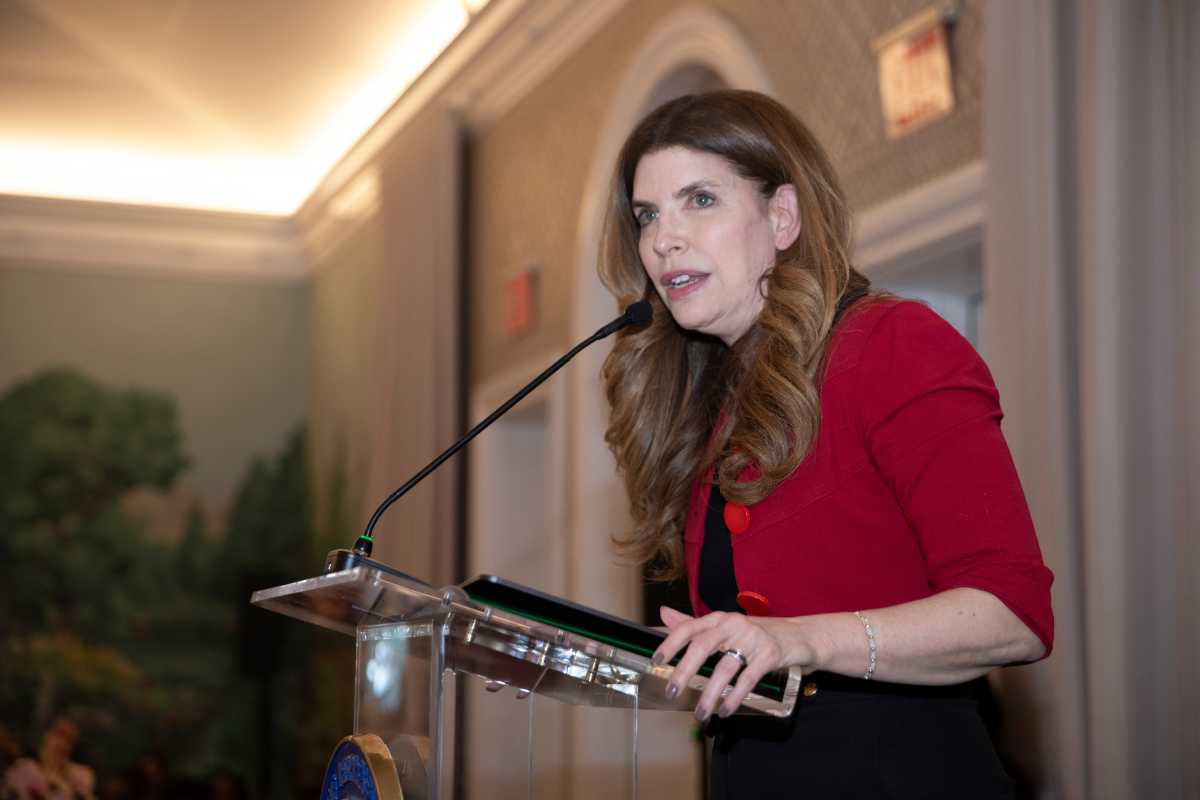
Finally, Rabbi Alana introduced the evening’s featured speaker: Andy Izenson, senior legal director for the Chosen Family Law Center, a non-profit focused on providing legal resources for families in need. The Chosen Family Law Center is one of many resources that CBST offers to congregants seeking legal counsel.
“At the end of the day, law is a kind of magic,” Izenson said in an interview with Gay City News. “The definition of magic is that you’re using language to change something about the material world… And so all of my career really has been using magic in service of making it so that individual vulnerable people feel a little bit more held as they go about their day.”
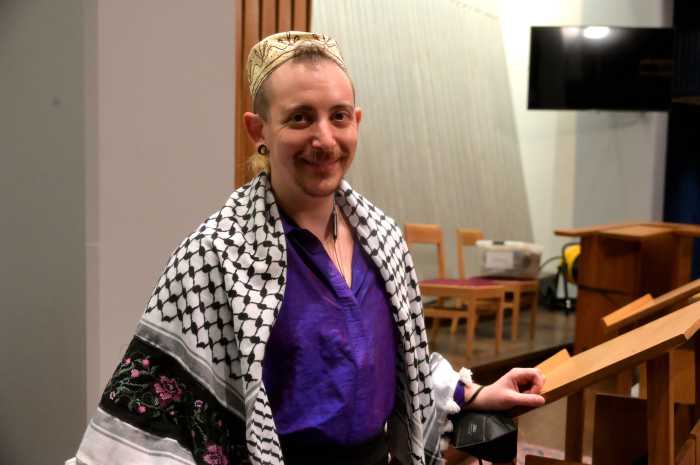
Later in their remarks, Izenson spoke about their own interpretation of Parshat Tsav.
“According to Torah, the worst thing that can happen to someone is to be […] cut off from kin,” Izenson said.
“But the consequence or punishment for basically stealing from God is the same thing that happens to trans people everyday,” Izenson continued. “That’s one of the ways we can transform into portals through which a holy light can flow into this world.
“So I ask: How are you tending your sacred fire?” Izenson said. “How are you putting it in your window, and how are you living up to that promise?”
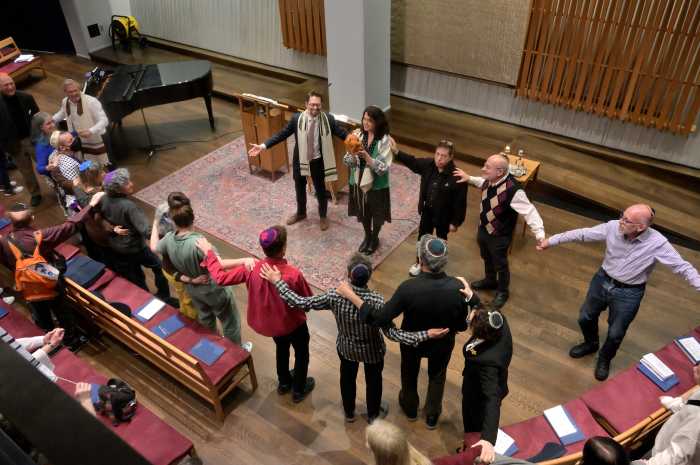
Izenson has been involved in advocacy for over 20 years with a special focus on family law. “It’s very important to me to always be trying to add new dimensions,” they said in an interview with Gay City News.
One of those new dimensions includes taking Rabbinical school classes at night, although Izenson said that they are just at the beginning of this journey.
“You know how sometimes you’re looking at your life and you’re looking at threads that feel very disparate and unrelated to each other, and you realize actually they’re not, they’re all pointing in one direction,” Izenson said.
CBST’s service included other gender-inclusive elements, such as a prayer that was written in a new form of non-binary Hebrew and a song that was composed without a tonal center to celebrate trans Jews.