Forty years ago, the U.S. Centers for Disease Control and Prevention (CDC) first sounded the alarm that Black and Latino communities were disproportionately impacted by HIV. Four decades later, that warning still echoes. Despite much progress in stemming the tide of the epidemic, HIV remains one of the clearest examples of how structural inequities shape health outcomes in the United States — and how Black Americans continue to pay the highest price. For Black women, youth, gay and bisexual men, and transgender, gender non-conforming, and non-binary (TGNC/NB) communities, these impacts have become even more pronounced.
What began as a public health crisis has become a long-running measure of our national resolve. The question before us is no longer whether we know how to prevent HIV or treat it effectively. The question is whether we are willing to confront the inequities that have allowed this epidemic to persist in Black communities for generations.
Condoms remain one of the most effective, accessible, and proven tools for preventing HIV and other sexually transmitted infections (STIs). Yet today, we also possess extraordinary medical tools that empower people to protect themselves. Pre-exposure prophylaxis (PrEP) can prevent HIV with remarkable effectiveness. Post-exposure prophylaxis (PEP) can stop infection after potential exposure. Modern treatment allows people living with HIV to achieve viral suppression, live long and healthy lives, and eliminate the risk of transmission. Plus, long-acting injectable options for prevention and antiretroviral treatment (ART) have demonstrated benefits for patients who may struggle with adherence to daily oral medications. Ending the epidemic is scientifically possible.
Yet the benefits of these advances remain unevenly distributed.
Black people account for approximately 12 percent of the U.S. population but represent nearly 40 percent of new HIV diagnoses and people living with HIV, according to the most recent data from the CDC. Of particular concern is the disproportionate impact of HIV among Black women, youth, trans women, and gay and bisexual men, as well as the higher rate of concurrent HIV and AIDS diagnosis and a faster progression from HIV to AIDS in Black men with HIV. Overall, Black individuals represent the highest percentage of deaths from HIV and AIDS (43%) of any group.
In addition, Black Americans are significantly less likely to have access to or use PrEP, be linked to care when diagnosed with HIV, and achieve viral suppression compared to their white counterparts. These gaps are driven not by lack of need or awareness, but by systemic barriers and stigma. Among TGNC/NB individuals — especially transgender women of color — HIV prevalence remains alarmingly high and they face significant barriers, leading to lower access and uptake of PrEP compared to other groups.
Access to PrEP and treatment is shaped by insurance coverage, provider bias, medical mistrust rooted in historical injustice, transportation challenges, and gaps in culturally responsive care. For many Black individuals, especially those in under-resourced neighborhoods or rural areas, preventive care and treatment remain difficult to access, prohibitively expensive, or inadequately promoted by healthcare systems. The result is a prevention and treatment landscape that too often fails the people most at risk.
At Amida Care, the NEW Pride Agenda, and the National Black Leadership Commission on Health, we advocate for and advance access to HIV and health services; we’ve seen firsthand how inequities in access to care, housing, education, income, mental health services, and social supports — the social determinants of health — perpetuate the HIV epidemic. These outcomes are not the product of individual behavior. They are the predictable consequences of policies and systems shaped by racism, economic inequality, and chronic underinvestment in Black communities. When these structural factors are ignored, disparities deepen.
At the same time, we know that intentional investment works. When Black-led and Black-serving organizations are resourced to deliver culturally responsive, community-driven care, people get tested earlier, start treatment sooner, and remain engaged in care. When prevention tools like PrEP are made affordable, accessible, and stigma-free, uptake increases and new infections decline. Investing in high quality, culturally sensitive HIV treatment and prevention services, provided by community healthcare providers like Acacia Network, are vital to meet people where they’re at and break down barriers to care.
Programs such as Medicaid (which provides coverage for 40% of all non-elderly people with HIV, of which approximately 50% are Black Americans), the Ryan White HIV/AIDS Program, routine and rapid testing initiatives, harm reduction strategies, and the federal Ending the HIV Epidemic initiative have proven their value. A new paper published this year in The Lancet HIV documents the vital impact of community engagement in the success of HIV prevention and treatment programs. However, ongoing threats to funding for these programs risk reversing hard-won gains and widening existing gaps. For Black communities already carrying a disproportionate burden, cuts to safety-net programs would be devastating.
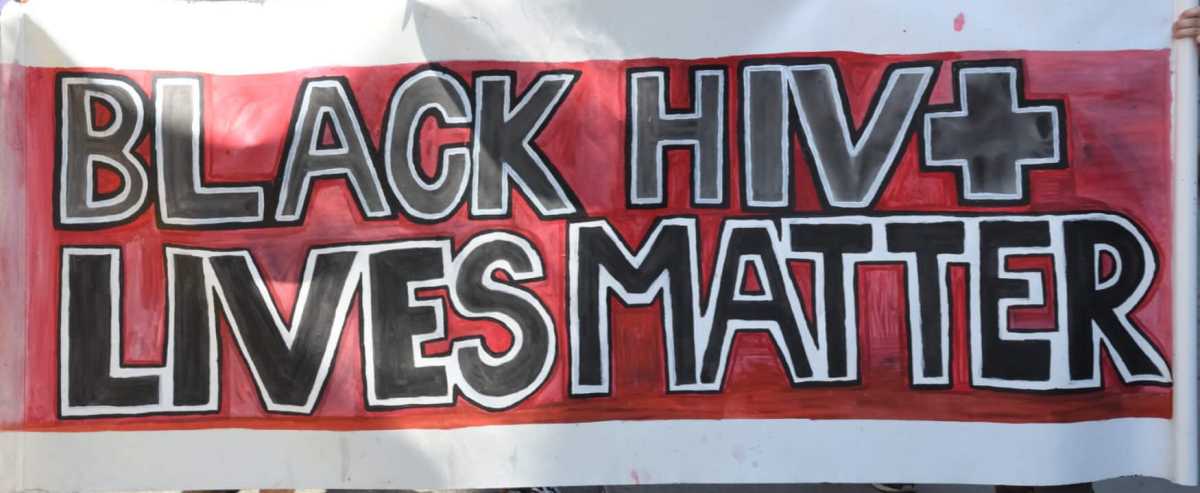
As we commemorate National Black HIV/AIDS Awareness Day (Feb. 7), let’s commit to addressing HIV in Black America with sustained focus and coordinated action. It requires expanding equitable access to PrEP, PEP, and HIV treatment; investing in community-based healthcare and social services; and confronting stigma and bias within healthcare systems. It also demands that Black voices — including people with lived experience — lead the design and implementation of HIV prevention and care strategies for those groups that are most vulnerable in our community.
Every statistic represents a life: a parent, a sibling, a partner, a neighbor — each with unique gifts and possibility. Each missed opportunity for prevention or care compounds an injustice that has lasted far too long and we cannot ignore. We cannot afford another decade marked by the same disparities we recognized 40 years ago.
The science is clear. The tools exist. What remains is the will to act — intentionally, consistently, and equitably. Ending HIV in the United States is possible, but only if ending inequity is treated as essential, not optional.
The time for reflection has passed. The time for deliberate, sustained action is now.
David Collymore, MD, is the chief medical officer at Acacia Network and a board member at Amida Care; Kei Williams is the executive director of the NEW Pride Agenda; and Shirley Torho is the President & CEO of the National Black Leadership Commission on Health