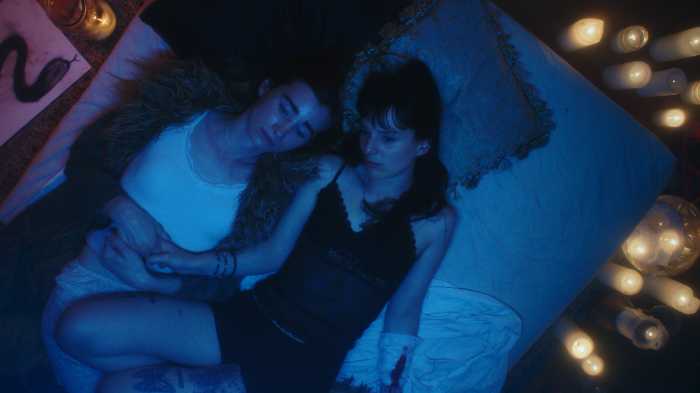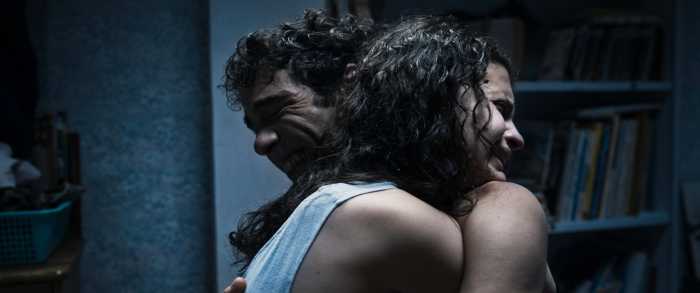
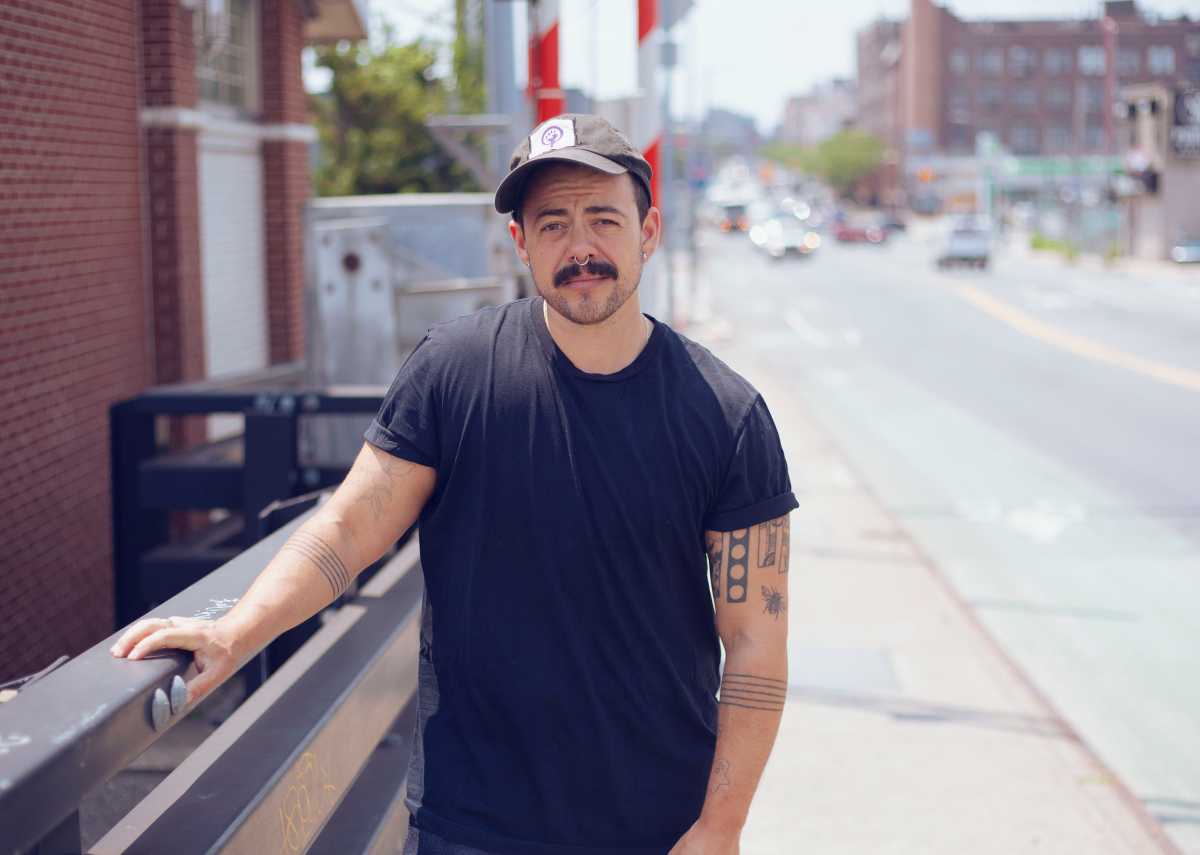
Roland Loomis reinvented himself as Fakir Musafar, a mysterious master of extreme bodily modification and pain tolerance. From his teenage years, he took self-portraits in the guise of alter egos drawn from other cultures. Moving to San Francisco, he met a group of queer men who were also interested in piercing and tattoos and began forming a public community. Trans director Angelo Madsen’s “A Body To Live In” offers a documentary that meets Musafar on his own ground.
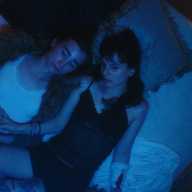
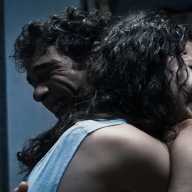
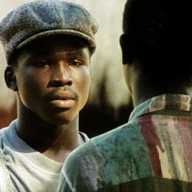
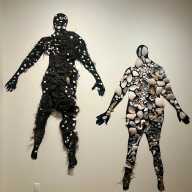
While Madsen’s previous feature, “North By Current,” was a deeply autobiographical examination of his own family, “A Body To Live In” shines a light both on Musafar and the subcultures in which he thrived, like the radical faerie movement. (He was attracted to men and women, and the evidence of his life suggests he wasn’t cis.) More dubiously, Musafar claimed the Lakota nation’s Sundance ritual, part of which includes piercing the chest and back, as his own. “A Body To Live In” incorporates clips of him being confronted about it by indigenous people on a talk show. Madsen’s style meets Musafar on his own terms. Eschewing talking heads interviews, the film blends archival photos and texts, copious videos illustrating Musafar’s practices, and recordings of his own words. It also shines a spotlight on his partner Cleo DuBois and fellow performance artists Annie Sprinkle and Ron Athey. The most transgressive aspect of “A Body To Live In” is the joy it finds in images of activities that might cause one to wince and look away in another context. It runs from March 5-11 at Anthology Film Archives.

Gay City News recently interviewed Madsen about “A Body to Live In.”
How did you first learn about Fakir?
I first learned about Fakir through a friend’s copy of “Modern Primitives,” a book that was put out by Re/Search Publications in the late ‘80s. Lots of people who are into punk culture, queer culture, and alternative zines gravitated towards that publication. So the first time I learned about him was seeing his photographs . Then, shortly after that I actually got a chance to meet him in San Francisco. He was the partner of a friend of mine that I was working on a project with, and there was some cross-collaboration with other projects and teaching demonstrations. I met him that way and didn’t really know he was the “Modern Primitives” guy until later. I didn’t put it together, just thought he was a nice old guy, and then I got involved in some other community stuff in San Francisco in the early 2000s. We had a friendship that evolved over the span of 15 years or so.
Were you already thinking about making a documentary about him?
Not really. He came to see a film of mine in San Francisco in 2017. That was the last time I saw him in person. We talked about the film a lot there and he was very excited about it. A lot of my films explore themes that involve queer sexuality, kink, other universes and worlds, familial bonds and ways we form relationships in the world, and our relationship to time. We had a lot to talk about with that film, and that got me wondering if I could do something about him or with his archive. I was most drawn to his still photographs and so I started thinking about that. Then he passed away, and I didn’t really start research on the project until 2019.
How different was the production on this one from your work on “North By Current”?
Insanely different and still the same. I’m still kind of a one-man show so it’s still just me sitting with all these materials figuring out where they go and how they fit. The “North By Current” shoot involved experiencing my own reality through the lens. My nervous system was on a totally different page. I was just a mess the whole time. I was insanely stressed and sad: processing, coping, grieving, confused. My body felt at risk. Working without any of those feelings is a piece of cake in some ways. Sitting with people I’ve known in intimate ways is something I do in a lot of my work. In that way, it’s familiar. I like having conversations with people I already know about things we’ve never talked about. The key difference is obviously there’s no vérité in this film. It is all archival except for the audio interviews. That’s really a process rooted in post-production and in research. Comparatively, it’s quite little production. It’s not like one where you’re traveling to a place you know once a month for years and documenting the sort of full scope of event. “North By Current” consequently was a quite straightforward film to edit. I kept up with my edits during my shoots. I’m really into dailies, and I also do assemblies after shoots. So the edit was three months but the edit for this film was 13 months.
Did the form, especially the lack of talking heads interviews, come out of your interest in his archive and his own documentation ?
The form of no talking heads actually just came from aesthetic choices. I wasn’t really interested in ever leaving the material world a little bit. At the very beginning, I thought, “Oh, I’m gonna have interviews that are on camera,” and and then I thought, “Maybe I won’t use them, but I should still shoot them for safety in case I need them.” Then I decided, actually, I don’t need them, but it took a full year of pre-production before I got to that stage. I knew that the work was going to be hard for some people, so why make any formal sacrifices if people are already gonna have a hard time with it? I wanted to keep people in the universe of the material, and when you have a crisp clean 4k headshot of somebody, it rips you out of that world. I’m very interested in what happens psychologically when we hear a voice and don’t get an image of the person. It also takes away our drive to judge someone by what they look like. Often when you get the interview shot, you know that’s your moment to make sense of someone.
In the context of this film, there are images that are reminiscent of a lot of horror films like “Hellraiser,” “Ichi the Killer” and various David Cronenberg movies. At the same time the film views BDSM and this kind of body modification in a positive light, but do you see it as having a relationship to body horror?
Yeah, totally. Genre films take a lot of inspiration from performance art. I think a lot of those industrial culture images from the early 1990s were pulling body horror from performance art and vice versa. There’s a kind of filtering that goes back and forth between that kind of image creation. I lean into body horror and lean out of it at the same time. I’m not interested in sensationalizing these practices or these experiences, so there are times when I soften them a little bit through editing and music. I tried to stay away from the idea of body horror more because it’s such a big idea and it has so many of its own branches. There’s no way I could contextualize it well within the landscape of this film. In the context of body horror, I do think about you making the image and the image making you. That’s a lot of what Fakir did as well . He created images of himself, influenced by other media, and then he remade himself based off those images. That’s the cycle of the way commercialization happens. Things get rendered popular and accessible, but in this case they’re made wild and grotesque.
Did you have a sense that Fakir was running away from the banality of being a white American Christian and that contributed to his borrowing, to put it politely, from other cultures?
I think he felt something in himself that was so Other from the people around him. He was trying to make sense of that, and he felt it so deeply that he ran away to San Francisco as soon as he could. He was reaching for whatever he could access to show him that there were others too. When you’re 12 years old and all you can do is ride a bicycle three miles down a dirt road to a public library, you find a “National Geographic” magazine or whatever. That’s what you’re gonna gravitate towards: anything that depicts this sort of otherness that you’re also attracted to. I remember being that age where you see an image and it just speaks to you in a certain way. You don’t know how to unsee it.
He feels very other but he also has been indoctrinated and socialized within this hierarchy. It becomes a double-edged sword, because then he goes out into the world feeling like an oppressed person. He’s also actually a very powerful person because of the body that he’s in, even though he feels so disconnected and strange. A lot of his appropriation was also related to the fact that he was trying to legitimize what he was doing, especially in his earlier years. We were just coming out of the phase of institutionalizing people. They would take you away, lock you up and throw away the key. You would die there. He knew that. He had seen it happen to people. He thought, “This has to be a secret, and if I open up, I have to show that other people have done this before and so I’m not crazy.” The only place he’s able to see other people doing similar practices is in these other traditions.
The unfortunate part of it is that he wasn’t able to hear people later in life, when conversations were starting about the way he was appropriating various cultures and integrating them. In so many interviews, he thought that by constantly referencing other cultures that were doing these practices, he was calling them in respect. He wanted people to know that he wasn’t the first one to do this. He’s behaving in this sort of imperial way where he believes he has access to these things yet at the same time the things he’s doing aren’t even the real practices. He has no idea what they look like. He’s never seen them because he’s a white man. He’s inventing these imaginary rituals based off of some pictures he’s seen or some feelings he had. The problem really is with him saying something like “I’m doing the Sundance.” For one, he didn’t know what one looks like and for two, he was a white dude. [Note: white people are barred from attending, photographing or filming the Sundance ritual.]
That’s partially why I foreground a bit of his history before I start to unpack that. I wanted you to understand he brought a view of the world to this.
Do you think presenting his work as performance art later in life was also a way of legitimizing it?
It’s possible. I think Cleo was more of a performer than he knows. Folks in their circle might argue, but she was performing before she met him. She was a burlesque and belly dancer. There was a performance art balloon in San Francisco in the mid ‘80s. She was part of it, doing long monologues with certain actions or gestures. In one, she’s on a swing, telling a story about her life the whole life. Annie Sprinkle influenced him too. Before he met Cleo, the performance was a sideshow spectacle: getting on a bed of nails or walking around with a typewriter attached through hooks in his chest. That world was so underground I don’t think he necessarily thought about it as legitimizing. It was an extension of where he found community. There’s a lot of overlap between it and the BDSM world. He was really just enjoying being a figure in it.
The film doesn’t really pin down his sexuality or gender. How do you think he thought about it? Did he call himself queer?
He didn’t call himself anything. That’s one of the things I love about him. He resisted labels. He thought they were reductive. He did what we have called personas, different pieces of him. This is before post-structuralist gender theory and all those conversations. He thought, “I’m a woman, I’m a man, I’m gay, I’m whatever, I don’t know what I am, I’m a body modifier, I’m a shaman, I’m a teacher. How can I be all these things?” Identifying these personas was the closest he got to labels. Who knows how he would self-identify at this point in time? He took estrogen on and off for the last 20 years of his life. To him, that was what felt good for his body. This resistance to labels is so important for pointing out the limits of language. Over the last 10 years, it’s become really important to be able to check as many boxes as possible. He just refused to check any of them, and I think It’s an interesting way to reject language as the defining factor. Language leaves so much room for misinterpretation. He just refused to reduce.